DNA - Deoxyribose Nucleic Acid (Edexcel GCSE Biology): Revision Notes
📚Revision Notes
DNA - Deoxyribose Nucleic Acid
Note
DNA (Deoxyribonucleic Acid) is the molecule that carries the genetic instructions essential for the growth, development, functioning, and reproduction of all living organisms. It is a polymer composed of long chains of nucleotides and is organised into structures known as chromosomes within the cell nucleus.
DNA Composition
- Nucleotides: The basic building blocks of DNA, each nucleotide consists of three components:
- A sugar molecule (deoxyribose)
- A phosphate group: Together, these form the backbone of the DNA strand.
- One of four organic nitrogenous bases: Adenine (A), Cytosine (C), Guanine (G), and Thymine (T).
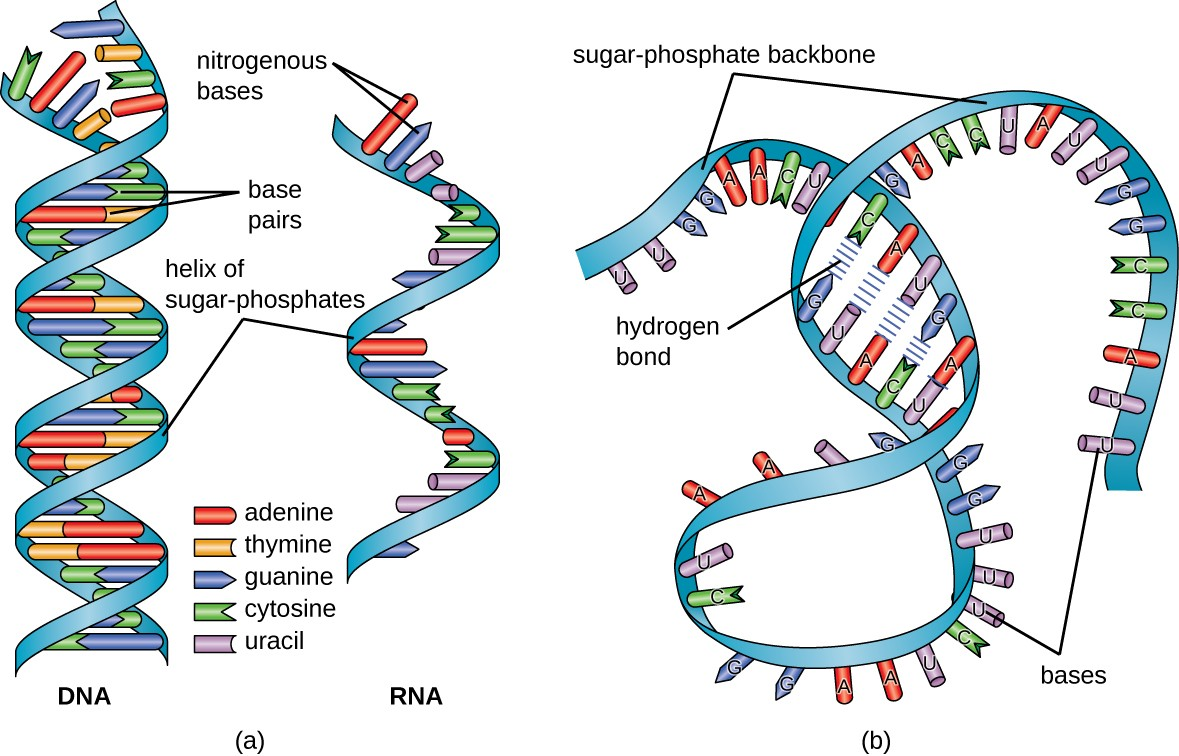
- Double Helix Structure: DNA is composed of two strands that twist around each other to form a double helix. The strands are connected by base pairs, where:
- Adenine (A) pairs with Thymine (T).
- Cytosine (C) pairs with Guanine (G). This specific pairing is known as complementary base pairing.
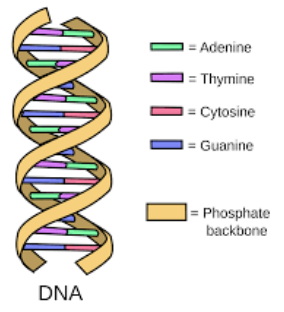
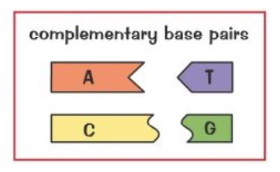
AT and CG pair together (complementary base pairing) Held by hydrogen bonds
Genetic Coding
- Base Sequence: The sequence of bases (e.g., A, G, T, T, C, A) along a DNA strand forms a genetic code that dictates the synthesis of proteins.
- Codons: Each group of three bases, known as a codon, codes for a specific amino acid.
- Amino Acids and Proteins: There are 20 different types of amino acids. The sequence and type of these amino acids, determined by the order of the codons, dictate the structure and function of the resulting protein.
Non-Coding DNA
Note
Not all DNA sequences code for proteins. Non-coding DNA regions play crucial roles in regulating gene expression, such as turning genes on or off, thereby controlling protein synthesis.
Protein Synthesis
Note
Protein synthesis is the process by which cells produce proteins from the genetic code found in DNA. This process occurs in two main stages: transcription and translation.
- Transcription:
- DNA unwinds, and the two strands separate.
- mRNA (messenger RNA) nucleotides match up with their complementary DNA bases on one strand, forming a strand of mRNA that is a mirror image of the DNA template.
- The newly formed mRNA strand detaches and exits the nucleus, moving into the cytoplasm.
- Translation:
- The mRNA attaches to a ribosome in the cytoplasm.
- The ribosome reads the mRNA sequence in sets of three bases (codons), each specifying an amino acid.
- tRNA (transfer RNA) molecules carry the corresponding amino acids to the ribosome, where they are added to the growing polypeptide chain.
- Once the chain is complete, the polypeptide folds into a unique three-dimensional shape, forming a functional protein.
Types of Proteins
- Enzymes: Catalysts that speed up biochemical reactions.
- Hormones: Chemical messengers that regulate various physiological processes.
- Structural Proteins: Provide support and strength to cells and tissues, such as collagen in connective tissues.
Mutations
Mutations are changes in the DNA sequence that can alter the structure and function of proteins. Types of mutations include:
- Insertion: An extra base is added, shifting the entire sequence and potentially altering every subsequent amino acid.
- Deletion: A base is removed, similarly shifting the sequence and altering subsequent amino acids.
- Substitution: One base is replaced with another, which may change a single amino acid or have no effect if the new codon still codes for the same amino acid.
- Mutations can have varying impacts:
- No or minimal effect: Many mutations do not significantly alter the resulting protein.
- Significant impact: Some mutations can severely change the protein's structure, affecting its function. For example:
- An enzyme might lose its ability to bind to its substrate.
- A structural protein might lose its integrity, affecting the stability of tissues.
- Non-Coding DNA Mutations: These mutations can affect gene regulation, altering whether a gene is expressed or silenced. Nitrogenous bases:
| A• Adenine | T• Thymine | → 2 bonds |
|---|---|---|
| C (cytosine) | G (guanine) | → 3 bonds |
Genetic Variation
The diversity between individuals arises from:
- Coding DNA: Variations in the sequence of bases that determine which proteins are produced and how they function.
- Non-Coding DNA: Variations that influence the regulation of gene expression, determining when and where specific genes are active.
DNA & the Genome
The genetic material in the nucleus of a cell is composed of a chemical called DNA. DNA is a polymer made up of two strands which wrap around each other like a rope - in a structure called a double helix. The DNA in the nucleus is contained in structures called chromosomes.
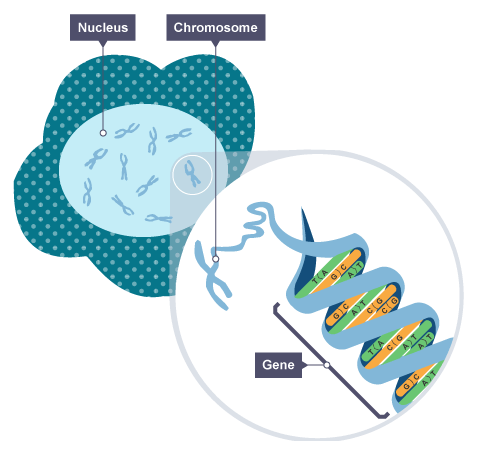
Between the two strands are the four nitrogenous bases lined up in single rows – these come together to form a series of complementary pairs (see below).
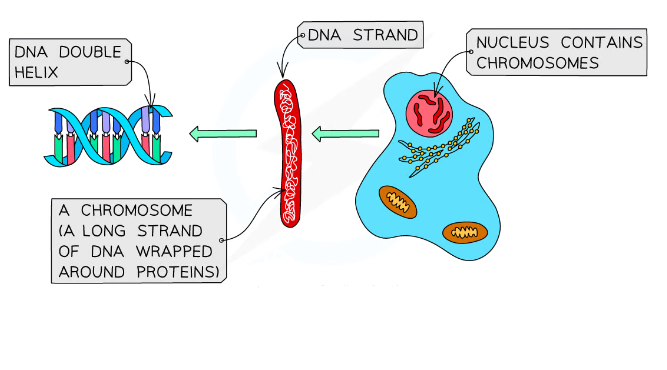
A gene is a small section of DNA on a chromosome - a triplet of bases that codes for a specific protein. Each gene codes for a particular sequence of amino acids, together a chain of amino acids can join to make a protein.
The genome is all the genes coding for all of the proteins within an organism. The whole human genome has now been studied and this has improved our understanding of the genes linked to different types of disease, the treatment of inherited disorders and has helped in tracing human migration patterns from the past. Understanding the human genome will have great importance for medicine in the future.