Mutations (Edexcel GCSE Biology): Revision Notes
📚Revision Notes
Mutations
Note
What are Mutations?
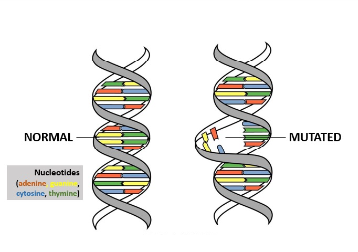
A mutation is a change in a gene or chromosome. Mutations are random and happen continuously. While most mutations do not create a new phenotype, some may lead to changes in an organism's traits. Occasionally, these changes can provide an advantage in a particular environment, leading to the mutation being passed on more frequently. Over time, this can result in changes in a species through natural selection.
Example of Mutation in Natural Selection
If a mutation changes a characteristic, like feather colour in birds, and this new trait makes the bird more attractive to mates, the bird is more likely to reproduce. This increases the chances of the mutated gene being passed on to offspring, gradually increasing the proportion of birds with the new feather colour in the population. This process is the basis of natural selection.
Natural Selection and Evolution
Natural selection describes how organisms that are better adapted to their environment are more likely to survive and reproduce. This is often called "survival of the fittest", and it plays a key role in evolution.
A famous example is the peppered moth:
- During the Industrial Revolution, pollution darkened tree bark with soot.
- Light-coloured moths became more visible to predators, while dark-colored moths were better camouflaged and survived more easily.
- The dark moths reproduced more, passing on their genes, leading to an increase in their population over time.
Causes of Mutations
Mutations can occur spontaneously or due to external factors, such as:
- Ionising radiation: Includes gamma rays, X-rays, and ultraviolet rays. The higher the radiation exposure, the higher the chance of mutation.
- Chemical mutagens: Substances like tar from cigarette smoke can increase the likelihood of mutations.
Effects of Mutations
Mutations can affect proteins in different ways:
- Minor or No Effect: Most mutations do not significantly alter a protein or its function.
- Positive Effect: Some mutations may improve an organism's chance of survival, like a mutation that gives resistance to a disease.
- Negative Effect: Mutations can lead to diseases or faulty proteins. For example, if a mutation affects an enzyme, it might no longer function properly, or if it affects a structural protein like collagen, it may weaken the structure of tissues. While most mutations have little to no effect, serious consequences can arise from harmful mutations, such as genetic diseases like cystic fibrosis or cancer caused by uncontrolled cell division due to mutations in cells.
Types of Mutations in DNA
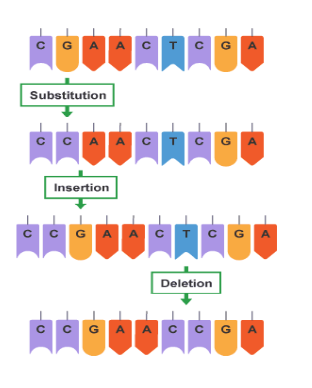
- Substitution: A base in the DNA sequence is swapped for another.
- Example: CGA changes to CCA, potentially altering the amino acid produced.
- Insertion: An extra base is added to the DNA sequence.
- Example: CCG becomes CCG A, shifting the reading frame and changing the resulting amino acids.
- Deletion: A base is removed from the DNA sequence.
- Example: CCG becomes CG, altering the reading frame and possibly creating a faulty protein.
- Inversion: A section of DNA is reversed.
- Example: CAC ACC CGA becomes CAC AAC CGA, potentially altering the resulting protein.
Consequences of Mutations
Mutations in genes can affect the production or activity of proteins, leading to changes in an organism's phenotype. These changes can sometimes be beneficial or harmful:
Positive mutations
-
Beneficial mutations can enhance survival and be passed on through natural selection. Can change a protein in a beneficial way Eg) allows variation in birds which gives a variety through evolution so better suited to environment = survival!
-
Harmful mutations, such as those leading to genetic diseases or cancer, may result from the production of faulty proteins or uncontrolled cell division. In conclusion, while mutations are a natural part of genetic variation, their effects can range from no impact at all to causing significant changes in an organism's health or survival.
Cancer Mutations
Note
Cancer occurs when changes or mutations in cells lead to uncontrolled cell division. Normally, cells divide in a regulated way to grow, repair tissues, and replace old cells. However, when the genetic material in a cell becomes damaged or altered, the control mechanisms that regulate cell division can fail. As a result, the affected cells begin to divide rapidly and uncontrollably. This uncontrolled growth can form a mass of abnormal cells, known as a tumor, which can invade surrounding tissues and, in some cases, spread to other parts of the body (a process called metastasis). This unregulated division of cells is the basis of cancer development.
Mutations in non-coding DNA
Non coding DNA normally tells the RNA to either start or stop translocating – isn't part of the code for the protein
A mutation causes the length of mRNA to be shorter/longer so affects translocation so the length of protein will be shorter/longer
Not all mutations affect protein
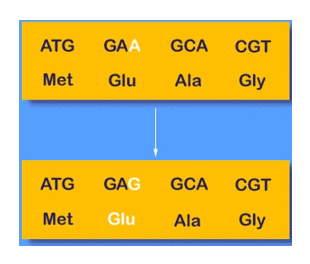
As the change in bases still code for the same amino acid (silent mutation)
Mutations in coding DNA
- A single base has been swapped with another (substitution)
- This changes the codon (3 bases) in the DNA
- So the corresponding amino acid MAY change so polypeptide chain contains an amino acid it shouldn't.
- So change in appearance & function (may- as you can still have changes in amino acid and makes same protein) Why do changes in amino acid sequence alter the resultant protein?
Changes the shape of the protein
-
Its shape is crucial to its function as active site must be complementary to substrate to be functional Change the location of bonds within protein
-
Changes the overall shape of the protein as the different bonds cause molecule to coil differently