Sexual and asexual reproduction (Edexcel GCSE Biology): Revision Notes
📚Revision Notes
Sexual and asexual reproduction
Note
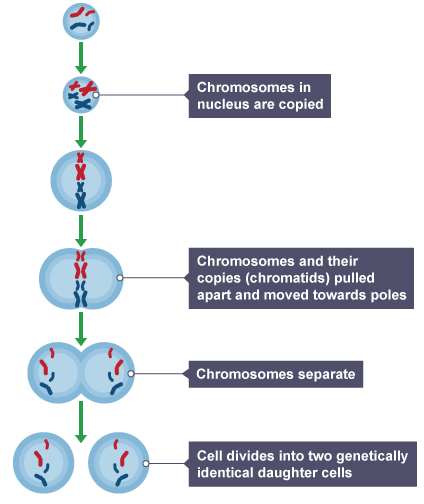
Meiosis is the formation of four non-identical cells from one cell. Mitosis is the formation of two identical cells from one cell.
Sexual reproduction
Sexual reproduction involves the joining of male and female gametes, each containing genetic information from the mother or father.
- Sperm and egg cells in animals
- Pollen and egg cells in flowering plants
- Gametes are formed by meiosis, as they are non identical.
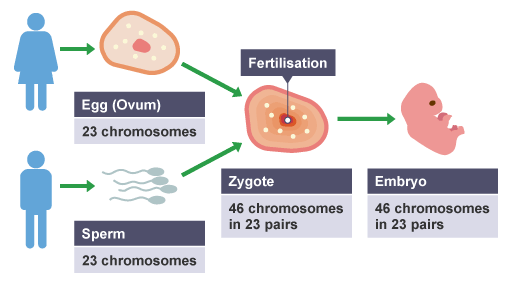
- A normal cell has 46 chromosomes. There are two sets of chromosomes (i.e. 23 pairs). In each pair, one chromosome is from the father and the second set is from the mother.
- Each gamete has 23 chromosomes and they fuse in fertilisation.
- The genetic information from each parent is mixed, producing variation in the offspring.
Asexual reproduction
Asexual reproduction involves one parent with no gametes joining. It happens using the process of mitosis, where two identical cells are formed from one cell.
- There is no mixing of genetic information.
- It leads to clones, which are genetically identical to each other and the parent.
- Examples of organisms that reproduce this way are bacteria, some plants and some animals.