Business Choices (Edexcel A-Level Business): Revision Notes
📚Revision Notes
Business choices
Introduction
Business decision-makers constantly face choices about how to use their limited resources. Whether it's an individual deciding how to spend their weekly budget, a company choosing between investment projects, or a government allocating billions in public spending, every decision involves selecting one option while giving up others. Understanding the true cost of these choices is essential for effective business management.
Note
Every business decision, no matter how small, involves choosing between alternatives. The ability to recognize and evaluate these choices is a fundamental skill for successful business management.
Opportunity cost
What is opportunity cost?
Opportunity cost is the benefit lost from the next best alternative when a choice is made. When resources are scarce (and they always are), choosing to use them in one way means sacrificing the opportunity to use them in another way.

Important
Opportunity cost is NOT simply the value of all foregone alternatives – it is specifically the benefit lost from the next best alternative only. This is a crucial distinction that many students overlook.
Every economic agent faces opportunity cost:
Individuals must allocate limited budgets across competing wants. A university student with $50 remaining after living costs might want to buy books ($20), travel home ($30), dine out with friends ($30), or purchase designer jeans ($50). Since these total $130, choices must be made. If books are chosen, the opportunity cost is whichever alternative was ranked second in preference.
Businesses regularly face similar decisions. A company with $100,000 might choose between an advertising campaign, workforce retraining, reception area redecoration, or new sales vehicles. The opportunity cost is the benefit foregone from whichever option ranked second in importance.
Governments must decide how to allocate billions in public funds between competing priorities such as disability benefits, hospital construction, mental health services, or transport infrastructure.
Calculating opportunity cost
Example
Worked Example: Determining Opportunity Cost
Consider a business ranking its spending preferences as follows:
- Advertising campaign
- Retrain workforce
- Redecorate reception area
- Buy new vehicles for sales staff
If the advertising campaign is selected, the three other projects are foregone. However, the opportunity cost is specifically the benefit lost from the second-best alternative – retraining the workforce. This is the sacrifice made by choosing the preferred option.
Monetary vs non-monetary opportunity cost
Opportunity costs can sometimes be measured in monetary terms. If a business chooses an advertising campaign over workforce retraining, it might calculate the opportunity cost as the value of extra output that trained workers would have generated.
However, many opportunity costs involve non-monetary or intangible factors that are difficult to quantify:
- Worker confidence and happiness following training may boost productivity, but measuring this precisely is challenging
- An entrepreneur reinvesting profits rather than taking a family holiday faces an opportunity cost of overwork, family disappointment, and reduced well-being
- Future costs are particularly hard to predict, making accurate opportunity cost calculation difficult
Note
The difficulty in measuring non-monetary opportunity costs doesn't make them less real or less important. In fact, these intangible costs often have the most significant long-term impact on business success and stakeholder satisfaction.
Real-world example: Arsenal FC
Example
Real-World Case Study: Arsenal FC Stadium Decision
In 2001, Arsenal FC invested approximately $400 million in constructing the Emirates Stadium, increasing capacity from 38,000 to over 60,000. The manager described this as Arsenal's biggest decision since the appointment of Herbert Chapman as chairman.
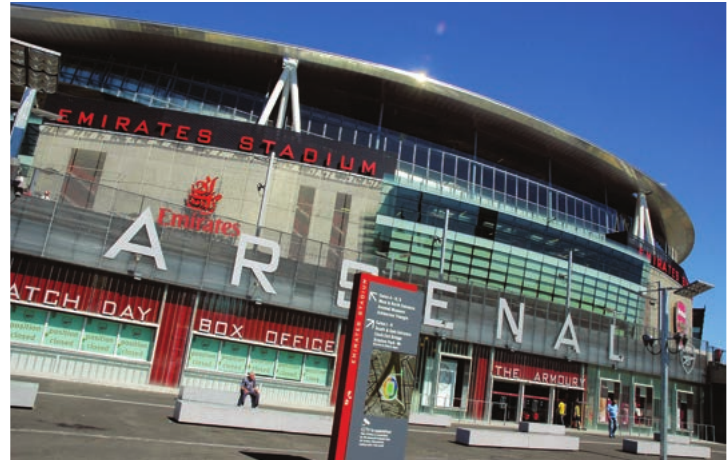
Between the stadium's opening in 2006 and 2014, Arsenal failed to win a single trophy. Many supporters viewed this eight-year trophy drought as a significant opportunity cost of the stadium decision, as the club appeared to have limited resources for signing new players during this period.
This example illustrates the difficulty of measuring opportunity cost precisely. How do you quantify supporters' emotional disappointment? What additional revenue would trophies have generated? These questions highlight why opportunity cost often includes unmeasurable intangible factors alongside calculable monetary losses.
Business choices and trade-offs
Understanding trade-offs
Businesses make countless decisions, and decision-makers frequently face trade-offs – situations where selecting one option requires compromising another. Examples include:
- A company prioritizing attention to detail must often sacrifice production speed
- A business accumulating stock must sacrifice cash liquidity
- Choosing quality typically means accepting higher costs
Note
Trade-offs are unavoidable in business. The key is not to eliminate them but to make conscious, informed decisions about which trade-offs are acceptable given the business's strategic objectives and constraints.
Risk and reward
One fundamental trade-off is the relationship between risk and reward. Generally, higher potential returns require accepting greater risks, but high risk also brings the danger of larger losses.
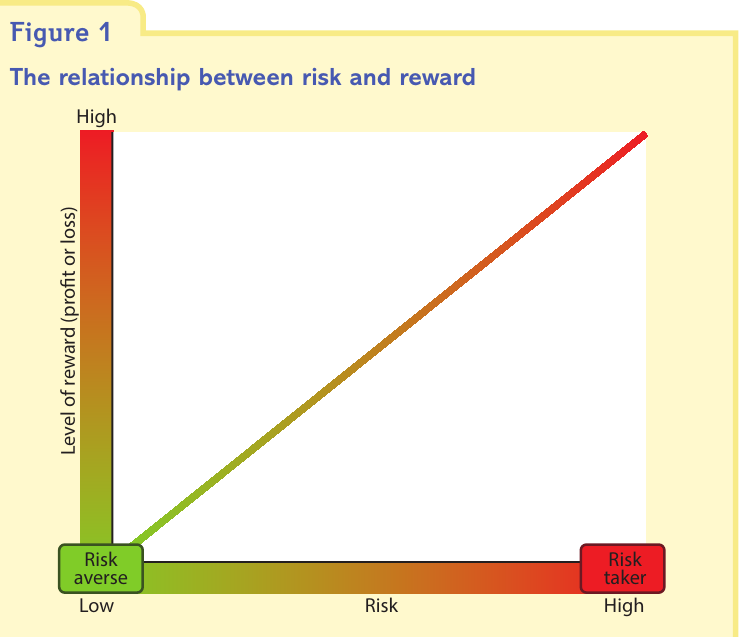
The diagram shows that as risk increases, so does the potential level of reward (profit or loss). Risk-averse individuals and businesses prefer lower-risk, lower-reward options, while risk-takers pursue higher-risk, higher-reward opportunities.
Important
Warning: The Danger of High-Risk Strategies
Before 2008, banks granted mortgages to high-risk borrowers, attracted by potentially high returns. When the property market collapsed, many borrowers defaulted, leading to some banks collapsing entirely. This demonstrates the real danger of pursuing high rewards without adequately managing high risks.
Entrepreneurship trade-offs
A crucial decision for potential entrepreneurs is whether to start a business at all. This involves weighing significant benefits against substantial drawbacks.
Benefits of entrepreneurship:
- Independence – complete control over all business decisions
- Flexibility – ability to choose preferred work-life balance
- Income potential – opportunity to earn more than in employment
- Job satisfaction – sense of achievement from building something from scratch
- Wealth creation – possibility of becoming wealthy or even a millionaire
Trade-offs and challenges:
- Financial security – giving up the regular salary, health insurance, pension contributions, holiday pay, and sick leave that employment provides
- Responsibility – sole traders must be available whenever the business operates, unless they have reliable assistance
- Time demands – risk of lacking free time, with work-life boundaries becoming blurred, especially when working from home
- Skill requirements – need for diverse capabilities in advertising, marketing, interviewing, hiring, management, stock control, and accounting, rather than specializing as an employee
- Unlimited liability – sole traders' personal assets remain unprotected if the business accumulates debts

Note
The entrepreneurship decision is perhaps the ultimate business trade-off. There's no objectively "right" answer – it depends entirely on individual circumstances, risk tolerance, skills, and personal values. What represents an exciting opportunity for one person may be an unacceptable risk for another.
Common business trade-offs
Businesses face numerous operational trade-offs:
| Trade-off | Explanation |
|---|---|
| Liquidity vs profitability | Holding more liquid assets (cash) provides security but reduces funds available for investment in productive assets like machinery. Investing more in productive assets may increase profitability but risks cash-flow problems. |
| Dividends vs reinvestment | Directors of public limited companies must balance shareholder demands for higher dividend payments against the need to reinvest profits for future growth and profitability. |
| Ethics vs costs | Taking a more ethical stance (e.g., environmental protection) typically requires costly investments in cleaner technology or sustainable practices. |
| Profit margins vs turnover | Businesses can often increase sales volume (turnover) by reducing prices, but this compromises profit margins. Conversely, higher prices protect margins but may reduce sales volume. |
Weighing up trade-offs
When facing difficult trade-offs, businesses can use several approaches to find the right balance:
1. Obtain information
List the advantages and disadvantages of each option and determine which carries the greatest weight. Gather data on costs, benefits, risks, and potential outcomes for each alternative.
Note
Good decision-making is information-driven. The more reliable data you can gather about each option, the more confident you can be in your choice. Don't rush into decisions when time allows for proper research and analysis.
2. Balance short-term with long-term
Consider what might be sacrificed in the long run for short-term gains, and vice versa. A decision yielding immediate benefits might create long-term problems, while short-term sacrifices might generate substantial future rewards.
3. Gauge support
Identify which key staff members will support each option and who will oppose it. The views and backing of others can significantly influence implementation success and should factor into the decision.
Real-world example: Boeing Dreamliner
Example
Real-World Case Study: Boeing Dreamliner Outsourcing Decision
In 2013, Boeing faced serious consequences from its decision to outsource the Dreamliner's design and production to other companies. While this approach aimed to save costs, it involved significant risks:
Problems encountered:
- Original 2008 delivery date was delayed until 2011
- Many fuselage components failed to meet Boeing's specifications, causing expensive delays
- The first Dreamliner arriving for assembly was missing thousands of parts
- In January 2013, the entire 50-plane fleet was grounded after problems with lithium-ion batteries
This case demonstrates the risk-reward trade-off. Boeing sought to reduce costs through outsourcing but faced substantial risks that materialized as expensive delays, quality issues, and serious safety concerns. The company may have saved money initially but potentially at too high a cost and risk level.
Exam guidance
Important
Exam Success: Using Opportunity Cost in Your Answers
When answering exam questions about business decisions, remember that opportunity cost applies to virtually any aspect of business operations. For example, when discussing pricing strategies, you could analyze the opportunity costs of a price cut – the business foregoes higher revenue per unit but may gain increased sales volume.
Using opportunity cost in evaluation:
Opportunity cost provides an excellent counterbalance in arguments and demonstrates evaluative thinking. When assessing a business decision, consider:
- What alternative option was sacrificed?
- What benefits were lost by not choosing the alternative?
- Can these costs be measured monetarily, or are they intangible?
- How do short-term and long-term opportunity costs compare?
The concept of opportunity cost helps you show higher-level evaluation skills by considering what businesses must give up when making choices, not just what they gain.
Remember!
Summary
Key Points to Remember:
-
Opportunity cost is the benefit lost from the next best alternative when a choice is made. It applies to individuals, businesses, and governments facing decisions with limited resources.
-
Opportunity costs include both monetary (measurable financial benefits foregone) and non-monetary (intangible factors like happiness, confidence, or reputation) elements.
-
Trade-offs mean that selecting one option requires compromising another. Businesses constantly face trade-offs between competing objectives such as quality vs speed, liquidity vs profitability, or ethics vs costs.
-
The risk-reward relationship shows that higher potential returns generally require accepting greater risks, but high risk also brings danger of larger losses. Businesses must find an appropriate balance based on their risk tolerance.
-
Common business trade-offs include liquidity vs profitability, dividends vs reinvestment, ethics vs costs, and profit margins vs turnover. Decision-makers must weigh these carefully using information gathering, short-term/long-term analysis, and stakeholder consultation.