Design Mix and Social Trends (Edexcel A-Level Business): Revision Notes
📚Revision Notes
Design Mix and Social Trends
Introduction to environmental awareness in design
Growing consumer awareness of environmental issues has fundamentally changed how businesses approach product design. Concerns about climate change, diminishing natural resources, and pollution have prompted both consumers and businesses to reconsider traditional design approaches.
Note
Companies now face pressure from multiple sources—government regulations, media scrutinity, and consumer advocacy groups—to incorporate environmental considerations into their product development. This shift represents a significant change in the design mix, requiring businesses to balance traditional design elements with environmental and social responsibility.
The focus has moved towards creating products that minimise environmental harm through reduced waste, increased potential for re-use, and greater use of recycled materials in production.
Design for waste minimisation
Waste minimisation involves reducing the quantity of resources discarded during production and throughout a product's lifecycle. This approach has become increasingly important as businesses respond to environmental pressures and seek to reduce costs.
Creating durable products
Rather than designing products for short-term use, businesses are exploring ways to extend product lifespans. This involves incorporating components that can be easily replaced or repaired, allowing products to function for many years.
Example
Real-World Application: Smartphone Repairability
Modern smartphone manufacturers have begun designing handsets with components that can be accessed and repaired more easily, moving away from sealed units that must be entirely replaced when faults occur. This represents a significant shift towards durable product design.
Important
The principle behind durability is straightforward: if products last longer, fewer resources are consumed in manufacturing replacements, and less waste enters landfill sites.
Reducing size and weight
Miniaturisation offers multiple environmental benefits. Smaller, lighter products require less raw material during manufacture, reducing resource consumption at the production stage. Additionally, transportation becomes more efficient, as lighter products consume less fuel during distribution and require less packaging material.
This trend is evident across consumer electronics. Laptops have evolved from bulky machines to slim, lightweight devices. Similarly, televisions have transitioned from deep, heavy cathode-ray units to thin, flat screens that use significantly fewer materials and are easier to transport.
Avoiding disposable products
Single-use items represent a significant source of waste. Disposable razors, plastic cutlery, cardboard plates, and paper cups all contribute to the mounting waste problem. Businesses could instead focus on designing durable alternatives that can be used repeatedly.
Note
However, the packaging industry remains a major concern, with considerable amounts of material being discarded after single use. While some progress has been made, there remains substantial scope for improvement in this area.
Challenges in waste minimisation
Despite the clear benefits, many businesses have been slow to embrace waste minimisation fully. The fashion industry exemplifies this challenge—clothing and accessories are frequently discarded not because they cease to function, but because they are perceived as outdated.
Important
Fast fashion business models rely on rapid turnover of collections, encouraging consumers to replace functional items with newer designs. Changing this pattern would require a fundamental shift in consumer behaviour and social attitudes towards consumption, which currently shows little sign of occurring.
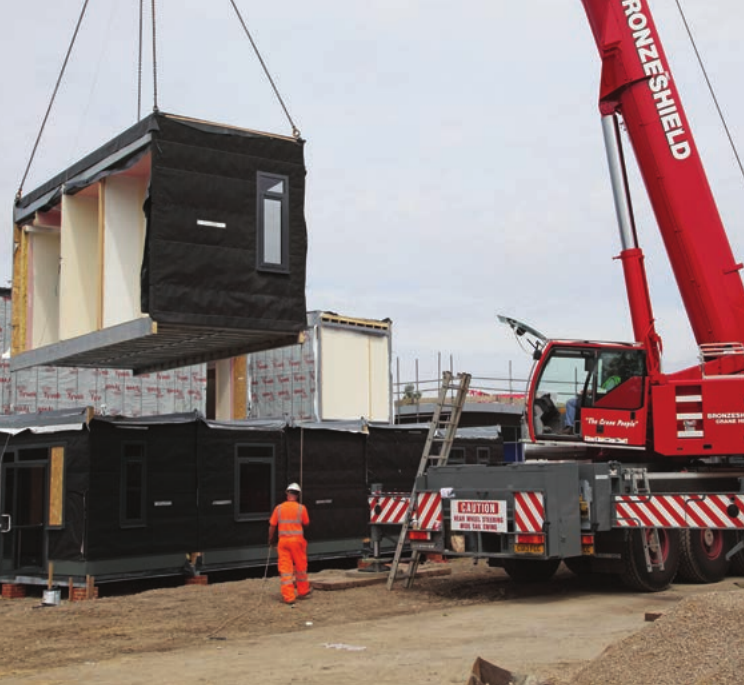
Modern construction methods, such as modular building techniques, demonstrate how design innovation can reduce waste through precise manufacturing and efficient use of materials.
Design for re-use
Re-use extends the life of materials and components by incorporating them into new applications, thereby conserving resources and reducing waste.
Re-usable packaging systems
Historical examples demonstrate the viability of re-usable packaging. Decades ago, beverages were commonly sold in returnable bottles. Consumers received refunds when they returned empty containers, which were then cleaned and refilled.
Example
Working System: Deposit-Return Schemes
Several European countries, including the Netherlands and Germany, continue to operate deposit-return schemes that incentivise consumers to return packaging for re-use.
This system creates a closed loop where packaging serves multiple cycles before reaching the end of its useful life.
Component re-use
Designing products so their parts can be easily dismantled and re-used offers significant resource savings. Mobile phones, for example, contain numerous components that could serve in other devices.
Note
Since the average first ownership period for a mobile phone is approximately 18 months—despite the devices being capable of functioning for much longer—designing for easy component recovery becomes crucial.
Lighting manufacturers have developed bulbs that can be dismantled more easily than traditional designs, enabling component recovery and re-use rather than complete disposal.
Industry-specific applications
Different sectors can apply re-use principles in creative ways. In theatre production, sets and props can be designed with adaptability in mind, allowing them to be modified and re-used across different performances rather than being built for single productions.
Design for recycling
Recycling involves using materials that have previously been discarded as waste, creating a circular economy where resources re-enter production cycles rather than being permanently lost.
Adapting production for recycled materials
Forward-thinking manufacturers are modifying their production processes to accommodate recycled inputs. Carpet manufacturers have developed techniques to incorporate fibres from old carpets into new products.
Example
Industry Application: Glass Manufacturing
Glass manufacturers have long recognised the value of using recycled glass (cullet) in production, as it melts at lower temperatures than raw materials, reducing energy consumption.
These adaptations require investment in new processes but ultimately create more sustainable production systems.
Businesses specialising in recycled materials
Some companies have built their entire business model around using exclusively recycled materials. For example, specialist manufacturers create furniture, accessories, and household items entirely from reclaimed materials such as old sailing equipment, manufacturing offcuts, and surplus fabric.
Note
This approach demonstrates that recycled materials need not be inferior to new resources—they can form the basis of high-quality, distinctive products.
Using waste from other industries
Innovation in recycling extends to cross-industry collaboration. Manufacturers are finding ways to use waste from unrelated sectors in their own products.
Example
Cross-Industry Innovation: Sugar Cane Waste
Sugar cane waste fibre, traditionally discarded after juice extraction, can be combined with recycled plastic and bamboo to create durable furniture components and storage systems.
This approach transforms one industry's waste into another's raw material, creating economic value while reducing environmental impact.
Media content recycling
In the media industry, recycling takes a different form. News organisations can adapt the same core story for multiple platforms—print publications, online articles, television broadcasts, radio reports, and podcasts—maximising the value extracted from journalistic effort while reducing resource waste.
Ethical sourcing
Ethical sourcing means businesses only procure materials, components, and services from suppliers who demonstrate respect for the environment, provide fair treatment and wages to workers, maintain safe working conditions, and conduct business with integrity.
Principles of ethical sourcing
The ethical sourcing approach recognises that design decisions extend beyond the immediate product to encompass the entire supply chain.
Important
A clothing designer practicing ethical sourcing would refuse to work with manufacturers using child labour or operating unsafe factories, regardless of potential cost savings.
This creates pressure throughout supply chains to improve labour practices and environmental standards.
Real-world implementation
Major retailers have implemented ethical sourcing policies with varying degrees of commitment.
Example
Case Application: Sainsbury's Fairtrade Initiative
When Sainsbury's decided to stock only Fairtrade bananas, they created a guaranteed market for growers who receive fair prices for their crops. Fairtrade certification also requires environmentally friendly cultivation techniques, delivering both social and environmental benefits.
The Fairtrade premium—an additional payment beyond the fair price—funds community development projects in growing regions, creating broader social value beyond the immediate transaction.
Limitations and challenges
Despite some businesses adopting ethical stances, price sensitivity remains a significant factor in consumer behaviour. Supermarket value brands continue to attract strong sales, suggesting many consumers prioritise low prices over ethical considerations.
Note
This creates a tension between ethical ideals and commercial reality—businesses must balance ethical commitments with the need to remain price-competitive in markets where many consumers show limited willingness to pay premiums for ethically sourced products.
Benefits of adapting product designs to social trends
While incorporating social trends into design may increase development costs, businesses can realise significant advantages that justify the investment.
Cost reduction through efficiency
Waste minimisation directly reduces production costs by decreasing the quantity of resources consumed. Fewer materials purchased, less energy used in processing, and reduced waste disposal costs all contribute to improved profit margins. These savings can be substantial over time, particularly for high-volume manufacturers.
Increased sales and revenue
Products that reflect current social trends become more attractive to consumers who prioritise environmental and social responsibility. This expanded appeal can drive higher sales volumes, increasing revenue and market share. As consumer awareness of environmental issues grows, products designed with these concerns in mind gain competitive advantage.
Creating a unique selling point
Design features aligned with social trends can serve as a USP (unique selling point), differentiating products in crowded markets.
Example
Market Differentiation: Plant-Based Cleaning Products
Cleaning products made exclusively from plant and mineral ingredients appeal to environmentally conscious consumers while avoiding the chemical ingredients found in conventional alternatives. This distinction becomes a central element of marketing strategy, helping products stand out.
Enhancing corporate reputation
Businesses that demonstrably embrace environmental and social responsibility in their design processes are viewed more favourably as corporate citizens. This positive reputation can be leveraged in marketing strategies emphasising corporate social responsibility, potentially increasing sales while reducing the risk of criticism from environmental campaigners and consumer groups.
Note
Strong corporate social responsibility credentials can also improve employee morale, aid recruitment, and strengthen relationships with investors increasingly concerned about environmental, social, and governance factors.
Case study: Jaguar Land Rover's recycling innovation
Example
Industry Case Study: Jaguar Land Rover's Aluminium Recycling
Jaguar Land Rover exemplifies how major manufacturers can incorporate recycling into production processes. Working with the REAL CAR initiative, they have developed techniques to produce sheet metal alloy from scrap aluminium, enabling them to use recycled material in vehicle manufacturing.
In-House Processing Benefits:
- The company established an in-house recycling system at their production facility
- Reduced transport emissions by processing materials domestically rather than importing from overseas suppliers
- This approach delivers both environmental benefits and potential cost savings
Commitment to Recycled Materials:
- Jaguar Land Rover's target of using up to 75% recycled aluminium where possible in vehicle manufacturing represents a significant commitment to reducing waste and resource depletion
- Aluminium recycling is particularly valuable because recycled aluminium requires only 5% of the energy needed to produce new aluminium from ore, delivering substantial environmental and economic benefits
Remember!
Summary
Key Points to Remember:
Design Approaches:
- Waste minimisation involves designing durable, smaller, and repairable products while avoiding single-use items
- Design for re-use enables packaging and components to serve multiple purposes, extending resource utility
- Recycling design incorporates previously discarded materials into new production, creating circular resource flows
- Ethical sourcing ensures suppliers respect environmental standards, treat workers fairly, and trade with integrity
Business Benefits:
- Adapting designs to social trends reduces costs, increases sales, creates USPs, and enhances corporate reputation
- Consumer behaviour and price sensitivity can limit the adoption of environmentally-focused designs, particularly in fashion and value markets
Key Terms to Remember:
- Design mix – the range of features important when designing a product
- Waste minimisation – reducing the quantity of resources discarded in production
- Resource depletion – the using up of natural resources
- Recycling – making use of materials that have been discarded as waste
- Ethical sourcing – using suppliers who respect the environment, treat workers fairly, and trade with integrity
- Consumer durables – goods that can be used repeatedly over time, such as cars and appliances