Income Elasticity of Demand (Edexcel A-Level Business): Revision Notes
📚Revision Notes
Income Elasticity of Demand
What is income elasticity of demand?
Income elasticity of demand measures how responsive demand for a product is when consumer incomes change. It is one of the key factors that affects product demand in a market.
When consumer incomes change, demand for different products responds in different ways. Some products experience large changes in demand, while others see relatively small changes.

Note
Consider this example: if incomes rise by 10%, demand for product A increases by 25%. The change in demand is proportionately larger than the change in income. This product has income elastic demand.
In contrast, if demand for product B only rises by 5% when incomes increase by 10%, this product has income inelastic demand. The percentage change in demand is proportionately smaller than the percentage change in income.
Products with income elastic demand typically include:
- Cars
- Fashion accessories
- Entertainment services
- Holidays
- Luxury goods
Products with income inelastic demand typically include:
- Essential goods like milk
- Food in general
- Heating fuel
- Basic necessities
Calculating income elasticity of demand
The formula for calculating income elasticity of demand is:
Example
Worked Example: Calculating Income Elasticity
For product A (where income rises 10% and demand rises 25%):
For product B (where income rises 10% and demand rises 5%):
Interpreting numerical values
Elastic vs inelastic demand
The calculated values tell us whether demand is elastic or inelastic:
Important
If the value is greater than 1, demand is income elastic. The change in demand is proportionately greater than the change in income. Product A (2.5) is income elastic.
If the value is less than 1, demand is income inelastic. The change in demand is proportionately smaller than the change in income. Product B (0.5) is income inelastic.
Normal goods vs inferior goods
The sign of the elasticity value reveals whether a product is a normal or inferior good:
-
Normal goods have a positive (+) value. When incomes increase, demand increases. Products A and B above are both normal goods.
-
Inferior goods have a negative (−) value. When incomes increase, demand decreases. Examples include budget own-brand products or lower-quality alternatives that consumers abandon when they can afford better options.

Note
The table above shows how different products respond to a 10% income increase. Product W and Y are normal goods with positive elasticity values. Product X and Z are inferior goods with negative values, meaning demand falls when incomes rise.
Factors influencing income elasticity of demand
Necessities vs luxuries
The main factor determining income elasticity is whether products are necessities or luxuries:
Necessities are basic goods that consumers must purchase regardless of income level. Examples include:
- Food staples
- Electricity and water
- Basic clothing
Demand for necessities is income inelastic because consumers buy similar quantities regardless of income changes. Research has shown that even addictive products like cigarettes can have very low income elasticity (studies have found values as low as 0.06), suggesting they become necessities for addicted consumers.
Luxuries are goods consumers buy when they can afford them. Spending on these is discretionary, meaning it is non-essential. Examples include:
- Air travel
- Satellite television
- Fashion accessories
- Leisure and tourism services
- Imported goods
Demand for luxuries is income elastic because consumers significantly increase or reduce spending on these items when their income changes.
Note
Research shows that developing nations significantly increase their demand for imported goods as their incomes rise, demonstrating the income elastic nature of luxury and imported products.
Price relative to income
The price of a product compared to typical incomes also affects elasticity:
-
Relatively cheap products (like pencils or basic stationery) tend to have income inelastic demand. Changes in income have minimal impact on purchasing decisions for low-cost items.
-
Expensive products (like houses or cars) tend to have income elastic demand. Significant income changes are needed before consumers can afford these purchases, making demand highly responsive to income fluctuations.
Significance of income elasticity to businesses
Understanding income elasticity helps businesses predict how economic changes will affect their sales and plan accordingly.
Businesses selling goods with high income elasticity
Products with high income elasticity experience cyclical demand linked to the business cycle:
-
During economic growth: Demand for income elastic goods (air travel, restaurants, luxury items) rises strongly. Businesses expand capacity and increase production.
-
During recession: Demand falls sharply as incomes decline. Businesses face difficulties and may need to lay off workers, postpone investment projects, or cancel expansion plans.
Example
Example: Impact of the 2008 Recession on Car Manufacturing
During the 2008 global recession, car manufacturers drastically cut production due to falling demand. Honda halted production at their Swindon factory for four months (February to March 2009) as consumers reduced spending on high-value purchases.
This demonstrates how businesses selling income elastic products must be prepared for significant demand fluctuations during economic downturns.
Important
Forecasting demand for highly income elastic products is challenging because their sales fluctuate significantly with economic conditions. Businesses must remain flexible and responsive to economic indicators.
Businesses selling goods with low income elasticity
Products with low income elasticity provide more stable, predictable demand:
-
Farmers selling food products experience relatively stable demand across different economic phases, making production planning and investment decisions easier.
-
However, in economies with steady long-term growth, demand for inferior goods and basic necessities tends to decline over time as consumers can afford better alternatives.
-
Businesses in these sectors may need to diversify into products with higher income elasticity for long-term sustainability.
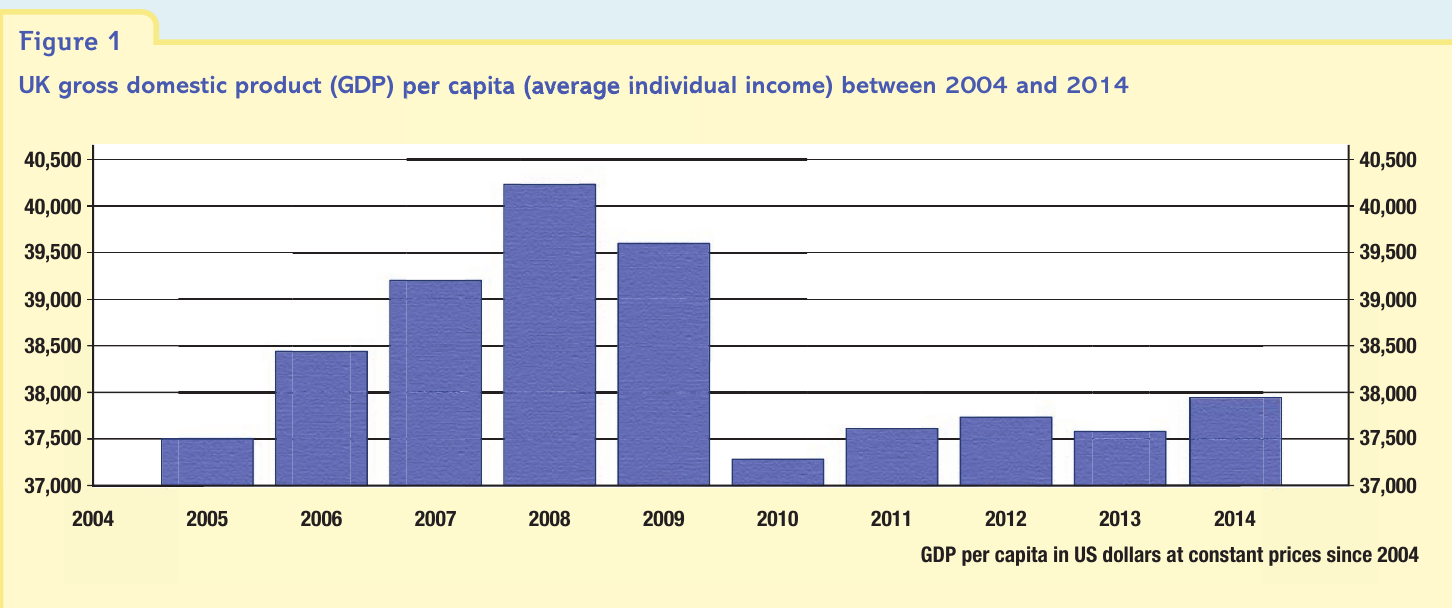
Note
The chart above shows UK GDP per capita between 2004 and 2014, illustrating how incomes fluctuated during and after the 2008 financial crisis. Such income changes directly impact demand for income elastic products, highlighting the importance of understanding these relationships for business planning.
Production planning
When businesses know the income elasticity of their products, they can respond strategically to predicted income changes:
For income elastic products:
- If incomes are expected to rise, businesses plan to increase capacity and production
- If recession is expected, businesses prepare to reduce output and cut costs
- This proactive planning helps avoid overproduction or understocking
For inferior goods:
- Producers may increase capacity during expected recessions
- When incomes fall, demand for budget alternatives and "no-frills" products increases
- Low-cost supermarkets often perform better during economic downturns
Product switching
Manufacturers with flexible resources can switch production between different products based on income forecasts:
Example
Example: Flexible Production Strategy
A manufacturer of plastic moulded products might produce both household goods and toys. If incomes are predicted to rise, they may shift production toward plastic toys if these have higher income elasticity, anticipating increased demand.
This flexibility allows businesses to maximize revenue by producing goods that will experience growing demand based on economic conditions.
Remember!
Summary
Key Points to Remember:
- Income elasticity of demand measures how responsive demand is to changes in consumer income
- Formula:
- Values greater than 1 = income elastic (demand changes proportionately more than income)
- Values less than 1 = income inelastic (demand changes proportionately less than income)
- Positive values indicate normal goods (demand rises with income)
- Negative values indicate inferior goods (demand falls as income rises)
- Necessities typically have inelastic demand; luxuries have elastic demand
- Businesses use income elasticity for production planning, forecasting, and strategic decision-making during different phases of the business cycle