Energy stores & Transfers (Edexcel GCSE Physics): Revision Notes
📚Revision Notes
Energy Stores & Transfers
Energy Stores
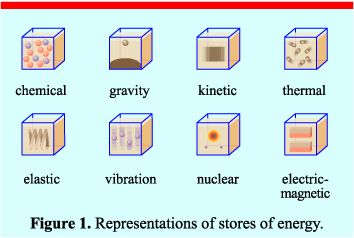
Energy is stored in different types of energy stores. The main types include:
- Nuclear Energy: Stored inside the nuclei of atoms. This energy is released during nuclear reactions, like in the sun or in nuclear power plants.
- Thermal Energy: Stored in an object due to its heat. The hotter the object, the more thermal energy it has.
- Electrostatic Energy: Stored by two charges that are attracting or repelling each other. Similar to magnetic energy but involves charged particles instead of magnets.
- Chemical Energy: Energy stored in the chemical bonds between atoms and molecules. Found in food, fuels, and batteries.
- Magnetic Energy: Stored by two magnets that are either attracting or repelling each other. If the magnets are closer together, the energy in the store is higher.
- Elastic Potential Energy: Stored in an object that has been stretched or compressed. For example, a stretched spring or a compressed rubber band has stored elastic potential energy.
- Kinetic Energy: Stored by an object that is moving. The faster an object moves, the more kinetic energy it has.
- Gravitational Potential Energy: Energy stored in an object when it is raised above the ground.
Note
When a system (an object or group of objects) changes, the way energy is stored also changes.
Energy Transfer Between Stores
Energy can be transferred between these stores when a system changes.
Note
For example:
Energy Transfers
Note
Energy can be transferred usefully, stored, or dissipated, but it cannot be created or destroyed. In any system change, some energy is always dissipated, meaning it is stored in less useful ways. This energy is often called "wasted energy".
Reducing Energy Waste
- Lubrication:
- Example: Oil in a motor reduces friction, meaning less energy is lost as heat.
- Thermal Insulation:
- Example: Double glazing reduces the amount of thermal energy lost from a building.
Thermal Conductivity
- Higher thermal conductivity in a material allows heat to travel through it more easily, increasing the rate of energy transfer by conduction.
- Thermal Conductivity in Buildings:
- The rate of cooling is slower if the walls are thick and have low thermal conductivity.
- If walls are made of thin metal sheets, heat would be lost very quickly.
Efficiency
Note
Efficiency is the ratio of useful energy output to the total energy input, usually expressed as a percentage:
Efficiency=Total energy inputUseful energy output=Total power inputUseful power output
- Increasing Efficiency:
- Reduce waste output: Methods like lubrication and thermal insulation help.
- Recycle waste output: For example, thermal waste can be captured and reused as input energy.
Increasing Efficiency of Energy Transfer
- The lower the thermal conductivity of a material, the less energy is lost as heat.
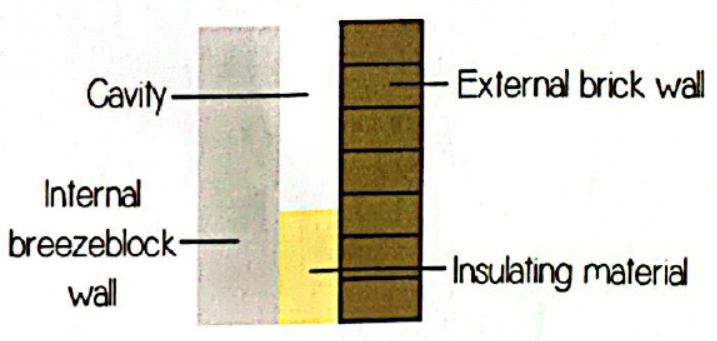
- Walls: Insulating material in the wall cavity helps reduce thermal energy loss.
- Windows: Double-glazed windows minimise heat loss.
- Roof: Loft insulation helps retain heat inside the house.
Diagram
Note
Below is a diagram showing how insulation and thermal conductivity affect energy efficiency in a house: