Managing Stress (Grade 12 NSC Matric Life Orientation): Revision Notes
📚Revision Notes
Managing Stress
Understanding your choice in stress management
Managing stress is entirely within your control. You can choose to let stress overwhelm and harm your life, or you can take charge of your stress and use it to your advantage. The key is learning to use some stress as motivation and energy, whilst dealing with the rest through effective methods that work for you. It's important to tackle your stresses one at a time to avoid feeling overwhelmed by trying to handle too many things at once.
Note
Remember that stress management is a skill that improves with practice. Start with small steps and gradually build your stress management toolkit.
Coping mechanisms and management techniques
There are two main approaches to handling stress that you need to understand:
Coping mechanisms are the ways you act, think, or behave to help you deal with stress. These involve changing how you think about your problems and seeing them as challenges and opportunities for learning. However, not all coping mechanisms are helpful - for example, drinking alcohol or taking drugs are harmful coping mechanisms to avoid.
Management techniques are ways you can control the stress in your life and prevent stress from occurring. These include methods such as managing your time effectively and maintaining healthy eating habits.
Important
Critical Distinction: Coping mechanisms help you deal with existing stress, while management techniques help prevent stress from building up in the first place. You need both approaches for effective stress management.
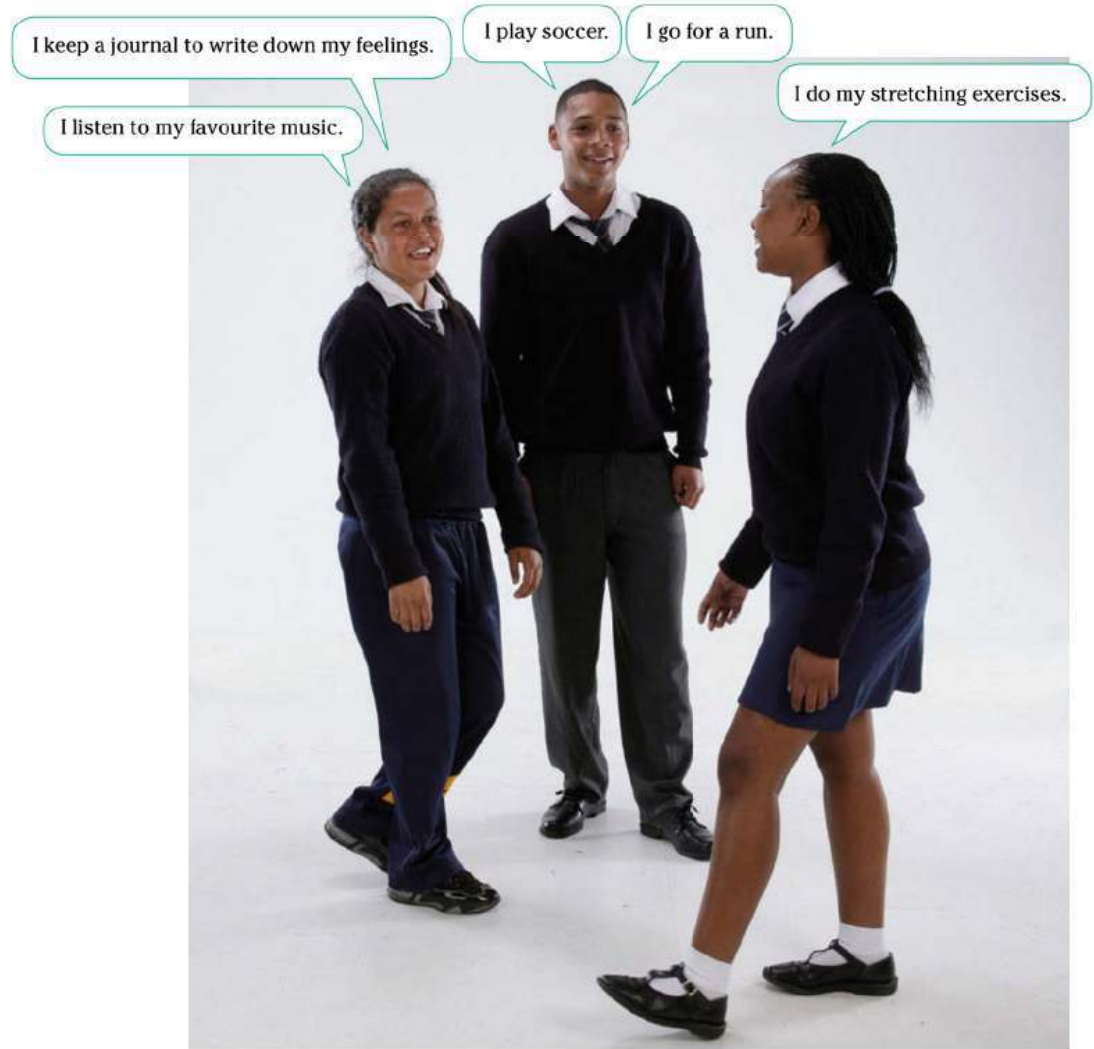
Developing your personal stress management strategy
Different stress management methods work for different people, and the best method can also depend on the situation. Here are proven techniques you can add to your skills toolkit and apply as needed:
Method 1: Identify stressors and assess stress levels
The first step in managing stress effectively is understanding what causes your stress and how stressed you actually are. You need to:
- Identify what your specific stressors are
- Assess your current stress levels to determine if you have a problem
- Look at ways of dealing with each individual stressor
This method involves applying systematic approaches to understand your stress patterns before taking action.
Method 2: Follow a balanced lifestyle
A balanced lifestyle means making time for all important areas of your life including school work, friends and family, physical exercise, hobbies, adequate sleep, and balanced meals that provide proper nutrition.
As a Grade 12 student, you must prioritise your school work, but it's crucial to also give yourself enough time to stay healthy, happy, and active. This balance prevents stress from building up due to neglecting important aspects of your wellbeing.
Note
Think of balance as a three-legged stool: academic work, physical health, and social connections. All three legs need to be strong for the stool to remain stable.
Method 3: Make time for physical exercise, recreation and relaxation
Physical activity is one of the most effective ways to reduce stress. In Grade 12, when your academic workload is high and you spend long periods studying, stress can accumulate in your body without regular exercise.
Choose recreational and sports activities that allow you to exercise, relax, reduce pressure, and have fun. Examples include:
- Dibeke, Kgati, Kho-kho
- Self-defence, yoga, jogging, swimming
- Walking, dancing, gardening, skipping
- Adapted team games
Regular physical exercise helps maintain your physical fitness and should follow a structured plan to improve your flexibility, endurance, and cardiovascular strength.
An excellent example of relaxation exercise is yoga, which has been practised for over 5,000 years. Yoga helps increase flexibility, endurance, and focus whilst providing a complete body workout that strengthens and tones muscles. Even 10-15 minutes of daily yoga practice will help you learn to relax effectively.
Method 4: Balanced nutrition
Following a balanced diet and eating healthy food at regular intervals is essential for stress management. Your nutrition should include:
- Fresh fruit and vegetables daily
- Adequate water intake (remember to drink enough water while studying)
- Healthy snacks like peanuts, apples, cheese wedges, low-salt biscuits, small amounts of dark chocolate, peanut butter or honey sandwiches, milk, and rooibos tea
Important
Foods to Avoid: Chips, sweets, fizzy cooldrinks, cakes, and caffeinated drinks like tea and coffee can actually increase your stress levels. These foods cause blood sugar spikes and crashes that make it harder to manage stress effectively.
Method 5: Deal with your emotions
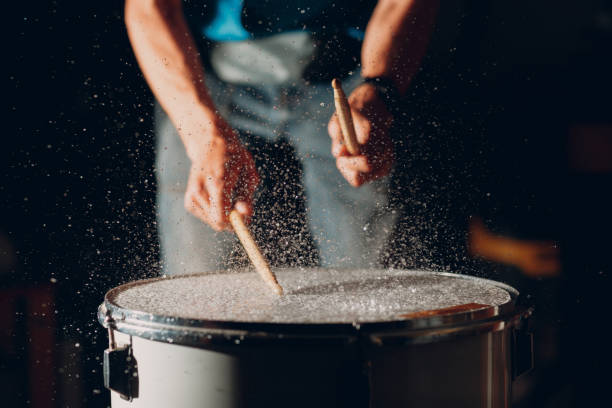
Finding healthy outlets for your feelings is crucial for stress management. You can:
- Beat a drum, shout loudly (when appropriate), kick a ball, or write in a journal
Example
Silent Emotional Release Technique
When feeling very emotional, you can vent your feelings by shouting without sound:
- Fill your lungs with air
- Open your mouth as wide as possible
- Make your hands into fists and shake them
- Stamp your feet while "screaming" silently
- Continue for about a minute
This technique helps release negative feelings and you'll feel much better afterwards.
Method 6: Visualise and turn hurtful emotions into healing emotions
Visualisation is extremely useful for relaxation and transforming hurtful emotions into healing ones. This technique involves seeing pictures in your head or imagining specific scenarios.
A short visualisation exercise can feel like taking a break because it removes you from your immediate stressful environment.
Example
Guided Visualisation Exercise
Follow these steps for a peaceful mental journey:
- Close your eyes and listen to the furthest sound you can hear
- Allow your hearing to expand far from where you are
- Imagine you're moving away and following the sound you hear
- Picture yourself floating or moving towards a far, special place
- Arrive at this peaceful place where soft music plays, birds sing sweetly, green trees rustle in the breeze, and a river trickles past
- Breathe in and out slowly as you experience happiness in this peaceful, quiet, special place
- Know that you are safe, with no pressures or worries - you are protected, loved, and cared for
- Recognise that you can cope
- Breathe slowly and imagine yourself saying goodbye to this special place
- Slowly wave goodbye as you float back to where you started
- Slowly open your eyes, stretch, and yawn
- You are now ready to deal with your pressures one by one
Method 7: Laughter
Laughter is one of the most effective ways to relieve stress. Start a giggle in class and pass it on - laughter is contagious and soon everyone will be laughing! Sometimes laughing can turn into crying, which is also beneficial as crying helps reduce stress.

Method 8: Time management
Effective time management involves identifying your time wasters and converting them into time savers. Common time wasters include:
- Too much television
- Excessive mobile phone time
- Too many computer games
- More than 10 hours of sleep nightly
- Talking about examinations without actually studying
Important
Avoid Procrastination: Try to complete what needs to be done immediately rather than postponing tasks. Procrastination is one of the biggest sources of stress for students.
To improve time management:
- Avoid postponing tasks - try to complete what needs to be done immediately
- Make a study plan and stick to it
- Start revising early
- Use half of each school holiday to work through old exam papers and study
Method 9: Good relationships
Maintain positive relationships with your friends by supporting them and receiving support from them. You need each other during stressful times. Work together in study groups, share summaries and questions, and enjoy group activities like relaxing walks, jogging, dancing, movies, or sports games.
However, keep your focus on school work. Serious romantic relationships can be distracting, so try to keep relationships friendly and deal with any conflicts that might divert your attention from studies.
Method 10: Embrace the challenges of Grade 12
Prepare yourself for Grade 12 by adopting a positive attitude towards the year. Believe in yourself and be kind to yourself. Motivate yourself by affirming that you can achieve much this year.
Remember your strengths and good qualities. Tell yourself: "No matter what, I am a worthy person." Look at each success you achieve during the year and let these victories give you courage to continue aiming for your goals.
Method 11: Apply exam stress reducers
Before writing tests or exams, or when feeling too much pressure during an exam, calm your mind using quick exercises. These take only one to two minutes and won't waste your valuable time.
Example
Calming Exercise
Use this technique in the exam room:
- Sit upright in your chair with hands lying loosely on your lap
- Close your eyes
- Listen to the furthest, most distant sounds you can hear around the examination room
- Bring your listening back to hear the closest sounds around you
- Listen to breathing in the class, rustling papers, and your own breathing and heartbeat
- Send your listening out again to the furthest sounds, then bring it back to the classroom
- Open your eyes and return to your question paper
Example
Exam Breathing Exercise
When stressed during an exam, you may hold your breath or not breathe deeply enough. Deep breathing helps you get necessary oxygen to your brain so you can think better and remain calm.
- Breathe in deeply from your stomach
- Hold your breath for 10 seconds, counting slowly
- Let go of your breath very slowly, counting to 10 until the last bit of air is out
- Repeat a few times

Summary
Key Points to Remember:
-
You have control over stress - You can choose whether to let stress harm your life or use it to your advantage
-
Use both coping mechanisms and management techniques - Coping mechanisms help you deal with existing stress, while management techniques help prevent stress from occurring
-
Balance is key - Maintain a balanced lifestyle that includes school work, physical activity, proper nutrition, adequate sleep, and healthy relationships
-
Physical activity is essential - Regular exercise, recreation, and relaxation are some of the most effective ways to reduce stress
-
Practice calming techniques - Visualisation, deep breathing, and quick calming exercises can help you manage stress in the moment, especially during exams