Products — Goods and Services (HSC SSCE Business Studies): Revision Notes
📚Revision Notes
Products — Goods and Services
What are products?
Products are the goods or services that businesses offer to satisfy customer needs and wants. Understanding products is essential for both marketing and operations management.
Goods vs services
Goods are tangible products — physical items you can touch, see and own. Examples include books, mobile phones, food and clothing. These are real objects that you can hold in your hands.
Services are intangible products — experiences or actions provided for your use or enjoyment, but not for ownership. Examples include financial advice, streaming services, sporting events and hairdressing. You consume these experiences but don't own a physical object.
Note
While we often separate goods and services, most products contain both tangible and intangible elements. Consider dining at an expensive restaurant: you receive tangible elements (food and drinks) alongside intangible elements (efficient service, pleasant atmosphere, live music). This combination is called the total product concept.
The total product concept
The total product concept recognises that products consist of both tangible and intangible benefits (called attributes). When customers purchase products, they buy a 'collection of satisfactions' that might include:
- The physical product itself
- The packaging and presentation
- The brand name and reputation
- The warranty and guarantees
- After-sales service
- Customer support
Important
Intangible benefits drive competition. For mass-produced items, businesses often compete based on intangible differences rather than tangible features. Consider cars: fundamentally, they all provide transportation from one place to another. However, each model differentiates itself through intangible attributes such as:
- Brand image and reputation
- Perceived prestige and status
- Style and design aesthetics
- Safety record and ratings
- Environmental credentials
Example
Worked Example: The Luxury Car Market
Luxury car buyers don't just purchase transportation — they buy feelings of prestige, importance and social status. Mercedes-Benz leads Australia's luxury vehicle market by successfully marketing these intangible benefits alongside quality engineering.
This demonstrates how intangible attributes create competitive advantage even when the core product function (transportation) is identical across all vehicles.
Key point: No two products are exactly the same when viewed through the total product concept, even if their core function appears identical.
Branding
What is a brand?
A brand is a name, term, symbol, design or any combination of these elements that identifies a specific product and distinguishes it from competitors. The brand name is the part of the brand that can be spoken.
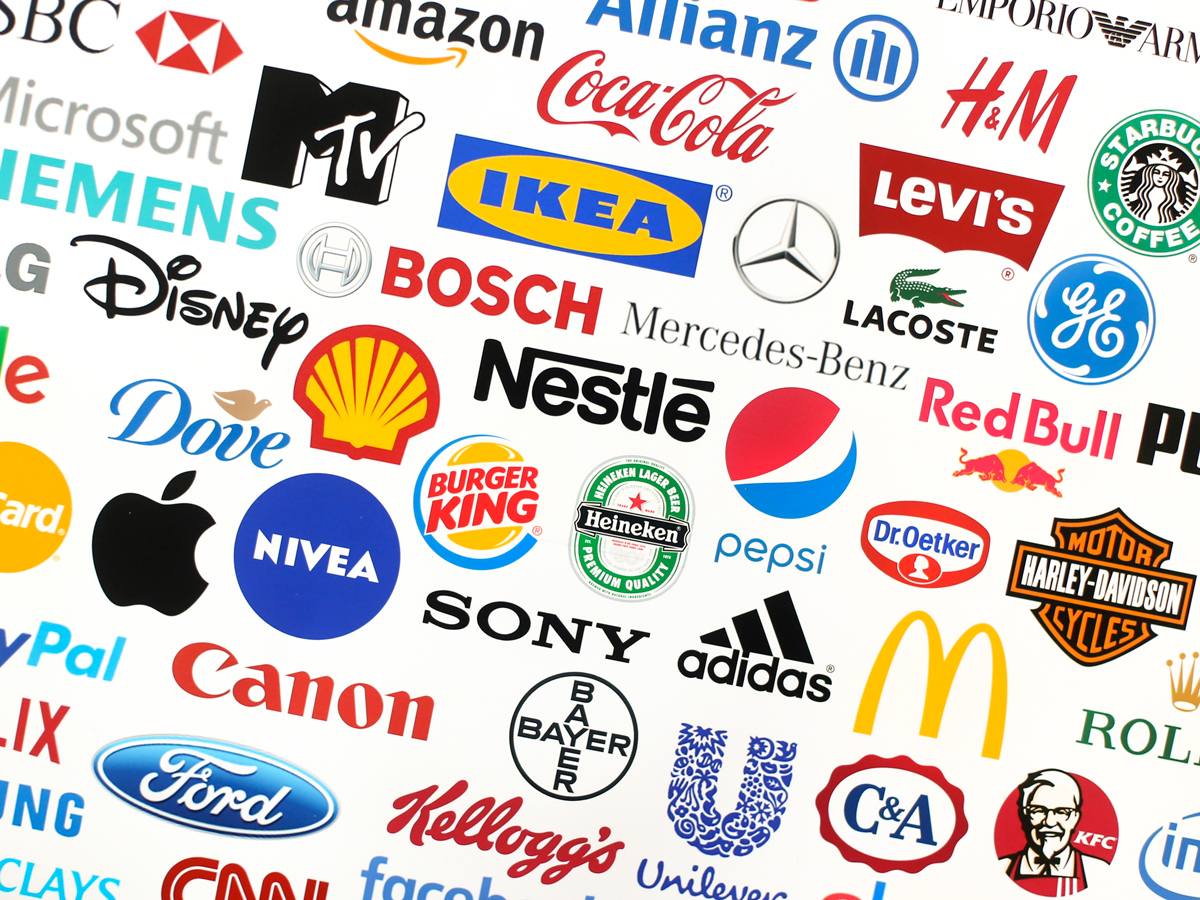
Brand names can include:
- Letters (e.g., BMW motor vehicles)
- Numbers (e.g., 4711 perfume)
- Combinations of numbers and letters (e.g., 3M tapes)
- Pronounceable symbols (e.g., the ampersand in Johnson & Johnson)
Note
Brand recognition is powerful. Well-known brands like Apple, Toyota, Coca-Cola, Google and McDonald's have invested heavily to ensure customers instantly recognise their brand names and associated products. According to Forbes' 2019 rankings, the world's five most valuable brands were Apple, Google, Microsoft, Amazon and Facebook.
Benefits of branding
Branding provides significant advantages for both buyers and sellers.
Benefits for consumers:
- Product identification: Branding helps you identify specific products you like. Without brands, choosing products would be random as you'd have no guarantee of purchasing your preferred option.
- Quality evaluation: Brands help you assess product quality, especially when you lack expertise to judge technical features. A trusted brand signals consistent quality standards.
- Risk reduction: Respected and trusted brands provide reassurance that you're making the right choice, reducing the perceived risk of purchase.
- Psychological rewards: Purchasing brands that symbolise status and prestige provides emotional satisfaction beyond the product's functional benefits.
Benefits for businesses:
- Repeat sales: Consumers recognise and return to familiar brands, generating loyal customer bases.
- New product introduction: Launching new products becomes easier when consumers already trust the business's existing brands. Brand recognition transfers to new offerings.
- Promotional efficiency: Promoting one product indirectly promotes all similarly branded products, maximising marketing investment.
- Customer loyalty and premium pricing: Strong brands encourage loyalty, allowing businesses to charge higher prices than unbranded or lesser-known competitors.
Protecting brands
Businesses invest substantial resources creating and protecting brand names. A trademark signifies that the brand name or symbol is registered and the business has exclusive usage rights. The symbols ©, TM or ® indicate copyright protection or registered trademark status.
Note
McDonald's, for example, aggressively protects its brand name and has taken legal action against businesses using 'Mc' names, fearing consumers might believe these businesses are owned or endorsed by McDonald's.
Brand symbols and logos
A brand symbol or logo is a graphic representation that identifies a business or product. Logos fall into five basic categories:
1. Brandmark logos: Solitary graphics without text — pictorial marks that rely purely on imagery. Apple's apple symbol is a prime example. These logos depend on instant visual recognition rather than brand name.
2. Wordmark logos: The logo consists entirely of the business name. These logos rely heavily on distinctive typography to stand out. Coca-Cola's script lettering is instantly recognisable worldwide.
3. Lettermark logos: Typography-based logos using a few letters, typically company initials, to represent the brand. Hewlett Packard uses 'hp' as its lettermark logo.
4. Combination mark logos: These combine brandmarks and wordmarks, featuring both imagery and text. Pepsi's logo includes both the circular graphic and brand name.
5. Emblems: Similar to combination marks, emblems combine images with text but encapsulate these elements within a frame or border. Starbucks uses an emblem featuring their mermaid image within a circular border.
Note
Well-designed logos become so iconic that consumers recognise products even when the logo is deliberately blurred. McDonald's 'Say No More' campaign demonstrates this — their red and yellow colour scheme and products are so recognisable that blurred billboard images still communicate the brand effectively.
Branding strategies
Businesses adopt different branding strategies based on ownership and market positioning.
Manufacturer's brands (national brands) are owned by manufacturers. Examples include Sunbeam appliances, Kraft foods and Billabong clothing. These brands have high consumer appeal because they are:
- Recognised nationally
- Widely available across retailers
- Associated with reliable, consistent quality
Private or house brands are owned by retailers or wholesalers. These products are often cheaper because retailers buy at lower costs and eliminate middlemen. Examples include:
- Myer's own labels: Reserve, Basque, Urbane, Blaq, Soho, Vue and Miss Shop
- Supermarket brands discussed below
Generic brands are products with no brand name at all, carrying only the product name in plain packaging. These have been available in Australian supermarkets since the mid-1970s. Examples include:
- Black and Gold (IGA)
- Essentials and Macro (Woolworths)
- Coles Finest (Coles)
- SimplyNature (Aldi)
Note
In 2014, Aldi expanded its private brand offering by launching SimplyNature, featuring organic and natural products to compete with Coles and Woolworths' organic ranges.
Brand evolution: Some businesses modify their brand names to reflect changing strategies. In 2018, Dunkin' Donuts dropped 'Donuts' from its brand name to emphasise its identity as primarily a coffee chain rather than a bakery, highlighting its future focus on coffee and beverages.
Important
Counterfeiting concerns: Brand counterfeiting seriously damages businesses because inferior counterfeit products weaken consumer trust and brand loyalty. Businesses must actively protect their brands against counterfeiters.
Packaging
What is packaging?
Packaging involves developing a container and graphic design for a product — it's much more than simply putting products in boxes or wrappers. Well-designed packaging can be as important as the product itself in driving sales.
Functions of packaging
Packaging serves multiple practical and promotional functions:
Practical functions:
- Preserves the product: Maintains freshness and quality
- Protects from damage or tampering: Ensures product safety and security
- Divides into convenient units: Creates appropriate portion sizes
- Assists with display: Enables attractive retail presentation
- Facilitates transportation and storage: Makes logistics more efficient
Promotional functions:
- Attracts consumer attention: Eye-catching designs draw customers to products
- Creates positive impressions: Tasteful packaging suggests quality and luxury
- Encourages first-time purchases: Appealing packaging motivates trial purchases
Note
For example, tasteful packaging can create images of luxury, sensuality and exclusiveness, effectively promoting premium products.
Packaging as communication
Packaging communicates before customers read labels. Colours create associations and conclusions about products:
- Red soft-drink cans signal cola
- Green soft-drink cans suggest lemon-lime flavours
- Yellow dishwashing liquid is perceived as 'lemony'
- Green household cleaners are associated with environmentally-friendly products
- Black or gold packaging conveys luxury and sophistication
Unique shapes become brand identifiers. Some packaging shapes become so distinctive they form part of the product identity. Consumers readily associate these unique shapes with specific products.
Example
Case Study: Coca-Cola's Contour Bottle
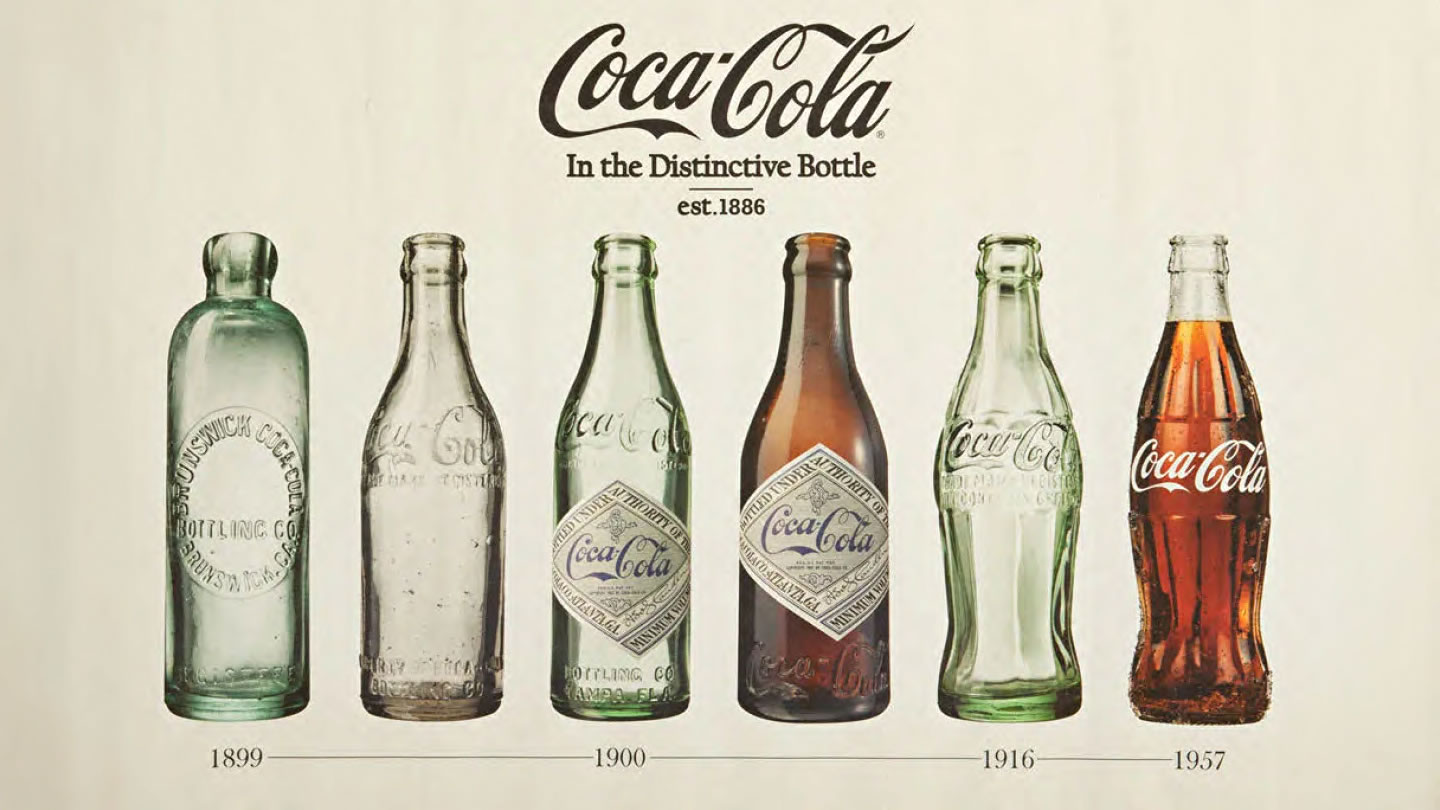
The Root Glass Company of Indiana created Coca-Cola's famous contoured bottle in 1915. The design brief specified that the bottle should be recognisable even in the dark, helping Coca-Cola stand out from competitors.
The 'pinched in at the waist' Coke bottle became one of the most easily recognised shapes in the soft-drink market. In 1977, Coca-Cola gained trademark protection from the United States Patent Office, arguing that the 'distinctively shaped contour' had become so well known it had achieved trademark status.
Coca-Cola owns several Australian trademarks for its Contour Bottle and aggressively protects its trademark shape due to strong consumer associations.
Note
Modern packaging innovation: Cadbury has trialled 100% sustainably sourced recyclable paper wrapping in New Zealand, demonstrating commitment to phasing out plastic packaging within five years. Unlike many paper-based food wraps that require thin plastic films, Cadbury's packaging paper acts as the barrier to protect food and ensure freshness.
The impact of packaging on consumer behaviour
Research shows packaging significantly influences purchasing decisions, sometimes more powerfully than rational factors like price or ingredients.
Visual properties act as signals that influence product valuation. Companies use bright colours and well-known characters from movies or celebrities to distinguish their products and attract consumers.
Studies demonstrate packaging effects:
- Food-directed commercials influence calorie consumption in children, with effects more pronounced in overweight children
- The same cereal tastes better to children when presented in appealing packages with cartoon characters
- Children make more effort to receive products in attractive packaging
Important
This phenomenon is called the marketing placebo effect — expectations about brands or attractive designs lead to actual differences in taste and consumption patterns by activating the brain's reward circuitry and increasing subjective taste pleasure.
Packaging essentially 'hijacks' the same brain processes involved in drug and alcohol addiction, making it a powerful marketing tool. However, understanding these effects can also help consumers make more informed choices.
Labelling
What is labelling?
Labelling is the presentation of information on a product or its package. A label is the part of the package containing this information.
Functions and requirements of labels
Marketers use labels to:
- Promote other products in their range
- Encourage proper product use
- Increase consumer satisfaction through clear information
Labels typically provide information about:
- Ingredients and composition
- Operating procedures and instructions
- Shelf life and expiry dates
- Package size and quantity
- Country of origin
Note
Australian labelling regulations: All labels must be truthful. Australian statutes (laws) and government regulations specify information that must be included in labelling for certain products. These regulations aim to:
- Protect consumers from misleading or deceptive claims
- Ensure safe product use
- Enable consumers to compare products effectively
Food labelling requirements
All packaged food in Australia must display:
- Name or description of the food
- Batch number for traceability
- Name and Australian address of the supplier
- List of ingredients in descending order by weight
- Date mark (best before or use by date)
- Nutrition information panel with standardised format
- Country of origin labelling
- Warning and advisory statements where applicable
Note
Country of origin labelling reforms: In 2016, the Australian Government introduced new food labelling requirements to clarify where products are produced, grown, made or packed. These labels also indicate what percentage of ingredients come from Australia, reducing consumer confusion.
Why goods and services are central to both marketing and operations
The product — whether a good or service — is the focal point where marketing and operations functions converge. Both departments must work together with the product at the centre of their activities.
The operations perspective
The operations function is central to any business because it produces the goods and/or services. Without a product, the business cannot exist. Operations managers determine:
- How to make the product or provide the service
- Production methods and processes
- Quality standards and controls
- Capacity and resource requirements
However, simply producing a product doesn't guarantee sales. Operations relies on marketing to:
- Conduct market research identifying customer needs
- Provide insights enabling production of products that satisfy customers
- Create demand through promotional activities
The marketing perspective
Marketing plays a key role in determining:
- The product's appearance and design
- Product functions and features
- How to communicate with the market
- Distribution channels and methods
- Appropriate pricing strategies
- Persuasive techniques to encourage purchases
Marketing relies on operations to:
- Produce products that meet design specifications
- Maintain consistent quality standards
- Deliver products on schedule
- Provide the capacity to meet demand
The integration imperative
Important
Successful businesses integrate marketing and operations around the product. Market research informs production decisions, while production capabilities influence marketing strategies. This collaborative approach ensures businesses create products that:
- Satisfy genuine customer needs
- Can be produced efficiently and profitably
- Reach target markets effectively
- Deliver both tangible and intangible benefits
The product serves as the bridge connecting customer needs (marketing's focus) with production capabilities (operations' focus), making it central to both functions.
Remember!
Summary
Key Points to Remember:
-
Products consist of both tangible and intangible attributes — the total product concept explains that customers buy collections of satisfactions, not just physical items.
-
Branding creates powerful competitive advantages through customer recognition, loyalty and premium pricing opportunities. The five logo types are brandmark, wordmark, lettermark, combination mark and emblem.
-
Packaging communicates as powerfully as it protects — colours, shapes and designs influence consumer perceptions and purchasing decisions before customers read any information.
-
Three branding strategies exist: manufacturer's/national brands (owned by manufacturers), private/house brands (owned by retailers), and generic brands (no brand name).
-
Products are central to both marketing and operations — operations produces goods/services while marketing determines appearance, functions and communication strategies. Both functions must collaborate with the product as their focal point.
Key terms: Products, tangible, intangible, total product concept, brand, brand name, trademark, brand symbol/logo, manufacturer's brand, private brand, generic brands, packaging, labelling, label.