Leadership (Edexcel A-Level Business): Revision Notes
📚Revision Notes
Leadership
Understanding management vs leadership
While management and leadership are sometimes used interchangeably, there are important distinctions between these two roles in business.
Management involves carrying out specific functions to keep operations running smoothly. According to management theorist Henri Fayol, managers should predict future trends, plan objectives, organise resources, command staff, coordinate tasks, and monitor progress. Peter Drucker later added that managers should also motivate staff, communicate effectively, and provide training opportunities.
Note
Management theory has evolved significantly. While Fayol established the foundational functions of management in the early 20th century, Drucker's contributions in the mid-1900s emphasized the human elements of management - motivation, communication, and development - recognizing that effective management requires both technical and interpersonal skills.
Leadership, however, goes beyond these functional responsibilities. Leaders possess additional qualities that drive organizational change and long-term success:
-
Visionary thinking: Leaders understand the current position of the organisation and can see the direction needed for future success. They identify where the business needs to go to survive and flourish in changing markets.
-
Change management: Leaders excel at implementing transformation. They can chart a clear path from the starting point to the desired outcome, seeing beyond temporary setbacks and maintaining focus on long-term goals.
-
Motivation: Leaders inspire those around them to perform at their best. They are particularly skilled at motivating people to embrace change, both personally and organizationally.
In large businesses, leaders typically devise strategies while managers implement them. However, effective leaders recognize that implementation is as crucial as strategy development and may get involved in both. In smaller businesses, leaders often possess the skills to both create and execute strategies.
Important
Key Distinction: The fundamental difference lies in scope and focus. Managers maintain current operations and ensure efficiency, while leaders transform organizations and drive innovation. The most effective organizations need both strong management and strong leadership working together.
Key characteristics of effective leaders
Research into successful business leaders has identified several common traits and qualities that distinguish them from others.
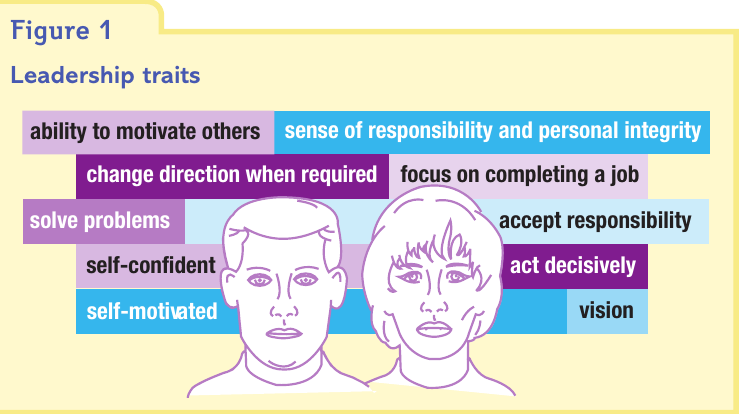
Self-confidence and self-awareness: Effective leaders maintain a positive self-image backed by genuine ability and realistic aspirations. They understand their own strengths and weaknesses. Examples include Richard Branson, known for his confidence in pioneering various business ventures. Many managers fail to lead because they become too focused on short-term activities rather than strategic thinking.
Example
Case Study: Richard Branson's Leadership Confidence
Richard Branson exemplifies self-confident leadership by consistently venturing into new industries where he had no prior experience. From Virgin Records to Virgin Atlantic Airways, Virgin Mobile, and Virgin Galactic, Branson's confidence wasn't reckless - it was backed by his ability to identify opportunities, assemble talented teams, and learn quickly. His self-awareness allowed him to recognize when to hire experts while maintaining strategic oversight.
Problem-solving and vision: Leaders can identify the core of complex problems and propose radical solutions. Steve Jobs demonstrated this when he returned to Apple in 1996 after leaving in 1985. He cut Apple's development projects from 350 to just 10, then launched groundbreaking products including the iMac, iPod, iTunes, and iPhone. Under his leadership, Apple's share price rose by 9,000%.
Example
Case Study: Steve Jobs' Radical Problem-Solving
When Steve Jobs returned to Apple in 1996, the company was struggling with financial losses and a confused product lineup. Jobs identified the core problem: lack of focus. His radical solution was dramatic simplification - cutting 350 projects to just 10. This allowed Apple to concentrate resources on developing revolutionary products rather than maintaining mediocre ones. The result was a remarkable turnaround that transformed Apple into one of the world's most valuable companies.
Expertise and intelligence: Studies show that business leaders tend to be experts in specific fields while remaining well-read across diverse topics. They are often 'out of the ordinary', highly intelligent, and articulate. Examples include Anita Roddick (founder of Body Shop) and Bill Gates (founder of Microsoft).
Creativity and innovation: Leaders actively seek new solutions to problems, ensure important tasks are completed, and continuously work to improve standards. They challenge conventional thinking and push boundaries.
Adaptability: Leaders possess the ability to sense change in the business environment and respond appropriately. This agility allows their organizations to stay competitive in dynamic markets.
Note
The Interconnected Nature of Leadership Qualities
These characteristics don't exist in isolation. The most effective leaders demonstrate how these qualities reinforce each other. For example, self-awareness helps leaders recognize when to adapt their approach, while creativity combined with problem-solving ability enables innovative solutions. Expertise provides credibility, and confidence allows leaders to take calculated risks when implementing their vision.
Leadership styles
Successful businesses often have excellent leaders, but their leadership approaches can vary significantly. Understanding different leadership styles helps explain how leaders operate and when each style is most effective.
Autocratic leadership
Autocratic leadership occurs when the manager sets objectives, allocates tasks, and insists on obedience. The group becomes dependent on the leader for direction and decision-making.
Characteristics:
- All decisions made by the leader alone
- No consultation with subordinates
- Clear chain of command
- Strict adherence to rules and procedures
Consequences:
- Group members often become dissatisfied with the leader
- Little team cohesion develops
- High levels of supervision required
- Poor motivation among employees
Important
When Autocratic Leadership is Appropriate:
Autocratic leadership may be necessary in specific circumstances, such as military operations where troops must move quickly and orders must be obeyed instantly without question. It can also be effective in crisis situations requiring immediate decisions where there is no time for consultation.
However, this style should be used sparingly in typical business environments, as prolonged autocratic leadership often leads to employee dissatisfaction and high turnover.
Example
Case Study: Helen Beaumont at Keymex Airlines
Helen Beaumont at Keymex airlines demonstrated autocratic leadership by making all key decisions without consultation. When she identified that slow decision-making was hindering the company's ability to respond to market trends, she took swift action by removing an entire management layer.
Outcome: While this decisiveness led to substantial revenue growth, it also created tension with some staff members. This example illustrates both the benefits (rapid action, clear direction) and drawbacks (employee dissatisfaction) of autocratic leadership.
Paternalistic leadership
Paternalistic leadership shares similarities with autocratic leadership but with a crucial difference in attitude toward employee welfare.
Characteristics:
- Leaders make all decisions and expect obedience
- Strong emphasis on employee well-being
- Leader acts as a 'father figure' to the organization
- No delegation of decision-making authority
Example
Historical Example: Rowntree and Cadbury
Joseph Rowntree and George Cadbury exemplified paternalistic leadership by building affordable housing for their employees. They made all business decisions but showed genuine concern for workers' welfare and quality of life.
These Victorian-era business leaders believed they had a moral responsibility to care for their workers. While they maintained complete control over business decisions, they invested heavily in employee housing, healthcare, and education - practices that were revolutionary for their time.
Key distinction: Unlike autocratic leaders who may be indifferent to subordinates' well-being, paternalistic leaders place great importance on looking after their employees. However, both styles maintain centralized control over decisions.
Note
Paternalistic leadership can create loyalty and dedication from employees who appreciate the care taken for their welfare. However, it can also be viewed as condescending in modern business environments where employees expect autonomy and participation in decision-making.
Democratic leadership
Democratic leadership encourages participation in decision-making processes. This style has two main approaches:
Persuasive approach:
- Leader has already made a decision
- Takes time to persuade others it is the right choice
- Example: A business owner deciding to employ external contractors and then convincing existing staff this will reduce their workload
Consultative approach:
- Leader consults others before making decisions
- Views of employees are genuinely considered
- Final decision incorporates feedback received
- Example: The marketing department being consulted about launching a new product range
Requirements: Democratic leadership demands excellent communication skills. Leaders must clearly explain ideas to employees and understand the feedback they receive. This approach may result in slower decision-making due to extensive consultation.
Why democratic leadership can be effective:
Social trends: Increased public participation in social and political life means employees expect more democratic management approaches.
Rising expectations: Higher income and educational standards lead people to expect greater freedom and better quality of working life.
Better decisions: Research suggests democratic leadership is generally more effective. Managers can utilize the knowledge and experience of skilled employees, leading to higher-quality decisions.
Enhanced commitment: When people participate in decision-making, they become more committed and motivated. They are more likely to accept decisions they helped create, trust their managers, and contribute creative ideas.
Important
Benefits of Democratic Leadership:
Democratic leadership often produces the best outcomes in knowledge-based organizations where employees possess valuable expertise. By tapping into collective intelligence, leaders can:
- Make better-informed decisions
- Increase employee buy-in and commitment
- Build trust and improve morale
- Foster a culture of innovation and creativity
However, this style requires more time and may not be suitable for urgent decisions or situations where employees lack relevant expertise.
Laissez-faire leadership
Laissez-faire leadership represents a 'hands-off' approach where the leader provides minimal direction and allows others significant autonomy.
Characteristics:
- Leader provides necessary tools and resources
- Minimal guidance and supervision
- Employees have freedom to make decisions
- Leader steps back from day-to-day management
When effective: This style works well when group members are:
- Highly skilled and experienced
- Self-motivated and capable
- Able to work independently
- Competent at setting deadlines and managing projects
Important
When Laissez-Faire Leadership Fails:
Laissez-faire leadership may fail if:
- Team members lack experience or knowledge
- Individuals cannot set their own deadlines
- People lack motivation to complete tasks
- Group members need direction and support
- Deadlines are missed, costing the business money
Without proper conditions, this 'hands-off' approach can result in confusion, lack of direction, and poor performance.
Example
Case Study: Warren Buffett at Berkshire Hathaway
Warren Buffett at Berkshire Hathaway successfully employed laissez-faire leadership. He allowed subsidiary heads significant freedom, stating in 2009: "We tend to let our many subsidiaries operate on their own, without our supervising and monitoring them to any degree."
Why This Worked:
- Buffett hired talented, well-motivated people
- He provided them with adequate resources
- He remained available for consultation when needed
- Each subsidiary maintained its own culture
- Managers understood how their specific business operated
Key Insight: Laissez-faire leadership requires careful selection of highly capable individuals who don't need close supervision. Buffett's success came from trusting competent leaders to run their businesses independently while maintaining ultimate strategic oversight.
Flexibility in leadership styles
Business leaders rarely adopt just one leadership style exclusively. Many successful leaders demonstrate a mixture or combination of styles depending on circumstances.
Example
Case Study: Sir Alex Ferguson's Flexible Leadership
Sir Alex Ferguson (former Manchester United manager) was often described as an autocratic leader. However, he showed paternalistic tendencies when protecting younger players from media pressure. This flexibility allowed him to adapt his approach based on individual needs and specific situations.
Ferguson understood that experienced players needed different treatment than young newcomers, and that high-pressure situations required different approaches than routine training. His ability to switch between styles contributed to his remarkable success over 26 years.
Effective leaders recognize that different situations, teams, and individuals may require different leadership approaches. The ability to adapt leadership style appropriately is itself an important leadership skill.
Note
The Reality of Leadership in Practice
Leadership in the real world is rarely as clear-cut as theoretical models suggest. The best leaders develop a repertoire of approaches and apply them situationally. They might be autocratic during a crisis, democratic when developing strategy with their senior team, and laissez-faire with highly skilled specialists. This flexibility and situational awareness distinguishes exceptional leaders from merely competent ones.
Remember!
Summary
Key Points to Remember:
-
Management vs Leadership: Managers focus on day-to-day operations and implementing plans, while leaders are visionaries who drive change and inspire others toward long-term goals.
-
Four main leadership styles:
- Autocratic (leader makes all decisions)
- Paternalistic (leader decides but cares for welfare)
- Democratic (involves others in decisions through persuasion or consultation)
- Laissez-faire (hands-off approach giving freedom)
-
Effective leader traits: Self-confidence, vision, problem-solving ability, motivation skills, creativity, adaptability, personal integrity, and decisiveness.
-
Democratic leadership benefits: Improved decision quality through tapping into employee expertise, higher motivation and commitment, better trust relationships, and more creative ideas.
-
Style appropriateness matters: Each leadership style works best in specific contexts. Autocratic suits crisis situations, democratic works well with skilled teams, and laissez-faire succeeds with highly experienced, self-motivated individuals.
-
Flexibility is essential: The most effective leaders adapt their style to match the situation, team capabilities, and organizational needs rather than rigidly applying one approach.