Moving from Entrepreneur to Leader (Edexcel A-Level Business): Revision Notes
📚Revision Notes
Moving from entrepreneur to leader
When entrepreneurs start successful businesses, their role evolves as the company grows. Running a small sole trader business with a few employees differs significantly from leading a large corporation with thousands of staff. This transition requires adapting skills, changing mindset, and developing new leadership capabilities.

Understanding the transition
As businesses expand, entrepreneurs face growing demands that stem from increased scale and complexity. Growth typically involves:
- Larger workforce – managing more employees with diverse needs
- Complex financial operations – handling bigger transactions and investments
- Expanded customer base – serving more clients across wider markets
- Increased regulation – complying with more rules and legal requirements
- Greater resource consumption – managing larger inventories, facilities and assets
- Complex communication – coordinating information across multiple levels and departments
Note
This expansion creates pressure for entrepreneurs to adapt how they operate and make decisions. The informal, hands-on approach that works in small businesses becomes insufficient in larger organisations.
Key changes required in the transition
The need for formality
Small businesses often operate informally. Communication happens naturally between a few people working closely together, and decisions can be made quickly by the owner who is always present. Documentation is minimal and formal meetings are rare.
However, as organisations grow into corporations, formal structures become essential. With hundreds or thousands of employees, businesses need:
- Systematic communication channels that everyone recognises and follows
- Departmental divisions that organise work into manageable units
- Formal organisational hierarchies that establish clear reporting lines and accountability
- Regular structured meetings to coordinate activities and share information
- Documented procedures that ensure consistency and compliance
Important
The entrepreneur who once made every decision must now become a senior executive or chairperson, working through established systems rather than direct personal contact.
The need for shared ownership
Expanding businesses require significant capital investment. To fund growth, entrepreneurs often must invite new investors to contribute money. For very large corporations, this typically means converting to a public limited company (plc) and selling shares to the public.
This represents a fundamental shift for entrepreneurs who begin as sole owners with complete control. Ownership becomes shared with:
- Institutional investors such as pension funds and insurance companies who hold large stakes
- Individual shareholders who may number in thousands or millions
- Business angels or venture capitalists who provide growth capital in exchange for equity
Note
Shared ownership means sharing future profits through dividend payments and accepting that others have legitimate claims on business decisions.
Greater responsibility to others
An entrepreneur running a small business bears responsibility for a handful of employees. As the business expands into a corporation, this responsibility multiplies dramatically. Leaders may become responsible for:
- Tens of thousands of employees whose livelihoods depend on business success
- Families of employees who rely on their income and job security
- Shareholders who have invested their savings and expect returns
- Suppliers who depend on the business for their own revenue
- Customers who trust the business to deliver quality products and services
- Communities where the business operates and provides employment
Important
This expanded responsibility creates enormous pressure. Poor leadership decisions can destroy thousands of livelihoods, wipe out retirement savings, and damage entire supply chains. The weight of these responsibilities differs fundamentally from running a small operation.
The need for motivation and inspiration
Small business owners work alongside their few employees, motivating through personal example and direct encouragement. As businesses grow, leaders must develop sophisticated motivational skills to engage a large, diverse workforce.
Most employees are not naturally self-motivated. They need:
- Clear goals that give direction and purpose
- Regular encouragement that recognises effort and achievement
- Inspiration that connects daily work to larger organisational vision
- Support when facing challenges or setbacks
- Development opportunities that help them grow their talents and capabilities
Note
Leaders must inspire people they rarely see personally. They must create motivational systems that work across departments, locations and levels. They must also develop other managers who can motivate their own teams effectively.
The need for strategy and vision
In small businesses, owners typically involve themselves in daily operations. They might work in production, serve customers directly, handle accounting tasks, and manage marketing activities. They focus on immediate, practical concerns.
As businesses expand, specialists take over operational functions. The leader's role shifts to:
- Designing business strategies that position the company for long-term success
- Providing strategic vision that defines where the company should go
- Making high-level decisions about markets, products, investments and partnerships
- Representing the company to investors, government, media and the public
- Setting organisational culture that shapes how employees behave and make decisions
This requires thinking in longer time horizons, considering broader competitive dynamics, and making decisions with major consequences. Some successful leaders maintain operational involvement (for example, chef Jamie Oliver still cooks in his restaurant empire's kitchens), but this becomes exceptional rather than normal.
Examples of successful transitions
Several British entrepreneurs have successfully made this transition from small business owners to corporate leaders:
- Richard Branson – built the Virgin brand from a student magazine into a global conglomerate
- Lord Sugar – grew from market trader to computer business magnate
- Michelle Mone – founded Ultimo lingerie brand and expanded into multiple business ventures
- Deborah Meaden – developed holiday businesses into major operations
- Mike Ashley – created Sports Direct retail empire and owns Newcastle United FC
- Hilary Devey – built logistics companies from modest beginnings
Note
These individuals all started with small-scale operations and developed the skills needed to lead large, complex organisations. Their success demonstrates that the transition is achievable with the right approach and personal development.
The difficulties in developing from an entrepreneur to a leader
Despite examples of success, the transition from entrepreneur to leader presents significant challenges. Understanding these difficulties helps explain why many business owners prefer to remain small traders rather than pursue aggressive growth.
Adapting the mindset
Entrepreneurs typically possess a strong desire for control and autonomy. They start businesses precisely because they want to:
- Control their own destiny
- Make decisions their own way
- Avoid answering to bosses or managers
- Work according to their own preferences and schedule
Business expansion requires a fundamentally different mindset. Leaders must:
- Relinquish direct control over many business functions
- Trust specialists to handle areas where others have greater expertise
- Accept that delegation is necessary rather than trying to do everything themselves
- Focus on different priorities rather than the hands-on work they may prefer
For many entrepreneurs, this psychological shift proves extremely difficult. They experience:
- Doubts about whether specialists will perform adequately
- Fears about losing control of "their" business
- Lack of trust in others' competence and commitment
- Reluctance to delegate even when logically necessary
Important
These mental barriers can prevent effective leadership development and limit business growth. The psychological shift from complete control to strategic delegation represents one of the most challenging aspects of the entrepreneur-to-leader transition.
Stress
Business ownership creates inherent stress. Entrepreneurs face constant pressure because their family's livelihood depends entirely on business success. They worry about business failure and its consequences.
As businesses grow, stress typically increases rather than decreases, despite greater financial success. Sources of stress include:
Financial pressures:
- Larger debts that must be repaid
- Worry about debtors failing to pay what they owe
- Greater financial complexity requiring expert advice
- Risk of losing much more if things go wrong
People pressures:
- Responsibility for many more employees and their families
- Increased scope for workplace conflict
- Need to manage difficult personalities and situations
- Pressure from shareholders and other stakeholders
Stakeholder conflicts:
- Workers wanting wage increases while customers demand stable prices
- Threat of strikes or industrial action
- Shareholders demanding dividends while business needs investment
- Suppliers wanting prompt payment while cash flow is tight
Important
These accumulated pressures create chronic stress that affects decision-making, health and personal relationships. Without effective stress management, leaders may burn out or make poor decisions.
Sharing ownership and control
Many entrepreneurs struggle with the reality of shared ownership that business expansion requires. When they invite partners, business angels, or shareholders to invest capital, they must accept that:
- Future profits must be shared through dividends or profit distributions
- Control is diluted as others gain voting rights and influence
- Original vision may be challenged by investors with different priorities
- Leadership can be questioned by boards of directors or major shareholders
Some entrepreneurs experience this sharing as:
- Loss of "their" business that they built from nothing
- Resentment toward others influencing direction
- Feeling undermined in their leadership role
- Conflict over strategic decisions and priorities
Note
These feelings can damage relationships with investors and limit the entrepreneur's effectiveness as a corporate leader. They may resist necessary changes or create unnecessary confrontation with other stakeholders.
Trust
As businesses expand, leaders must delegate extensively and employ specialists in various functions. Many entrepreneurs find it difficult to trust these new managers and employees. They experience:
Trust in delegation:
- Suspicion that delegated tasks won't be completed properly
- Concern that they are losing touch with key operations
- Worry about quality standards declining
- Difficulty letting go of hands-on control
Trust in specialists:
- Feeling threatened when specialists know more than them in certain areas
- Concern about being manipulated or kept in the dark
- Anxiety about depending on others' expertise
- Fear of appearing ignorant or incompetent
Trust in new owners:
- Suspicion about shareholders' or investors' motives
- Worry about hostile takeovers or replacement
- Concern about conflicting interests
- Difficulty accepting accountability to others
Important
When leaders cannot develop trust, employees sense this distrust. They may become demotivated, defensive or leave for other opportunities. This creates a self-fulfilling prophecy where the leader's lack of trust generates the very problems they feared.
Lack of leadership qualities
Entrepreneurs possess many skills that contribute to business start-up success, including risk-taking, innovation, and hands-on problem-solving. However, leading a large corporation requires additional leadership qualities that entrepreneurs may lack:
Management skills:
- Coordinating multiple departments and functions
- Designing effective organisational structures
- Implementing control systems that maintain standards
- Managing budgets at much larger scale
Communication skills:
- Speaking persuasively to large audiences
- Writing formal reports for shareholders and regulators
- Communicating effectively through media interviews
- Operating in multiple languages in international contexts
- Using diplomacy and tact in sensitive situations
Problem-solving skills:
- Addressing complex, multi-dimensional business challenges
- Making decisions with major financial and human consequences
- Resolving conflicts between powerful stakeholders
- Thinking strategically about long-term competitive positioning
Organisational skills:
- Coordinating activities across multiple locations
- Managing time effectively given competing demands
- Prioritising among numerous important issues
- Maintaining focus on strategic priorities amid distractions
Important
While entrepreneurs use these skills at small scale (giving instructions to employees, discussing specifications with customers, meeting accountants), corporate leaders must apply them at dramatically larger scale (negotiating with foreign governments, presenting to international media, making decisions affecting thousands of people). The gap between these levels may overwhelm some entrepreneurs who lack experience or training in large-scale leadership.
Overcoming difficulties
Despite these substantial challenges, many entrepreneurs successfully transition to corporate leadership. They employ various strategies to overcome difficulties and develop necessary capabilities.
Delegation and trust
Successful leaders become comfortable with delegation. They recognise that:
- Specialists and experts will improve business performance in their areas
- They cannot personally do everything well
- Trusting talented people produces better results than maintaining rigid control
- Delegation frees them to focus on strategic priorities
To build trust and delegate effectively, leaders can:
Implement thorough recruitment:
- Use structured hiring processes to find talented, honest people
- Check references and credentials carefully
- Test candidates' skills and character
- Start with trial periods before making permanent appointments
Surround themselves with talent:
- Actively recruit the best people available
- Pay competitively to attract high-calibre staff
- Create a culture that attracts talented individuals
- Accept that good people may know more than them in certain areas
Develop trust gradually:
- Start by delegating smaller responsibilities
- Increase delegation as people prove themselves
- Maintain oversight without micromanaging
- Give autonomy while requiring accountability
Example
Practical Approach to Building Trust Through Delegation
Step 1: Start with a low-risk task that needs delegation
- Identify a task that is important but not critical to immediate business survival
- Select a capable team member who has shown reliability in smaller tasks
Step 2: Set clear expectations
- Define exactly what success looks like for this task
- Establish checkpoints for progress updates
- Agree on deadlines and quality standards
Step 3: Provide support without micromanaging
- Make yourself available for questions
- Check progress at agreed intervals
- Resist the urge to take back control at the first sign of difficulty
Step 4: Evaluate and expand
- Review the outcome together
- Provide constructive feedback
- Gradually increase the scope and importance of delegated tasks
Effective delegation reduces stress, improves business performance, and allows leaders to focus on areas where they add most value.
Earn respect
Many difficulties disappear when leaders earn genuine respect from stakeholders. People become more trustworthy, effective, and flexible when they respect their leader. Respect can be earned through:
Meeting stakeholder needs:
- Providing employees with fair pay, good conditions, and development opportunities
- Treating suppliers and customers ethically and fairly
- Being transparent and honest with shareholders
- Contributing positively to communities
Recognising good performance:
- Praising employees when they excel
- Celebrating team and individual achievements
- Rewarding superior performance appropriately
- Acknowledging contributions publicly
Demonstrating integrity:
- Being fair but tough when necessary
- Acting consistently with stated values
- Being open and honest in communications
- Admitting mistakes and learning from them
Creating positive culture:
- Establishing clear values and expectations
- Modelling desired behaviours personally
- Creating an environment where people want to work
- Building a culture that stakeholders accept and support
Note
When leaders earn respect, they gain trust naturally. Employees work harder, investors remain patient during difficulties, and customers stay loyal. Respect reduces conflict and makes all aspects of leadership easier.
Maturity and experience
Some people possess natural leadership ability. They demonstrate charisma and leadership qualities from early in their careers. However, most leaders develop through maturity and experience. Over time, they:
Learn from mistakes:
- Identify what went wrong in failed initiatives
- Adjust their approach based on experience
- Develop judgment about what works
- Build wisdom about people and situations
Develop through challenges:
- Handle increasingly difficult situations
- Build confidence through overcoming obstacles
- Develop resilience in face of setbacks
- Grow capabilities through demanding experiences
Gain perspective:
- See patterns across multiple situations
- Understand how decisions play out over time
- Recognise what truly matters versus what is merely urgent
- Develop balanced judgment
Build relationships:
- Establish networks of trusted advisors
- Develop relationships with other leaders who can mentor
- Learn from observing other leaders' successes and failures
- Create support systems that sustain them
Note
The transition from entrepreneur to corporate leader often takes years or even decades. Entrepreneurs who understand this can be patient with themselves, consciously learning and developing over time.
Education
Many leadership skills can be learned through education and training. Numerous courses help business leaders develop:
Management skills:
- Strategic planning and implementation
- Organisational design and change management
- Performance management systems
- Financial management and control
Communication skills:
- Public speaking and presentations
- Business writing and reports
- Media relations and crisis communication
- Negotiation and conflict resolution
Decision-making skills:
- Analytical frameworks and tools
- Risk assessment and management
- Data-driven decision-making
- Scenario planning and strategy
Technical skills:
- Languages for international business
- Information technology and digital tools
- Industry-specific technical knowledge
- Regulatory and compliance requirements
Note
Leaders can pursue formal qualifications (such as MBAs or executive education programmes) or shorter courses focusing on specific skills. Professional development should be ongoing throughout a leader's career, adapting to changing business environments and personal development needs.
Reduce stress
Calm, composed leaders make better decisions than stressed, anxious leaders. Effective stress management improves leadership performance and personal wellbeing. Figure 1 shows key stress reduction strategies:
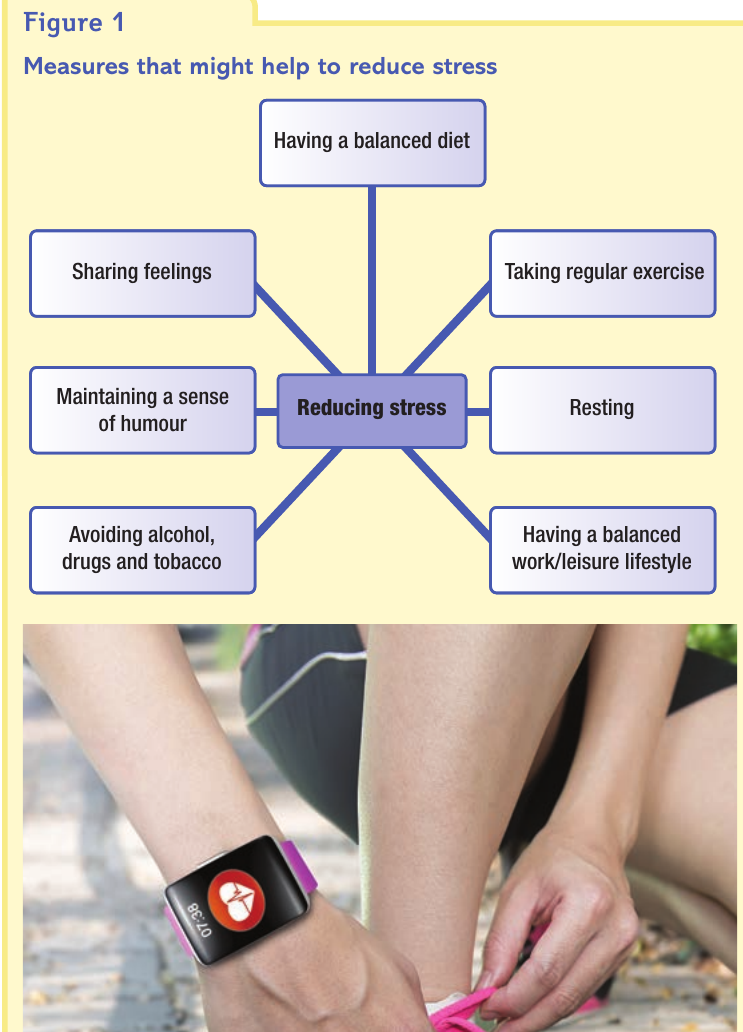

Physical health strategies:
- Balanced diet – proper nutrition supports mental and physical health
- Regular exercise – physical activity reduces stress hormones and improves mood
- Adequate rest – sufficient sleep enables better decision-making and emotional regulation
Lifestyle balance:
- Work-life balance – maintaining interests and relationships outside work prevents burnout
- Avoiding harmful substances – limiting alcohol and avoiding drugs and tobacco protects health
Mental health strategies:
- Sharing feelings – talking about concerns with trusted friends, family or counsellors
- Maintaining humour – keeping perspective and not taking everything too seriously
Important
Leaders who manage stress effectively maintain better judgment, build stronger relationships, and sustain high performance over long periods. They also model healthy behaviour for their organisations, creating cultures that support employee wellbeing.
Remember!
Summary
Key Points to Remember:
-
Business growth changes the entrepreneur's role fundamentally – moving from hands-on operator to strategic leader requires developing new skills and adapting mindset
-
The transition requires five key changes – introducing formality, sharing ownership, accepting responsibility, motivating others, and developing strategy and vision
-
Major difficulties include – adapting mindset to delegate, managing increased stress, sharing control, building trust, and developing leadership qualities at larger scale
-
Success requires multiple strategies – effective delegation, earning respect, gaining experience, pursuing education, and managing stress
-
The transition takes time – developing from entrepreneur to corporate leader typically requires years of learning, growth and adaptation