Marketing Strategies (Edexcel A-Level Business): Revision Notes
📚Revision Notes
Marketing strategies
A marketing strategy is a planned set of actions designed to achieve specific marketing objectives. For example, a business aiming to become the market leader might develop a strategy involving improvements to customer service, promotional offers, advertising investment, and establishing an online presence. Effective marketing strategies integrate all elements of the marketing mix and use various promotional techniques to achieve their goals.
Note
A successful marketing strategy requires careful coordination of all four marketing mix elements (Product, Price, Promotion, Place) rather than focusing on individual components in isolation. The integration of these elements creates synergy that amplifies overall marketing effectiveness.
Strategies for mass markets
Mass markets are large-scale markets with millions of potential customers, often operating globally. Companies like Procter & Gamble, Heinz, Kellogg's, Coca-Cola and General Motors compete in mass markets. These markets are highly competitive because the potential rewards for success are substantial. While marketing strategies in mass markets vary, certain common characteristics emerge across the marketing mix.
Product strategies in mass markets
In mass markets, numerous products compete for consumer attention. Most products serve as close substitutes for each other, making differentiation crucial. The most successful businesses develop a Unique Selling Point (USP) to help their product stand out from competitors. If differentiation through product features proves difficult, businesses must rely more heavily on other marketing mix elements to gain competitive advantage.
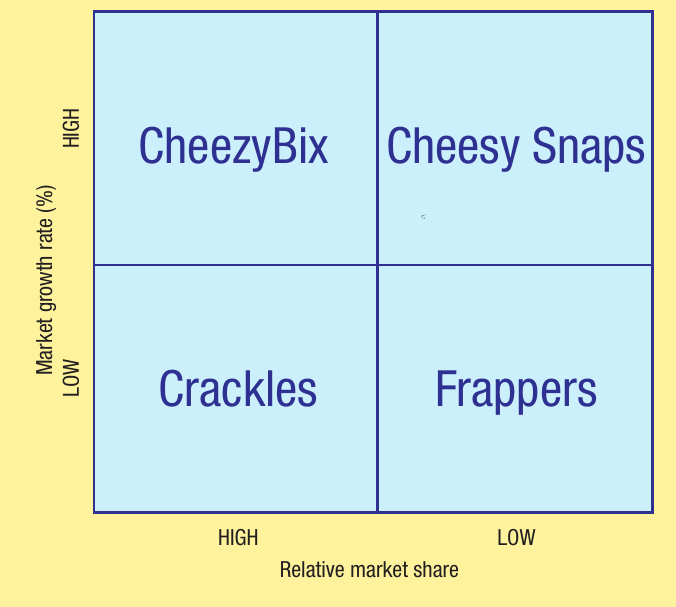
Businesses can analyze their product portfolios using tools like the Boston Matrix to identify which products require investment and which should be maintained or removed from the range.
Important
In highly competitive mass markets, developing a strong USP is often the difference between success and failure. Without clear differentiation, products become commodities competing solely on price, which typically erodes profitability for all market participants.
Price strategies in mass markets
Prices across mass markets tend to be remarkably similar. Businesses typically avoid aggressive price competition because price wars usually reduce revenue for all competitors. This explains why companies often charge the standard market price accepted across the industry.
Price leadership is common in mass markets, where the dominant business (often the one with lowest unit costs) sets the price level and competitors follow. This strategy maintains market stability while protecting profit margins across the industry.
Note
Price leadership benefits the entire industry by creating price stability and preventing destructive price wars. The price leader typically has the strongest cost position and can sustain lower prices if necessary, discouraging aggressive price competition from rivals.
Promotion strategies in mass markets
When price competition is limited, firms turn to non-price competition to gain market advantage. This means heavy investment in advertising and promotion becomes essential in mass markets. The overwhelming majority of television advertising comes from mass market businesses.
Although only a small percentage of viewers (perhaps less than 5%) may purchase the advertised product, this still represents significant sales volume when dealing with audiences of several million. The high cost of mass advertising is justified by the potential reach and sales generation.
Place (distribution) strategies in mass markets
Businesses serving mass markets typically use multiple distribution channels to maximize market coverage. Companies selling fast-moving consumer goods target supermarkets, wholesalers, independent retailers and any other suitable outlets. Some manufacturers pay supermarkets premium fees to display products in prominent positions (at eye level or aisle ends) to increase visibility and sales.
Digital distribution has transformed mass market access. All banks now offer online accounts, and increasing numbers of supermarkets provide online shopping with delivery or "click and collect" services. The internet has democratized mass market access, allowing small businesses to distribute products to individual customers worldwide. For example, a small manufacturer in Scotland could now sell directly to customers across the globe through e-commerce.
Note
Digital Transformation Impact:
The rise of e-commerce has fundamentally changed distribution strategies in mass markets. Traditional barriers to entry have lowered significantly, enabling smaller businesses to compete with established multinationals by reaching global audiences through digital channels without the need for extensive physical distribution networks.
Strategies for niche markets
Niche markets serve customers with very particular needs that are sometimes overlooked by larger firms. This creates opportunities for businesses willing to tailor their offerings to small, specialized customer groups. Marketing strategies for niche markets differ significantly from mass market approaches.
Product strategies in niche markets
Products in niche markets typically show significant differentiation from mainstream alternatives. For example, while the UK has approximately 420,000 restaurants, only four hold three Michelin stars (the highest award for food quality and service). These restaurants serve exceptional food quality that differs dramatically from typical offerings, catering to customers seeking the finest dining experience and willing to pay premium prices.
In niche markets, product design is carefully crafted to meet the specific needs of the target customer group. Product becomes the key element in the marketing mix, as the specialized nature of the offering provides the primary competitive advantage.
Example
Michelin Star Restaurant Strategy
Three-Michelin-star restaurants exemplify niche market product strategies:
- Product differentiation: Exceptional food quality far exceeding standard restaurants
- Target market: Customers seeking the finest dining experience
- Premium positioning: Prices exceeding $100 per person justified by unique experience
- Market size: Only four such restaurants in UK (from 420,000 total)
- Competitive advantage: Extreme specialization rather than mass appeal
Price strategies in niche markets
Niche market businesses enjoy greater pricing flexibility due to reduced competition. Higher prices can be charged without losing significant market share to rivals. Customers often willingly pay premium prices when their specific needs are met effectively. For instance, three-Michelin-star restaurants can charge over £100 per person (excluding wine), and customers accept these prices for the exceptional experience provided.
Promotion strategies in niche markets
Promotion and advertising in niche markets tends to be highly targeted. Since these markets are smaller, national media advertising proves inefficient and wasteful. Businesses must accurately identify their customer profile to ensure advertising expenditure reaches the right audience.
Advertisements typically appear in specialized publications. For example, yacht equipment is advertised in magazines like Yachting Monthly and Boating World. Some golf equipment manufacturers advertise on television but only use specialized channels like Sky Sports where their target audience concentrates.
Place (distribution) strategies in niche markets
Niche market businesses are typically more selective with distribution channels. They often use exclusive distributors or handle distribution privately to maintain control over the customer experience. Internet sales provide practical additional distribution where appropriate.
Example
Blue Mountain Coffee Distribution Strategy
Blue Mountain coffee demonstrates niche market distribution principles:
- Premium product: High-quality coffee grown mainly in Jamaica
- Selective distribution: Available only from selected UK stores and online
- Price positioning: Approximately £24 for 227g (versus £3.50 for mainstream alternatives)
- Exclusivity supports premium: Limited distribution reinforces high-value positioning
- Market segment: Coffee connoisseurs willing to pay premium for quality
B2B and B2C marketing strategies
Many businesses supply goods and services to other businesses rather than consumers. For example, JCB produces construction machinery sold primarily to construction companies and plant hire firms worldwide. Marketing strategies for Business-to-Business (B2B) markets differ from Business-to-Consumer (B2C) approaches. In B2B marketing, businesses often distinguish between outbound and inbound strategies.
Outbound marketing strategies
Outbound marketing involves directing marketing material at potential customers whether they expect it or not. Common outbound methods include:
- Direct mail campaigns
- Email marketing
- Telemarketing (cold calling)
- Sponsorship arrangements
- Targeted advertisements in specialist publications
- Trade shows and exhibitions
However, outbound marketing faces several challenges. Many people increasingly ignore advertisements, and few can remember specific adverts they've seen. Cold calling and other intrusive methods often generate negative reactions, potentially damaging brand reputation through persistent contact. Many leads obtained through outbound methods prove poor quality, "fizzling out" and wasting resources. Research suggests outbound leads cost significantly more to acquire than inbound leads.
Important
Challenges with Outbound Marketing:
While outbound marketing can generate quick results, businesses must recognize its limitations:
- Many prospects ignore or actively avoid outbound advertising
- Intrusive methods like cold calling can damage brand reputation
- Lead quality tends to be lower, with many prospects showing little genuine interest
- Cost per lead acquisition typically exceeds inbound marketing costs significantly
- Negative customer reactions may harm long-term brand perception
Inbound marketing strategies
Inbound marketing attracts potential customers to websites when they actively seek suppliers or solutions to problems. This customer-initiated approach generates higher quality leads. Common inbound marketing techniques include:
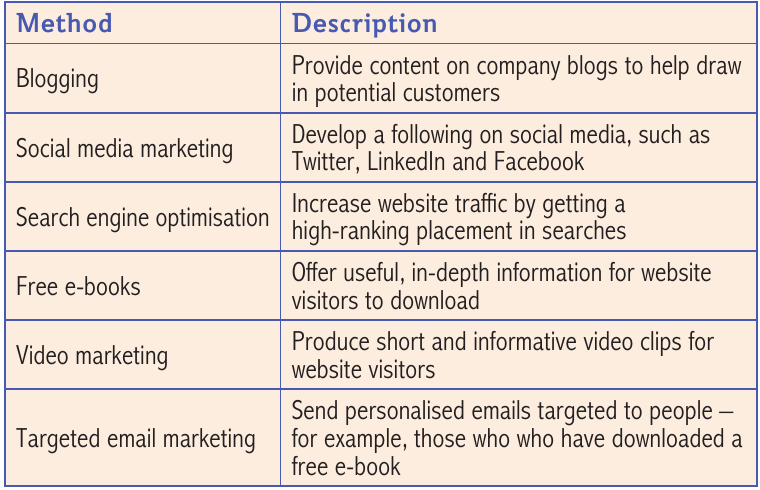
Inbound marketing methods also present challenges. Building sufficient useful website content to convert visitors into leads requires significant effort and resources. Recruiting experienced inbound marketers can prove difficult, and keeping strategies current with rapidly emerging trends demands constant attention.
Note
Inbound Marketing Advantages:
Inbound marketing generates higher quality leads because customers actively seek solutions rather than being interrupted by advertising. This self-selection process means prospects have genuine interest and higher conversion potential. However, inbound strategies require patience – meaningful results typically take at least six months to materialize as content builds authority and search rankings improve.
Hybrid strategies
Hybrid strategies combine both outbound and inbound methods. Since inbound strategies typically require at least six months to generate meaningful results, businesses can employ outbound methods for short-term lead generation. Once inbound methods begin producing leads, less effective outbound approaches can be discontinued, reducing costs while creating sustainable market share growth.
Important
Exam insight: Marketing strategies vary hugely depending on factors including product nature, available resources, strategic objectives, market size and characteristics, corporate strategy, and employee creativity. Different products require different marketing approaches – healthcare and confectionery marketing differ dramatically. Even businesses within the same industry may adopt different strategies. Small businesses use different approaches than multinationals due to resource constraints. While some businesses share strategic similarities, strategies are rarely identical.
Developing customer loyalty
Customer loyalty – encouraging customers to make repeat purchases – significantly contributes to business success. Several proven methods help develop loyalty:
Communication
Businesses must keep customers informed and engaged. In mass markets, this might involve national advertising campaigns announcing new products. Some businesses use reassuring advertisements that convince customers they made the right purchase decision.
Regular newsletters (usually via email) keep customers updated with company developments. Consistent communication builds relationships between businesses and customers. When genuine bonds form, customers become more likely to return.
Customer service
High-quality customer service encourages repeat business. Employees who interact with customers must demonstrate professionalism, consistency and integrity. Customer service improvements often involve:
- Handling matters more promptly
- Providing effective after-sales service
- Making the purchasing experience pleasant and memorable
- Offering refreshments during transactions

Note
Excellent customer service creates positive experiences that customers want to repeat, building loyalty through satisfaction. Research consistently shows that customers who experience outstanding service are significantly more likely to return and recommend the business to others, creating a multiplier effect on customer acquisition.
Customer incentives
Many businesses reward repeat customers through loyalty schemes. Supermarket loyalty cards exemplify this approach. For instance, Morrison's "Match & More" card checks prices against competitor databases. When rival products cost less, customers earn points (50 pence difference equals 500 points). Additional points accumulate on hundreds of products. Every 5,000 points generates a £5 voucher.
Such schemes encourage customers to concentrate their spending with one provider to accumulate sufficient points for rewards. The immediate financial benefit reinforces repeat purchase behavior.
Example
Morrison's Loyalty Scheme
The "Match & More" card demonstrates effective incentive design:
- Price matching: Earns points when competitors offer lower prices
- Point accumulation: 50p difference = 500 points, plus bonus points on selected products
- Reward conversion: Every 5,000 points = £5 voucher
- Behavioral impact: Encourages spending concentration at single retailer
- Customer benefit: Tangible financial rewards reinforce loyalty
Personalization
Treating customers personally strengthens relationships. Businesses may address customers by name in person or in correspondence. Some firms send birthday and Christmas cards to build personal connections.
However, genuine personalization proves easier for smaller businesses than multinationals. Small businesses can more readily maintain individual customer relationships, while large corporations must rely more heavily on database-driven personalization.
Preferential treatment
Many customers value exclusive or preferential treatment. Examples include:
- VIP areas in nightclubs reserved for high-spending customers
- Airline lounges at airports for first class, business class or frequent flyer passengers, offering free refreshments, Wi-Fi, television, comfortable seating and showers
- Priority service or exclusive access to products or services
The principle underlying preferential treatment is simple: customers who receive special recognition and benefits feel valued and are more likely to return for continued preferential experiences.
Note
The Psychology of Preferential Treatment:
Preferential treatment leverages fundamental human psychology – people value exclusivity and status. By creating tiered service levels, businesses make customers aspire to higher tiers while simultaneously rewarding loyal customers with tangible benefits. This creates both retention (customers don't want to lose benefits) and aspiration (customers want to achieve higher status).
Remember!
Summary
Key Takeaways:
Marketing Strategy Fundamentals:
- Marketing strategies integrate all marketing mix elements to achieve specific objectives, varying significantly based on market type, resources and business context
- Successful strategies coordinate Product, Price, Promotion and Place for maximum synergy
Mass Market Strategies:
- Emphasize differentiation through USPs to stand out among close substitutes
- Similar pricing to avoid destructive price wars, often following price leadership
- Heavy promotional investment, particularly in mass media advertising
- Multiple distribution channels to maximize market reach and coverage
Niche Market Strategies:
- Focus on specialized product design tailored to specific customer needs
- Premium pricing flexibility due to reduced competition and willing customers
- Targeted promotion in specialist media rather than mass advertising
- Selective or exclusive distribution to maintain control and premium positioning
B2B Marketing Approaches:
- Outbound strategies: Pushing marketing material to prospects (direct mail, telemarketing, trade shows)
- Inbound strategies: Attracting prospects through valuable content (SEO, blogging, social media)
- Hybrid approaches: Combining both methods often proves most effective – outbound for immediate results while building inbound for sustainable growth
Customer Loyalty Development:
- Effective communication keeps customers informed and builds relationships
- Excellent customer service creates positive experiences worth repeating
- Incentive schemes provide tangible rewards for repeat purchases
- Personalization strengthens individual customer connections
- Preferential treatment makes customers feel valued and exclusive
Essential Definitions:
- Marketing strategy: Planned actions designed to achieve specific marketing objectives
- USP (Unique Selling Point): Distinctive feature that differentiates a product from competitors
- Price leadership: Strategy where the dominant business sets market prices and competitors follow
- B2B (Business-to-Business): Marketing goods or services to other businesses
- B2C (Business-to-Consumer): Marketing goods or services directly to consumers