Market Segmentation (Edexcel A-Level Business): Revision Notes
📚Revision Notes
Market Segmentation
What is market segmentation?
Markets consist of many different types of customers, each with their own specific needs and preferences. Market segmentation involves dividing a market into distinct sections called market segments. Each segment contains consumers who share similar characteristics and needs.
Businesses use market segmentation to identify and target specific customer groups more effectively. There are three main approaches businesses can take:
Note
Three Strategic Approaches to Market Segmentation:
- Niche targeting – concentrating on producing one product for a single segment (e.g. luxury car manufacturers targeting wealthy consumers)
- Multi-segment targeting – developing a range of products aimed at several different segments
- Mass market approach – aiming products at nearly all consumers (e.g. large food manufacturers)
By dividing markets into segments, businesses can better understand their customers and design products that meet specific needs more precisely.
Geographic segmentation
Geographic segmentation divides markets based on where customers live and the characteristics of their location.
Customer needs vary significantly depending on geographical factors such as climate, culture, and regional preferences. Businesses must recognise these differences when targeting products.
Example
Examples of Geographic Segmentation:
- Climate-based differences: consumers in hot climates like Australia require different products compared to those in temperate climates like the UK (air conditioning vs heating systems)
- Regional variations within countries: different regions of India have distinct cuisine preferences and tastes
- Urban vs rural locations: city dwellers may have different product needs compared to rural populations
Demographic segmentation
Demographic segmentation divides markets according to measurable characteristics of the population. This is one of the most common and straightforward segmentation methods used by businesses.
Age
Different age groups have fundamentally different needs and preferences. Businesses design products specifically for distinct age segments:
- Infants require specialised products like baby food and nappies
- Teenagers prefer trendy clothing and technology
- Young adults focus on career-building products
- Over-65s may need healthcare products and retirement services
Clothing retailers typically produce different styles for various age groups, recognising that a teenager will not want the same fashion as a middle-aged adult.
Gender
Men and women are frequently targeted with different products across many industries. Businesses develop gender-specific versions of products to meet distinct preferences:
- Clothing designed for different body types and fashion preferences
- Cars marketed differently to male and female buyers
- Magazines with gender-specific content
- Toiletries and cosmetics tailored to each gender
- Beverages positioned for different gender segments
Income
Income levels vary considerably across populations, creating natural market segments. Businesses target products at specific income brackets:
- High-income segments: luxury watchmakers and premium car brands target wealthy consumers willing to pay premium prices
- Low-income segments: budget supermarket chains and value brands focus on cost-conscious consumers
- Middle-income segments: mainstream brands offer good quality at reasonable prices
Social class
Businesses pay significant attention to socio-economic groups, which categorise people based on occupation and social status. The Institute of Practitioners in Advertising (IPA) classification divides society into six categories:
| Social grade | Social status | Head of household occupation | % of UK population |
|---|---|---|---|
| A | Upper middle class | Higher managerial, administrative or professional (doctors, lawyers, company directors) | 4% |
| B | Middle class | Intermediate managerial, administrative or professional (teachers, nurses, managers) | 12% |
| C1 | Lower middle class | Supervisory, clerical, junior managerial (shop assistants, clerks, police constables) | 22% |
| C2 | Skilled working class | Skilled manual workers (carpenters, plumbers, cooks, train drivers) | 33% |
| D | Working class | Semi-skilled and unskilled manual workers (fitters, window cleaners, storekeepers) | 19% |
| E | The poor | State pensioners, widows, casual workers, long-term unemployed | 10% |
Note
This classification helps businesses understand which social groups are most likely to purchase their products and how to position their marketing accordingly. The categories descend from highest status (A) to lowest status (E), with the majority of the UK population falling into the C1 and C2 categories.
Ethnicity
Many countries are becoming increasingly cosmopolitan, with diverse ethnic groups living alongside each other. Different ethnic groups maintain distinct cultural practices, which influence their purchasing behaviour.
Businesses must recognise these cultural differences:
- Food preferences vary between ethnic groups
- Clothing styles reflect cultural traditions
- Religious and cultural celebrations create specific product demands
For example, in Canada (with over 200 ethnic groups), Chinese consumers tend to spend more than other groups on leather goods, furniture, appliances, and electronic equipment.
Religion
Religious beliefs significantly influence consumer behaviour and product choices. Different religious groups have specific requirements:
- Muslims do not consume pork or alcohol, creating demand for halal products
- Jewish consumers follow kosher dietary laws – the kosher food market in the US is estimated at $100 billion
- Hindu consumers may avoid beef products
- Religious festivals create seasonal demand patterns
Psychographic segmentation
While geographic and demographic segmentation are useful, they have limitations. Consider females aged 16-18 living in Manchester – they share the same gender, age, and location, yet their spending patterns may vary enormously.
Important
Limitation of Geographic and Demographic Segmentation:
People with identical demographic characteristics can have vastly different purchasing behaviours. Two people of the same age, gender, and location may have completely different lifestyles, values, and spending priorities.
Psychographic segmentation offers an alternative approach by grouping customers according to their attitudes, opinions, values, and lifestyles rather than just demographic characteristics.
Example
Examples of Psychographic Segmentation:
- Sports enthusiasts: products aimed at those interested in extreme sports like skiboarding
- Chocolate consumption styles: manufacturers identify 'depressive' chocolate lovers (who eat chocolate to unwind in the evening) versus 'energetic' chocolate eaters (who consume chocolate as fast food while living at a fast pace)
- Ethical consumers: pension funds and investment products targeted at those who only want to invest in ethical businesses
- Fashion attitudes: clothing ranges for consumers interested in 'retro' fashions from earlier decades
- Family lifestyle: travel companies design holidays specifically for families with younger children
- Political alignment: certain newspapers target Labour voters while others appeal to Conservative voters
Important
Limitation of Psychographic Segmentation:
Collecting data about consumers' beliefs, attitudes, and lifestyles proves difficult. Businesses often require specialist market research companies to gather this information accurately.
Behavioural segmentation
Behavioural segmentation divides markets based on how consumers actually interact with and use products. This approach focuses on consumer behaviour patterns rather than characteristics.
Usage rate
This method categorises consumers by the quantity and frequency of their purchases. Businesses can identify heavy users, moderate users, and light users of their products.
British Airways Executive Club exemplifies this approach – the airline established this programme specifically to encourage and reward frequent business travellers who generate significant revenue through regular flights.
Loyalty
Consumers can be grouped according to their brand loyalty levels. Loyalty schemes encourage repeat purchases and help businesses identify their most valuable customers.
Tesco Clubcard demonstrates behavioural segmentation through loyalty. The scheme offers discounts and rewards to regular Tesco customers, encouraging continued patronage and building long-term customer relationships.
Time and date of consumption
Consumers often purchase and use particular products at specific times. Businesses can adjust their marketing to target these consumption patterns:
- Breakfast cereals: primarily consumed in the morning, but manufacturers encourage evening consumption to increase sales
- Bars and clubs: target different consumer groups on different nights (Thursday nights for older singles, Friday nights for younger consumers)
- Seasonal products: targeting products at specific times of year (Christmas, summer holidays)
Note
Combined Segmentation Approach:
Businesses often use multiple segmentation methods together. For example, a luxury apartment developer might target single professionals aged 30-40, with high incomes in social classes A-B, with no children. Because purchasing an apartment is typically a one-off decision, behavioural segmentation would be less relevant in this case.
Benefits of market segmentation
When businesses segment their markets effectively, they can better meet customer needs and improve business performance. The main benefits include:
Increased revenue
Businesses can charge different prices to different segments based on their willingness to pay. This strategy, known as price discrimination, maximises revenue from each customer group.
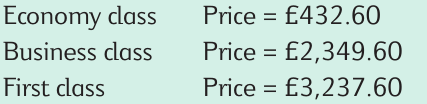
Airlines provide a clear example – they charge first-class passengers significantly more than economy passengers for the same flight. This pricing strategy dramatically increases total revenue from each flight.
Enhanced customer loyalty
When businesses provide products specifically tailored to particular segments, customers feel the business understands their needs. This personalisation builds stronger customer relationships and encourages repeat purchases.
Efficient promotional spending
Segmentation prevents wasteful marketing expenditure. Instead of advertising products to everyone, businesses can focus promotional resources on segments most likely to purchase. This targeted approach reduces costs and improves return on marketing investment.
Wider product range
Many businesses successfully market different products to various customer groups. Car manufacturers exemplify this approach – they produce multiple models, each targeted at different market segments. This strategy allows them to capture sales across the entire market rather than limiting themselves to a single segment.
Summary
Key Points to Remember:
- Market segmentation divides markets into groups of consumers with similar needs and characteristics
- The four main types of segmentation are geographic, demographic, psychographic, and behavioural
- Demographic segmentation includes age, gender, income, social class, ethnicity, and religion
- Socio-economic groups (A, B, C1, C2, D, E) classify consumers by occupation and social status
- Psychographic segmentation focuses on attitudes, opinions, and lifestyles rather than demographics
- Behavioural segmentation examines how consumers use products (usage rate, loyalty, timing)
- Benefits include increased revenue, customer loyalty, efficient marketing, and ability to serve multiple segments
- Businesses often combine multiple segmentation methods to identify target markets more precisely