Alkenes (Edexcel GCSE Chemistry): Revision Notes
📚Revision Notes
Alkenes
Note
Hydrocarbons are molecules made only of carbon and hydrogen atoms. They can be either alkanes or alkenes, depending on the type of bonds between the carbon atoms.
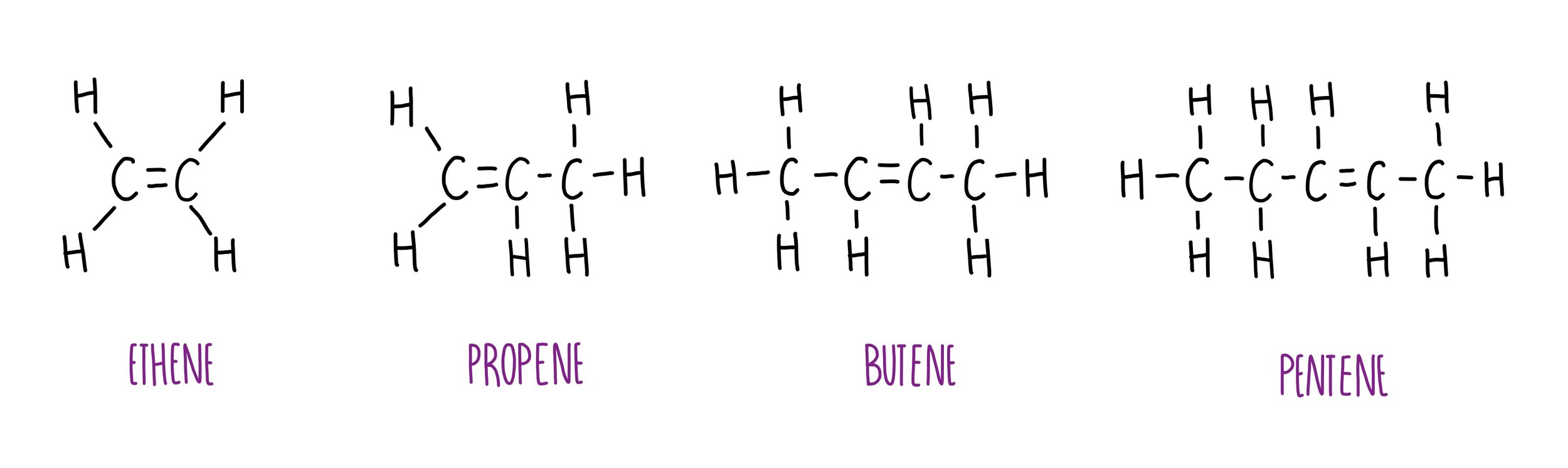
- Alkenes contain at least one double bond between carbon atoms, making them unsaturated. This means they are not bonded to as many hydrogen atoms as possible, unlike alkanes.
Alkenes (Unsaturated Hydrocarbons)
Alkenes are part of a group of molecules called a homologous series, just like alkanes. However, alkenes are unsaturated because they have a double bond that can open up to bond with other atoms, making them more reactive.
Note
The general formula for alkenes is CnH₂n, which means for every carbon atom, there are two hydrogen atoms. For example, the simplest alkene is ethene (C₂H₄), followed by propene (C₃H₆), butene (C₄H₈), and so on.
Why Are Alkenes More Reactive Than Alkanes?
Alkenes are more reactive than alkanes because the double bond is weaker than the single bonds between carbon atoms. This double bond can easily break, allowing the alkene to react with other substances. These reactions are called addition reactions because new atoms are added when the double bond breaks.
Combustion of Alkenes
Alkenes can burn in oxygen, releasing heat energy, although they are less common as fuels compared to alkanes.
Reactions of Alkenes with Bromine
Only alkenes (with double bonds) can react with bromine water in an addition reaction. The double bond in the alkene breaks, and the bromine atoms add to the carbons.
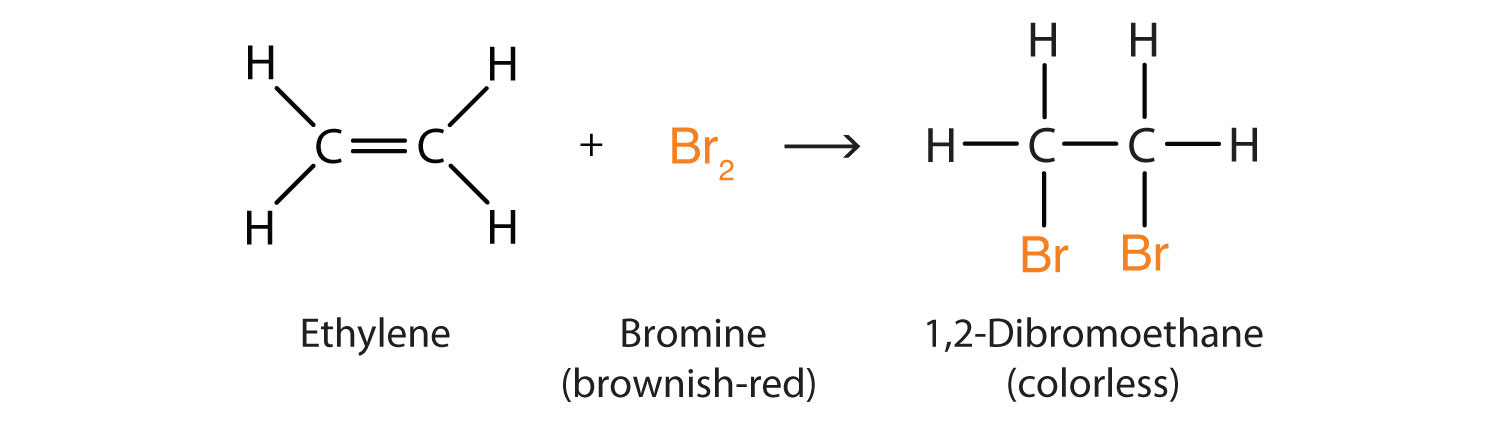
- Bromine water is orange but turns colourless when it reacts with an alkene. This is a test for the presence of alkenes.