Condensation polymers (Edexcel GCSE Chemistry): Revision Notes
📚Revision Notes
Condensation Polymers
Note
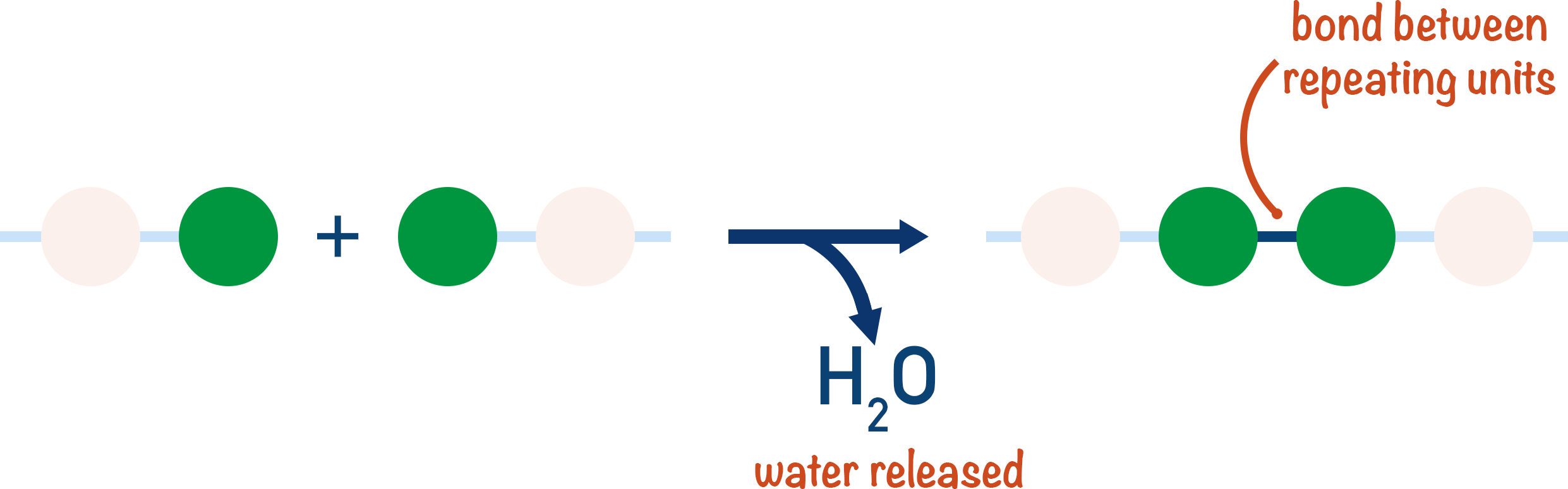
Condensation polymers are formed when two different types of monomers join together, and each time a bond forms, a small molecule (like water) is lost. This process is called condensation polymerisation.
Key Features of Condensation Polymerisation:
- Two different monomers: In condensation polymerisation, two different monomers are involved. Each monomer has two functional groups, one at each end.
- Polymer chain formation: The monomers react together and form bonds between them, creating a polymer chain. For each new bond that forms, a small molecule like water is lost.
-
Two products: The reaction produces two things:
-
The polymer chain.
-
A small molecule, usually water.
How Condensation Polymerisation Works:
- Each monomer has at least two functional groups that can react with another monomer.
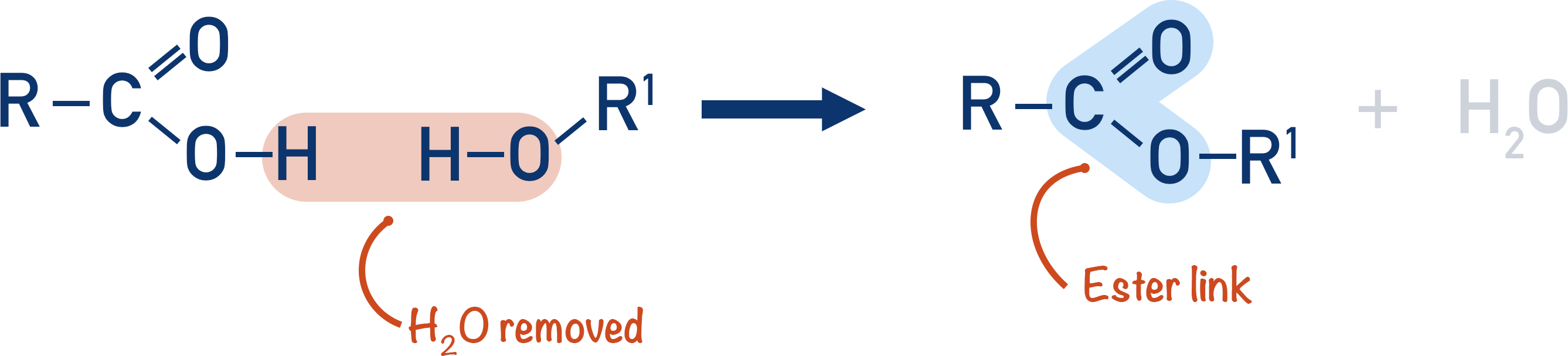
- As the monomers bond, the OH (from a carboxylic acid group) and H (from an alcohol group) are removed, forming water.
- The remaining oxygen from the alcohol and the carbon from the acid group bond to form an ester link.
- This reaction continues, forming long chains of alternating monomers.
Note
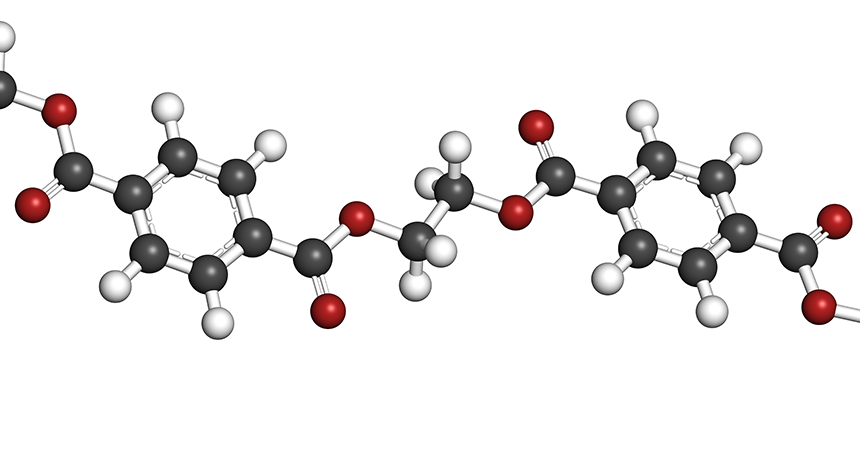
Example: Polyester
Polyester is an example of a condensation polymer.
It is made from two monomers: a dicarboxylic acid (with two carboxylic acid groups, -COOH) and a diol (with two alcohol groups, -OH).
When these monomers react, they form an ester link and water is released.
Polyesters:
Polyesters form when dicarboxylic acid monomers react with diol monomers.
Each time a carboxylic acid group (-COOH) reacts with an alcohol group (-OH), an ester link forms, and a water molecule is lost.
Examples of Biological Polymers
Note
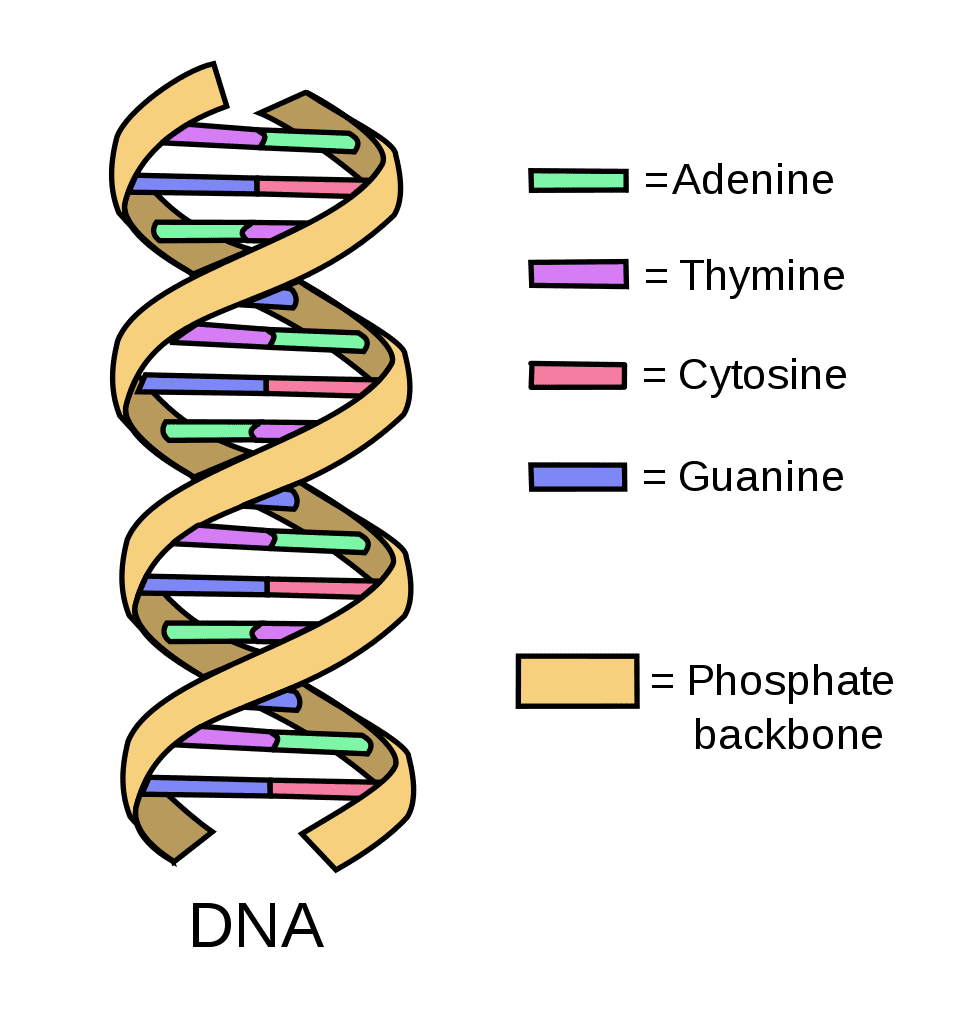
- DNA:
- DNA is a complex molecule that stores genetic information.
- It is made up of two strands of nucleotide monomers, which join together through polymerisation reactions.
- DNA is formed from four different types of nucleotide monomers.
Note
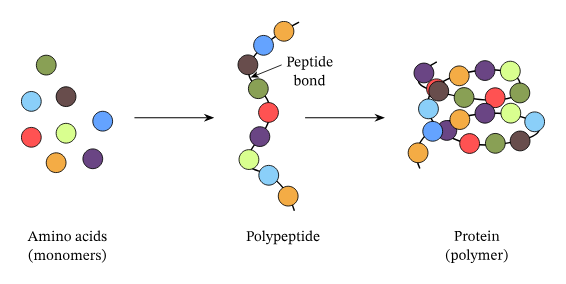
- Proteins:
- Proteins are formed through condensation polymerisation of amino acids.
- Amino acids are the monomers, and they join to form long chains called proteins.
- Proteins have many essential functions in the body, like acting as enzymes.
Note
- Carbohydrates:
- Carbohydrates are molecules made of carbon, oxygen, and hydrogen, and they are used by living organisms to produce energy.
- Starch and cellulose are examples of large, complex carbohydrates. They are made up of many smaller sugar units joined in long chains.