Background radiation (Edexcel GCSE Physics Combined Science): Revision Notes
📚Revision Notes
Background radiation
Note
Background radiation is ionising radiation that is naturally present all around us in the environment. It's always there, even when you're not near any specific radiation source.
- This type of radiation can cause atoms to lose or gain electrons, which makes them ionised (charged).
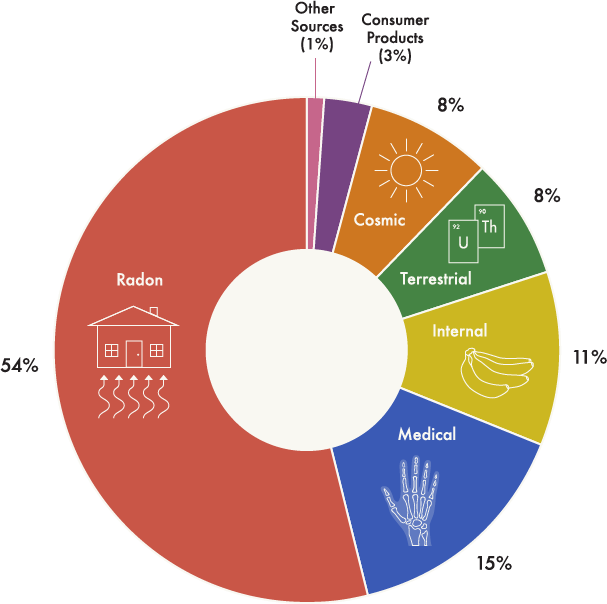
Sources of Background Radiation
Note
Background radiation comes from both natural and artificial sources:
- Natural Sources:
- Cosmic rays: Radiation that reaches Earth from space, especially from the sun and other stars.
- Rocks and soil: Some rocks contain radioactive materials, like uranium, which slowly decay and release radiation.
- Radon gas: A radioactive gas that seeps out of the ground, especially in areas with certain types of rock (like granite).
- Living things: Even the food we eat contains tiny amounts of radioactive materials, like potassium-40.
- Artificial Sources:
- Medical procedures: X-rays, radiotherapy for cancer treatment, and other medical uses of radiation.
- Nuclear power stations and weapons testing: These can release radioactive materials into the environment, although strict controls are in place to minimise exposure.
Radiation Dose
Note
The radiation dose is the amount of radiation you are exposed to. This is measured in sieverts (Sv), but a much smaller unit is often used, called millisieverts (mSv).
The dose varies depending on where you live and your job:
- People living at higher altitudes or in areas with high radon levels may receive more background radiation.
- Jobs like radiographers (who take X-rays) or nuclear power workers can involve exposure to higher radiation levels.
Irradiation vs. Contamination
Note
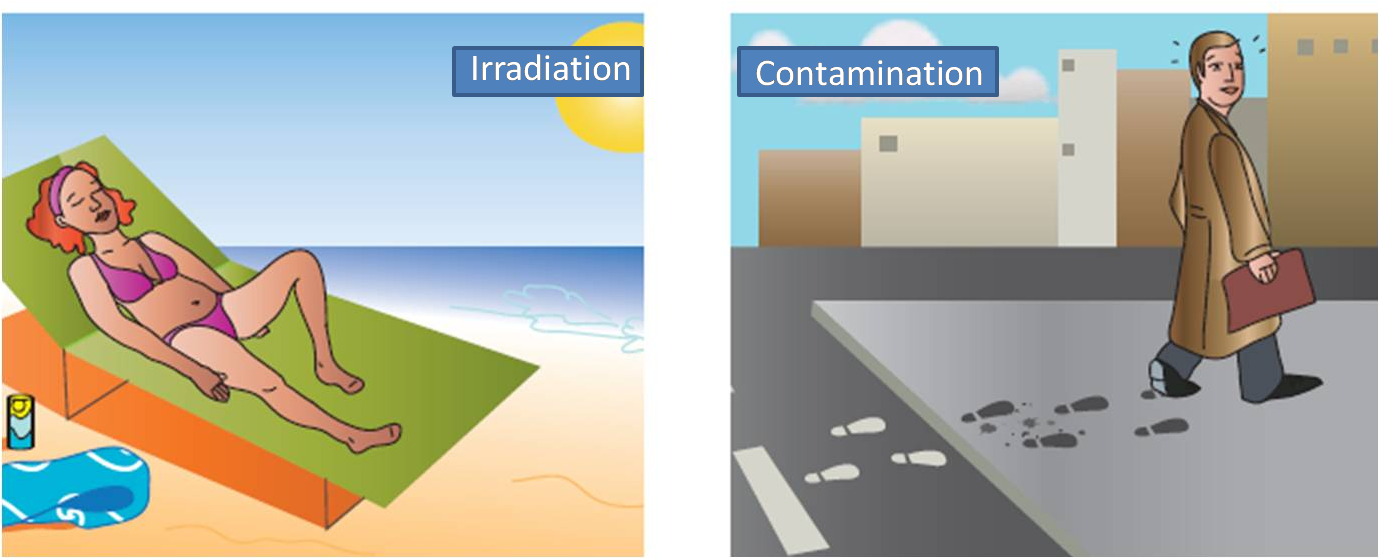
Irradiation: When an object or person is exposed to radiation from a nearby source.
- This does not make the object radioactive—it just means radiation is hitting it.
Note
How to prevent irradiation:
- Store radioactive materials in lead-lined boxes, which absorb the radiation.
- Barriers (like thick walls or glass) can block radiation.
- Use remote-controlled arms to handle radioactive materials from a distance.
- People working with radiation wear photographic film badges to monitor how much radiation they've been exposed to. The film changes if exposed to radiation, allowing workers to track their dose.:
Note
Contamination: This is different from irradiation. It happens when radioactive particles get onto or into an object or person.
Note
For example, if you touch something with radioactive particles on it, your hands become contaminated. If these particles get inside your body (by breathing them in, for instance), they can cause harm by emitting radiation inside you.
Note
How to prevent contamination:
- Wear gloves and use tongs when handling radioactive materials, so particles don't get on your skin.
- Use protective suits to stop radioactive particles from being breathed in or touching your clothes.
- Contaminated objects should be carefully cleaned or disposed of properly to avoid spreading radioactive particles.
Note
Key Differences:
- Irradiation: Exposed to radiation from a distance, but the object or person doesn't become radioactive.
- Contamination: Radioactive particles are on or inside the object or person, and can continue to release harmful radiation.