The Electromagnetic Spectrum (Edexcel GCSE Physics Combined Science): Revision Notes
📚Revision Notes
The Electromagnetic Spectrum
Electromagnetic Waves
Note
Electromagnetic waves are transverse waves that transfer energy from the source of the waves to an absorber.
Visible Light
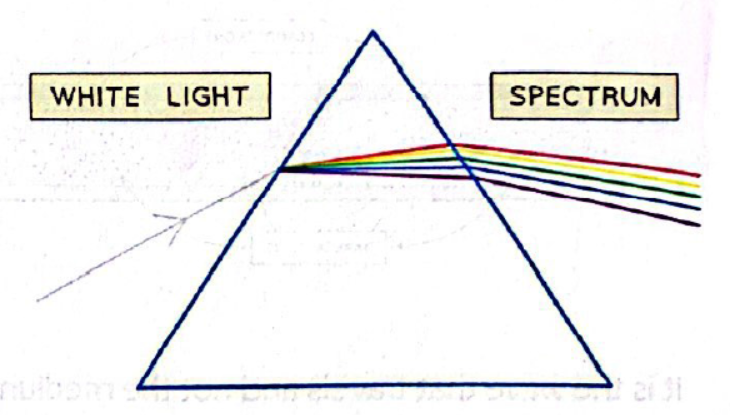
- If we pass white light through a prism, it splits into a spectrum.
- Each colour of light has a different wavelength and frequency.
- Visible light is the only part of the electromagnetic spectrum that can be detected by the human eye.
Spectrum Order (from lower frequency, longer wavelength to higher frequency, shorter wavelength)
- Red
- Orange
- Yellow
- Green
- Blue
- Indigo
- Violet
Characteristics
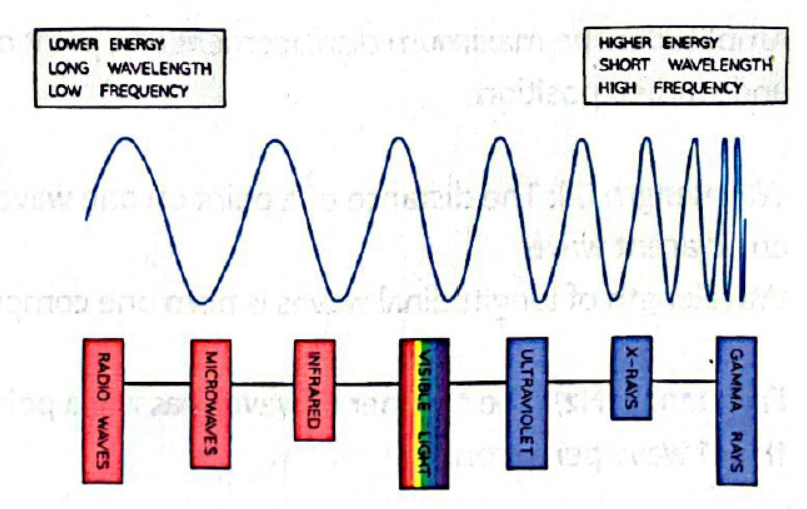
- Lower frequency, longer wavelength (Red) to higher frequency, shorter wavelength (Violet).
- The electromagnetic spectrum is a continuous spectrum.
- They do not need a medium to travel in. All EM waves travel through a vacuum at 3 × 10^8 m/s.
Mnemonic for Spectrum Order
Note
"Raw meat is very unsanitary, except giraffe"
- Helps to remember the colours of visible light in order.
Uses of Electromagnetic (EM) Waves
Radio Waves
- Transmission of Radio and Terrestrial TV Signals
- Can travel long distances before being absorbed by buildings and trees.
- Longer radio waves can spread out between hills due to diffraction.
- Reflect off charged particles in the ionosphere, allowing them to travel long distances around the Earth.
Microwaves
- Heating Food
- Water molecules in food absorb the energy of microwaves, causing the temperature of the food to increase.
- Communication with Satellites in Space
- Microwaves can pass through the Earth's atmosphere without being refracted or reflected.
Infrared
- Emitted by Electrical Heaters and Cooking Food
- The energy of infrared is easily absorbed by the surface of objects.
- Infrared Cameras
- Used to check buildings for heat losses.
Visible Light
- Communication Using Fibre Optics
- Optical fibres are thin strands of glass that transmit pulses of light to carry information.
- Carrying Telephone and Cable TV Signals
- Short wavelengths allow it to carry a large amount of information.
Ultraviolet
- Energy Efficient Light Bulbs
- Ultraviolet light is created inside the bulb and converted to visible light by the bulb's internal surface.
- More energy-efficient due to the shorter wavelength of ultraviolet light.
- Sun Tanning
X-Rays and Gamma Rays
- Medical Imaging
- X-rays: Visualise broken bones.
- Gamma Rays: Detect cancer.
- Both are very penetrating and can pass through body tissues.
- X-rays are absorbed by bones, making them visible on X-ray images.
- Cancer Treatment
- Both X-rays and Gamma Rays can be used to treat cancer.
Electromagnetic Waves
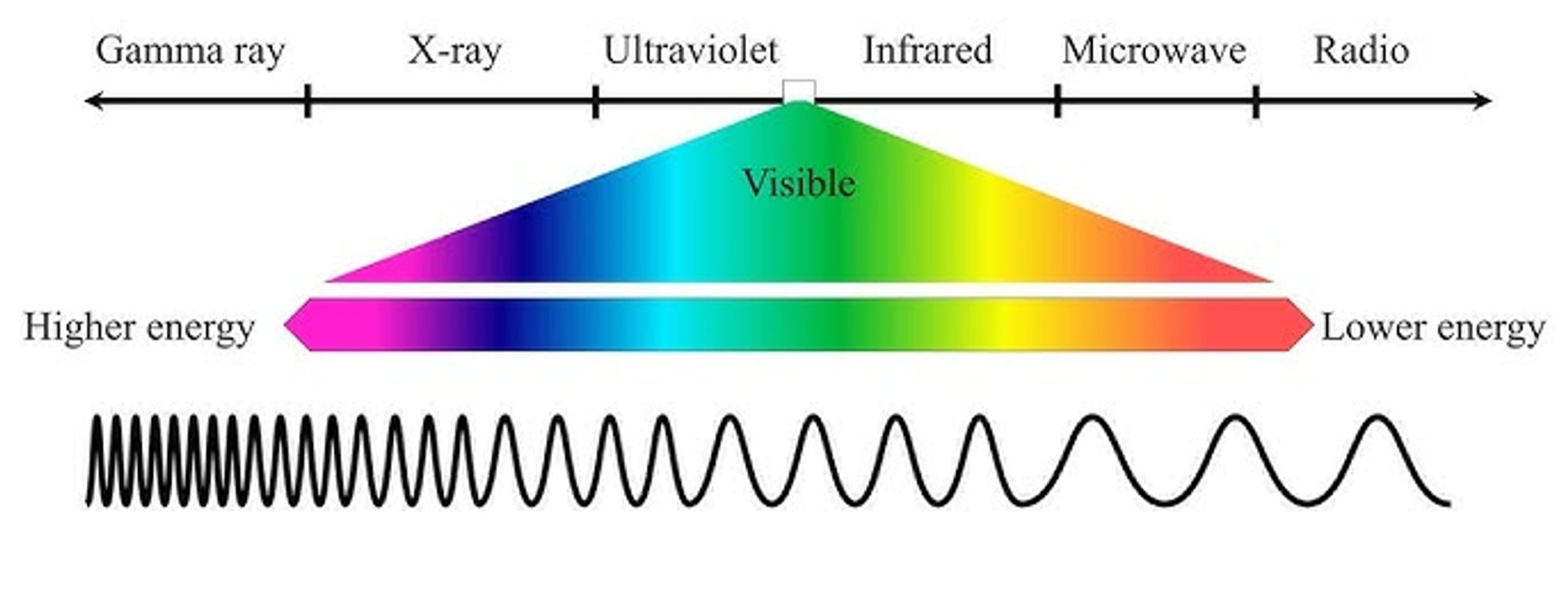
Need to learn the main groups, and in which order (for increasing wavelength or frequency).
- These are transverse waves.
- Do not need particles to move.
- In space, all waves have the same velocity (speed of light).
- They can transfer energy from a source to an absorber.
- Microwave source to food.
- Sun emits energy to Earth.
Relationships
- As speed is constant for all EM waves.
- As the wavelength decreases, the frequency must increase.
- As frequency increases, the energy of the wave increases.
Eyes
- Our retina can only detect visible light, a small part of the entire EM spectrum.
- This visible light is still an EM wave like X-rays and microwaves, do not forget!
The Electromagnetic Spectrum
Note
Electromagnetic waves are transverse waves. They transfer energy from the source of the waves to an absorber.
Note
For example, infrared waves are emitted from the sun. The sun is a source of electromagnetic radiation. The infrared waves travel to the Earth and heat up the air. The air is the absorber.
Note
Key Points Electromagnetic waves are transferred by vibrations of electric and magnetic fields. This means they do not require a medium to travel through. Hence, electromagnetic waves can travel through a vacuum such as space.
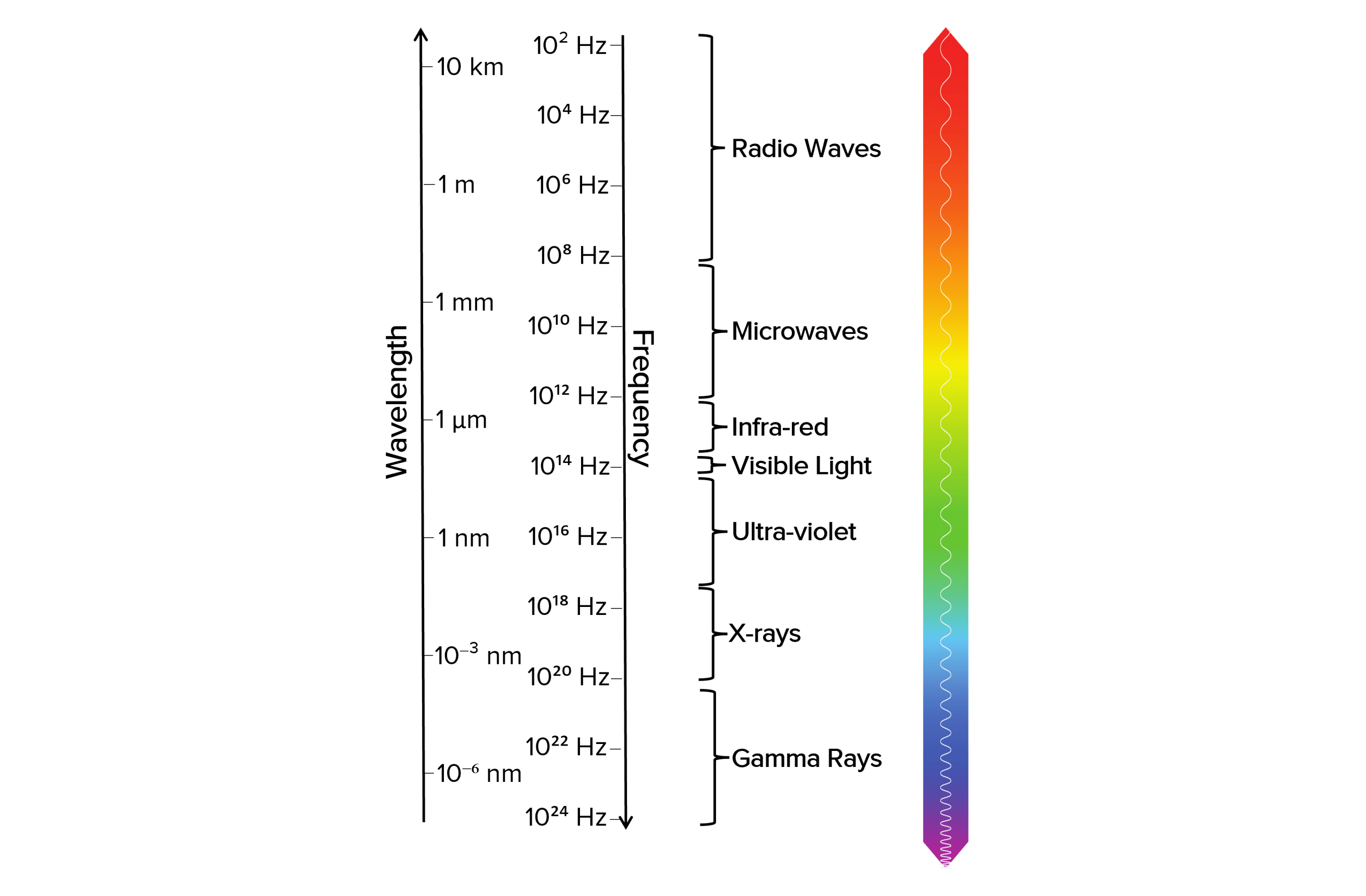
There are lots of types of electromagnetic waves that form a continuous spectrum of electromagnetic radiation. Different types of electromagnetic waves have different frequencies, wavelengths and properties. But all electromagnetic waves travel at the same speed – the speed of light. The full spectrum of electromagnetic waves is shown below.
Note
Humans can only see a very small portion of the electromagnetic spectrum. The waves in this portion are called visible light.