Visible light & colour (Edexcel GCSE Physics Combined Science): Revision Notes
📚Revision Notes
Visible light & colour
Note
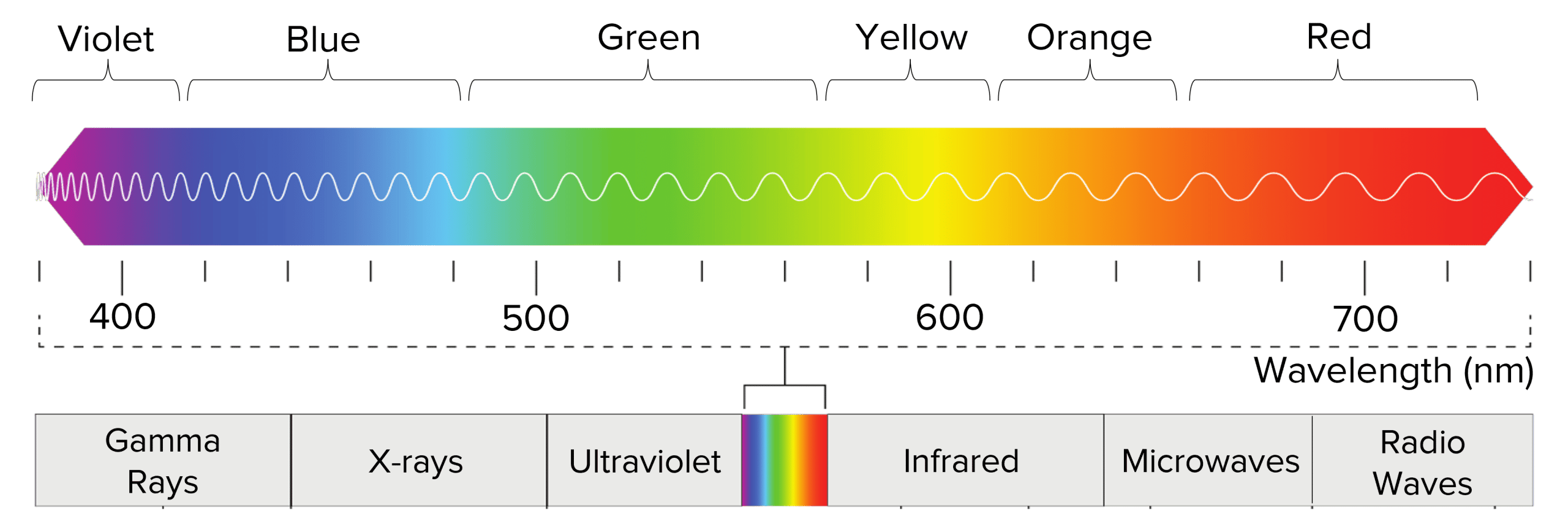
Colour is determined by how materials absorb, transmit, and reflect different wavelengths of light.
- White light is a mixture of all visible light colours, each with different wavelengths.
How Objects Interact with Light:
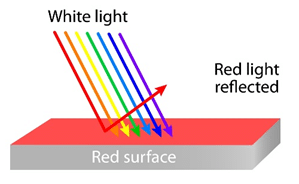
- Opaque Objects: Opaque objects do not allow light to pass through them. When visible light hits them, they absorb some wavelengths and reflect others.
- The colour of an opaque object depends on the wavelengths of light that are reflected.
Note
For example, a red object reflects wavelengths that correspond to the red part of the visible spectrum and absorbs other wavelengths. Examples:
- White objects reflect all wavelengths of visible light.
- Black objects absorb all wavelengths, reflecting none.
- Transparent/Translucent Objects:
- These objects transmit light, meaning some light passes through them. They don't absorb or reflect all the light that hits them.
- The object's colour corresponds to the wavelengths of light that are most strongly transmitted.
How Colours Are Perceived:
Primary Colours of Light: Red, green, and blue.
- Other Colours: Formed by mixing different combinations of primary colours.
Note
For example, a banana looks yellow because it reflects yellow light, or a combination of red and green light. When white light shines on an object, the colours seen are due to the specific wavelengths that are reflected or transmitted.
Colour Philtres:
Colour filters only let through particular wavelengths of light, blocking the rest. They are used to philtre out certain wavelengths, allowing only specific colours to be transmitted while others are absorbed.
How Colour Philtres Work:
| Filter Colour | Effect |
|---|---|
| Primary Colour Filter | Transmits only that colour's wavelength, while absorbing others. If white light is shone on a blue philtre, only blue light will pass through. |
| Same Colour Light & Filter | The light is reflected from the object's surface and transmitted through the philtre. |
| Different Colour Light | If light of a different colour shines through the philtre, the object will appear black because the philtre absorbs all light reflected by the object. |
| Non-primary Colour Filters | These let through wavelengths that correspond to their colour, as well as the primary colours that mix to make that colour. For example, a cyan filter will let through blue and green light. |