15 – To Investigate Factors Affecting the Growth of Microorganisms (LC 2027) (Leaving Cert Biology): Revision Notes
📚Revision Notes
15 – To Investigate Factors Affecting the Growth of Microorganisms
Introduction
Microorganisms are tiny living things that include bacteria and yeast. In this investigation, we focus on yeast because it's safer to work with than bacteria, which can sometimes cause disease.
Note
Yeast is chosen for laboratory investigations because it's generally harmless to humans, unlike some bacteria which can be pathogenic. This makes it an ideal organism for students to work with safely while still learning important microbiological principles.
Yeast is a single-celled fungus that feeds on different types of sugars. When it does this, it produces alcohol (ethanol) and carbon dioxide as waste products. This process is very useful in baking and brewing industries.
When yeast grows in a liquid culture, the solution becomes more cloudy or turbid. The more yeast cells present, the cloudier the culture becomes, which means less light can pass through it. We can measure this using a special instrument called a colorimeter.
Key terminology
When working with microorganisms, you need to understand two important concepts that are often confused:
Important
Asepsis refers to the absence of disease-causing organisms (also called pathogens). Aseptic techniques help prevent contamination from harmful microbes.
Sterile means the complete absence of all microorganisms, both harmful and harmless. Sterile techniques ensure no microorganisms at all can contaminate your investigation.
The key difference is that aseptic conditions only eliminate pathogens, while sterile conditions eliminate all microorganisms.
Safety procedures
Safety is paramount when working with microorganisms. Two types of techniques are used depending on the level of contamination control required.
Aseptic techniques
Important
Aseptic techniques help prevent contamination from disease-causing organisms:
- Wash your hands and clean the work bench with disinfectant before and after each investigation
- Never put your fingers, food, drink or equipment in or near your mouth during the investigation
- Keep all containers closed whenever possible
- Only open containers for the shortest time necessary
Sterile techniques
Important
Sterile techniques prevent contamination from all microorganisms:
- Use pre-sterilised equipment or sterilise equipment yourself before use
- Flame the neck of all flasks both before and after using them
- At the end of each investigation, soak all equipment and cultures in sterilising fluid
Measuring microbial growth
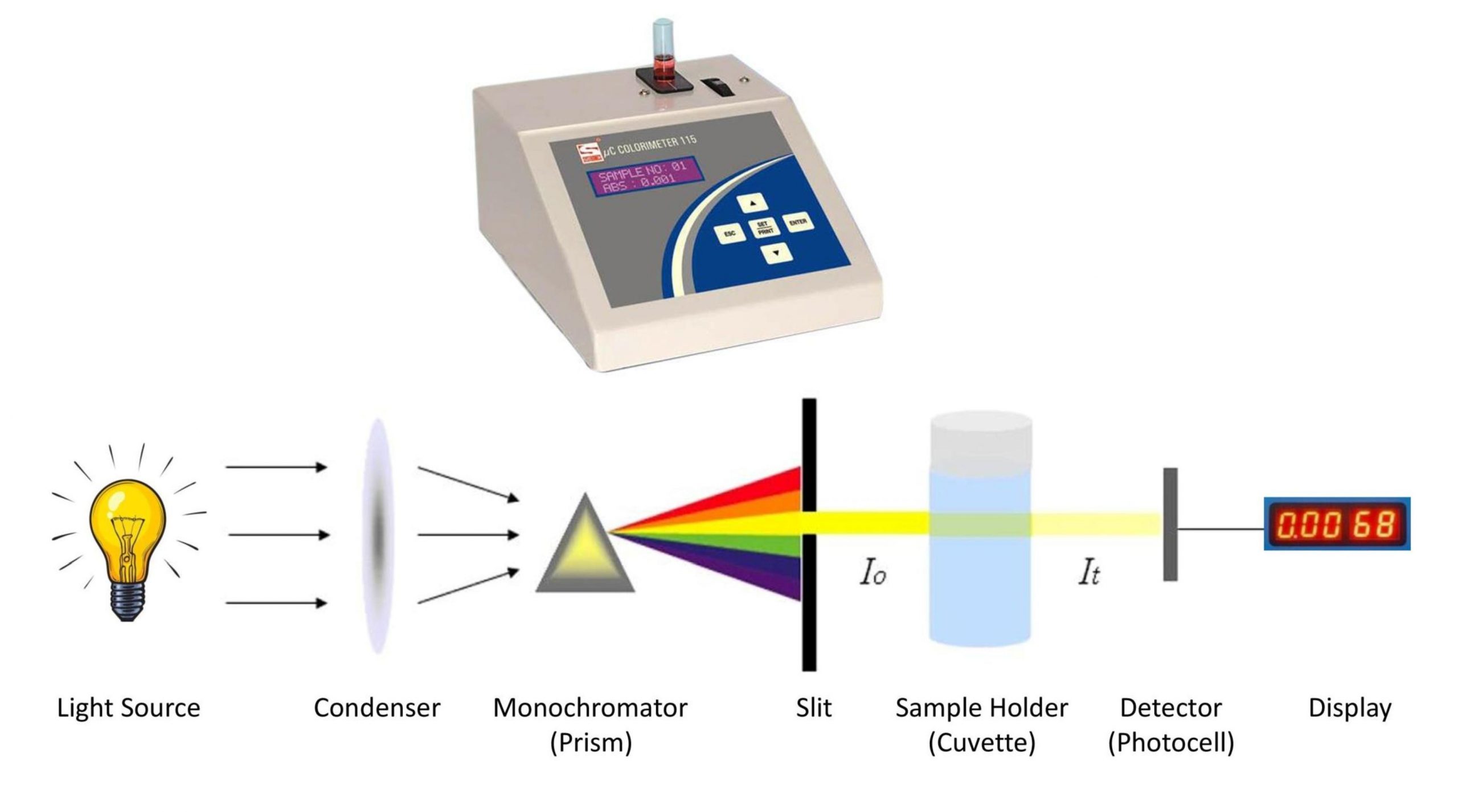
We measure yeast growth by determining how turbid (cloudy) the culture solution becomes. A colorimeter is used for this purpose.
Note
The colorimeter works on a simple principle: as yeast cells multiply, they scatter more light, making the solution appear cloudier. This increased cloudiness means less light passes through the solution, resulting in higher absorbance readings.
The colorimeter measures light absorbance - this tells us how much light is absorbed by the culture rather than passing through it. The greater the light absorbance, the more turbid the solution, and therefore the greater the number of yeast cells present.
Investigation: Effect of pH on yeast growth
This investigation examines how different pH levels affect yeast growth rates by comparing acidic, neutral, and alkaline conditions.
Growing the yeast culture
Example
Method: Preparing Yeast Cultures at Different pH Levels
Step 1: Initial preparation
Wash your hands and clean your bench with disinfectant to reduce the chance of contamination
Prepare a culture solution by adding glucose to boiled and cooled water in a sterile conical flask, then seal with cotton wool
Step 2: Adding yeast
Remove the cotton wool briefly, flame the neck of the flask, add some baker's yeast and swirl to mix it all together
Using aseptic techniques, divide the culture solution equally between three sterile conical flasks
Step 3: Setting up different pH conditions
Add different pH buffers to each flask:
- Flask A: pH buffer 4 (acidic)
- Flask B: pH buffer 7 (neutral)
- Flask C: pH buffer 10 (alkaline)
- Close the flasks using cotton wool plugs
Measuring yeast growth
Example
Measurement Procedure Using Colorimeter
Step 1: Calibration
- Place some of the glucose solution in a cuvette (a small, transparent container designed for use in colorimeters)
- Place this cuvette in the colorimeter and use it to set the absorbance reading to zero
Step 2: Initial measurements
3. As soon as you mix the glucose, yeast and pH buffer solutions, take a sample from each flask, place it in a cuvette and measure the light absorbance
Step 3: Growth period and final measurements
4. Leave the three conical flasks at room temperature (20°C) for 30 minutes to allow yeast growth
5. After 30 minutes, measure the light absorbance for each solution again and calculate the change in absorbance
6. Record your results in a table
7. As a control, repeat the investigation without adding any yeast
Other factors affecting microbial growth
This investigation can be modified to test other factors that affect yeast growth, making it a versatile experimental framework.
Nutrients
You can investigate how different food sources affect growth by testing:
- Different nutrients like sucrose, fructose, starch or artificial sweeteners instead of glucose
- The same amount of glucose dissolved in different volumes of water
- The same volume of water with increasing amounts of glucose (this changes the concentration of the external solution)
Temperature
Environmental conditions significantly impact yeast activity:
- Test water baths at different temperatures such as 0°C, 40°C and 60°C
Note
Temperature affects enzyme activity in yeast cells. Too low temperatures slow down metabolic processes, while too high temperatures can denature essential enzymes, killing the yeast.
Chemical factors
Investigate the effects of potentially harmful substances:
- Investigate conditions that resulted in the greatest yeast growth but add potential anti-fungal chemicals
- Try substances like bleach, detergent, sanitisers, antiseptics, toothpaste, mouthwash or tea tree oil
Industrial importance of microorganisms
Microorganisms play crucial roles in many industries, particularly in pharmaceutical production. They are essential for manufacturing life-saving medications and treatments.
These tiny organisms are used to manufacture:
- Antibiotics to fight bacterial infections
- Vaccines to prevent diseases
- Enzymes, hormones and steroids (including statins to reduce cholesterol)
- Anti-cancer drugs
- Immunosuppressive drugs used in organ transplants
Note
The pharmaceutical industry relies heavily on microorganisms because they can be genetically modified to produce human proteins and other complex molecules that would be difficult or impossible to synthesise chemically.
Remember!
Summary
Key Points to Remember:
- Aseptic techniques prevent contamination from disease-causing organisms, while sterile techniques prevent contamination from all microorganisms
- Turbidity (cloudiness) indicates yeast growth - more yeast cells make the solution more turbid and absorb more light
- Colorimeters measure light absorbance to quantify yeast growth objectively
- pH significantly affects yeast growth - test acidic (pH 4), neutral (pH 7) and alkaline (pH 10) conditions
- Multiple factors can be investigated including temperature, nutrients, concentrations and anti-fungal chemicals
- Microorganisms have vital industrial applications in pharmaceutical manufacturing