Preparation and use of an immobilised enzyme (LC 2026) (Leaving Cert Biology): Revision Notes
📚Revision Notes
Preparation and use of an immobilised enzyme
Background:
Immobilised enzymes: enzymes that are attached to an inert material.
Materials:
- Sodium alginate
- Water
- Yeast
- Beaker
- Glass stirring rod
- Syringe
- Calcium chloride solution
- Sieve
- Distilled water
Method:
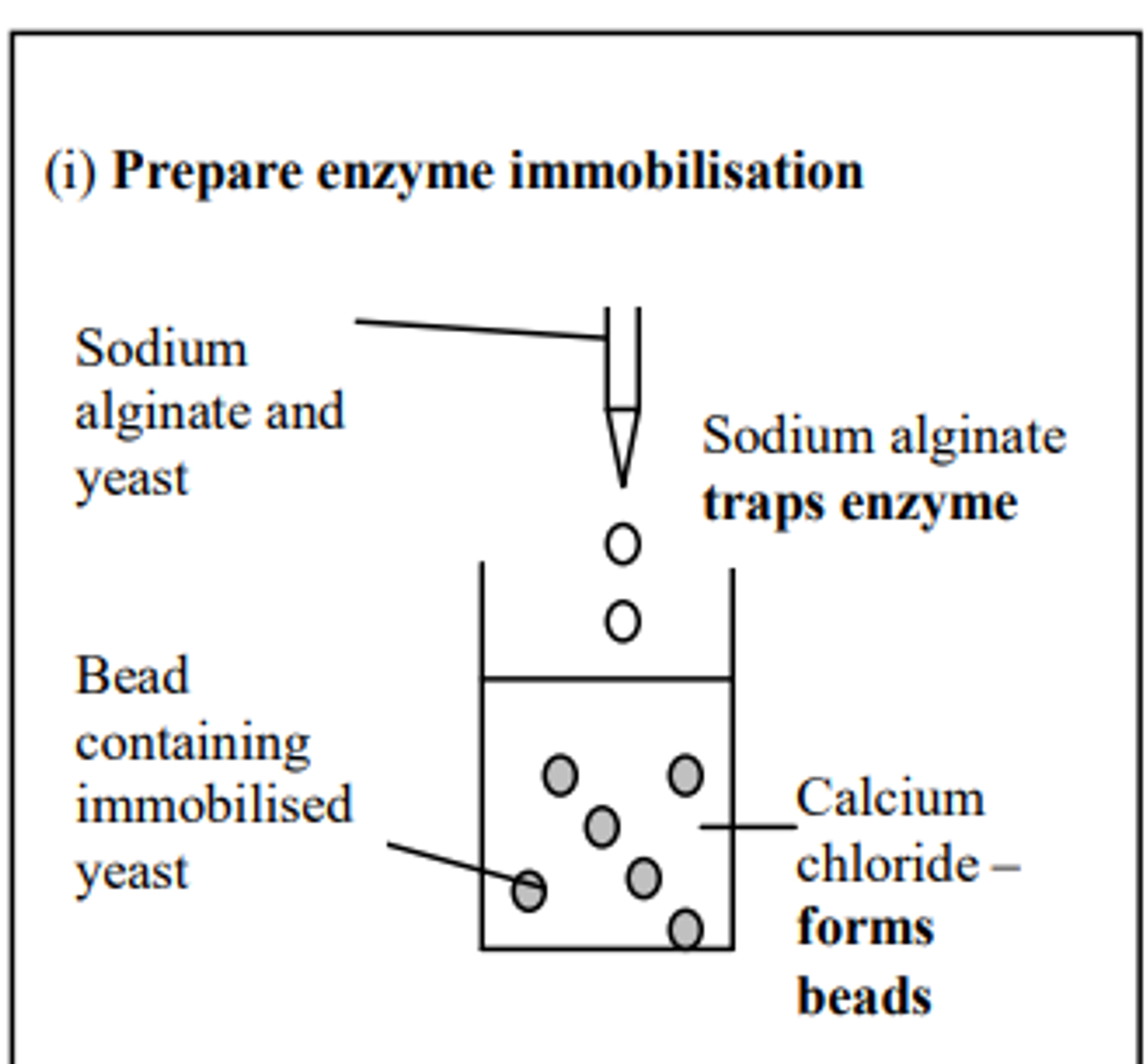
i) Prepare enzyme immobilisation
- Sterilise all glassware in advance of conducting the experiment to ensure no contamination from micro organisms.
- Mix sodium alginate, water, and yeast in a beaker.
- Use a glass stirring rod to stir the mixture and form a paste.
- Draw the mixture into a syringe.
- Release the mixture from the syringe, one drop at a time, into a calcium chloride solution. Beads containing yeast cells will form.
- Leave the beads to harden.
- Philtre the beads through a sieve and rinse with distilled water to remove any excess free enzyme.
ii) Application of the immobilised enzyme-production of glucose from sucrose
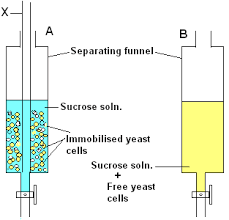
- Mix yeast and water, then pour into a separating funnel (free yeast).
- Place the beads into another separating funnel (immobilised yeast).
- Pour sucrose solution into each of the separating funnels.
- Immediately test samples from each funnel for glucose using Clinistix.
- Repeat the test at intervals until glucose appears in both funnels.
- Record the results.
- Run off the remaining product from each funnel into beakers.
- Compare the turbidity of the solutions from both funnels.