Carboxylic Acids (AQA A-Level Chemistry): Revision Notes
📚Revision Notes
7.3.1 Carboxylic Acids
Carboxylic Acids
Carboxylic acids are a family of organic compounds characterised by the presence of the carboxyl functional group ().
Structure and Nomenclature
General Formula: The general formula for a carboxylic acid is (where R is an alkyl or aryl group).
Carboxyl Group (): The functional group consists of a carbonyl group () and a hydroxyl group () bonded to the same carbon atom, giving carboxylic acids their distinct properties.
Naming Carboxylic Acids: The naming follows the structure alkan + oic acid (e.g., ethanoic acid for ).
- There is no need to number the position of the carboxyl group, as it is always at the end of the carbon chain (carbon 1). Carboxylic Acids Examples:
| Structural Formula | Name | Molecular Formula |
|---|---|---|
| Methanoic acid (formic acid) | ||
| Ethanoic acid (acetic acid) | ||
| Propanoic acid |
Weak Acid Properties of Carboxylic Acids
- Weak Acid Nature:
- Carboxylic acids are weak acids, meaning they only partially ionise in aqueous solution.
- In water, they establish an equilibrium where only a small fraction of molecules donate ions:
The position of this equilibrium lies significantly to the left, indicating low levels of ions, which results in a weakly acidic solution.
- Solubility:
- Carboxylic acids with up to five or six carbons are soluble in water due to hydrogen bonding between the group and water molecules.
- Larger carboxylic acids have limited solubility in water due to the increased hydrophobic nature of the alkyl chain.
- Reactions with Carbonates:
- Despite being weak acids, carboxylic acids react with carbonates () and hydrogen carbonates ()to release carbon dioxide ().
- Reaction with Sodium Carbonate ():
- Reaction with Sodium Hydrogen Carbonate (NaHCO₃):
- These reactions are useful as qualitative tests for carboxylic acids, as the production of gas (observable by effervescence) confirms the acidic functional group.
Esterification: Formation of Esters
Carboxylic acids react with alcohols in the presence of a strong acid catalyst (such as concentrated sulfuric acid) to form esters. This process, known as esterification, is a type of condensation reaction where a small molecule (water) is eliminated.
Reaction Mechanism:
- Carboxylic acid + alcohol → ester + water.
- For example, ethanoic acid reacts with ethanol to form ethyl ethanoate:
- Naming Esters:
- The ester's name comes from both the alcohol (prefix for the alkyl part) and the carboxylic acid (the acid part gives the suffix):
- For example, ethyl ethanoate is derived from ethanol (ethyl group) and ethanoic acid.
- This reaction is often reversible, requiring reflux to ensure maximum yield of ester.
- Key Points about Esterification:
- Catalyst: Concentrated sulfuric acid or hydrochloric acid speeds up the reaction.
- Conditions: Heating under reflux helps achieve a high yield.
- Condensation Reaction: Esterification is classified as a condensation reaction because it eliminates water in the process.
Note
Key Exam Tip:
- Acidity of Carboxylic Acids: Understand the weak acid behaviour and know the equilibrium position in aqueous solution, which lies to the left.
- Testing for Carboxylic Acids: Be familiar with the reactions with carbonates and hydrogen carbonates to identify carboxylic acids through gas production.
- Ester Formation and Naming: Be able to write out esterification reactions, name the products, and identify the conditions required for maximum yield.
Physical Properties
Solubility in water
- Short chain carboxylic acids are very soluble in water.
- This is because the polar and can form H-bonds with water.
- However, as the number of C atoms in the chain increases, the solubility decreases
- This is due to the longer non-polar hydrocarbon chain.
Boiling point
The boiling point of carboxylic acids is higher than corresponding alcohols.
- For propan-1-ol and ethanoic acid: - They have the same relative so the same number of electrons.
- This means they have similar Van der Waals forces between the molecules, both of them have H-bonds between their molecules.
- The higher boiling point of the carboxylic acid is because the H-bonding occurs between 2 molecules of the acid (to form a DIMER).
- This doubles the size of the molecule and increases the van der Waals' forces between the dimers resulting in a higher boiling point.
Acid Reactions of Carboxylic Acids
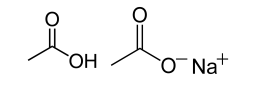
Carboxylic acids react with bases, alkalis and reactive metals to form salts (just as other acids do)
Acid + Carbonate → Salt + Water + Carbon Dioxide
- Ethanoic acid with sodium carbonate:
- Ethanoic acid with sodium hydrogen carbonate:
With Metals
Observations: Effervescence occurs, and the solid metal is used up, producing a colourless solution.
Acid + Metal → Salt + Hydrogen
- Ethanoic acid with magnesium:
With Bases
Observations: Release of heat, and a colourless solution remains.
Acid + Base → Salt + Water
- Ethanoic acid with sodium hydroxide:
With Ammonia
Observations: There is a release of heat, and a colourless solution remains.
Acid + Ammonia → Ammonium Salt
- Ethanoic acid with ammonia:
(Ammonium ethanoate formed)