Renewable energy (AQA GCSE Design and Technology): Revision Notes
📚Revision Notes
Renewable energy
What is renewable energy?
Renewable energy comes from sources that can naturally replenish themselves over time. These energy sources allow us to generate electricity while avoiding the direct release of carbon emissions into the atmosphere. Although setting up renewable energy systems can require significant initial investment, the ongoing energy costs are typically very low once the infrastructure is in place.
Note
The key advantage of renewable energy is its ability to regenerate naturally, making it a sustainable long-term solution for our growing energy needs while reducing environmental impact.
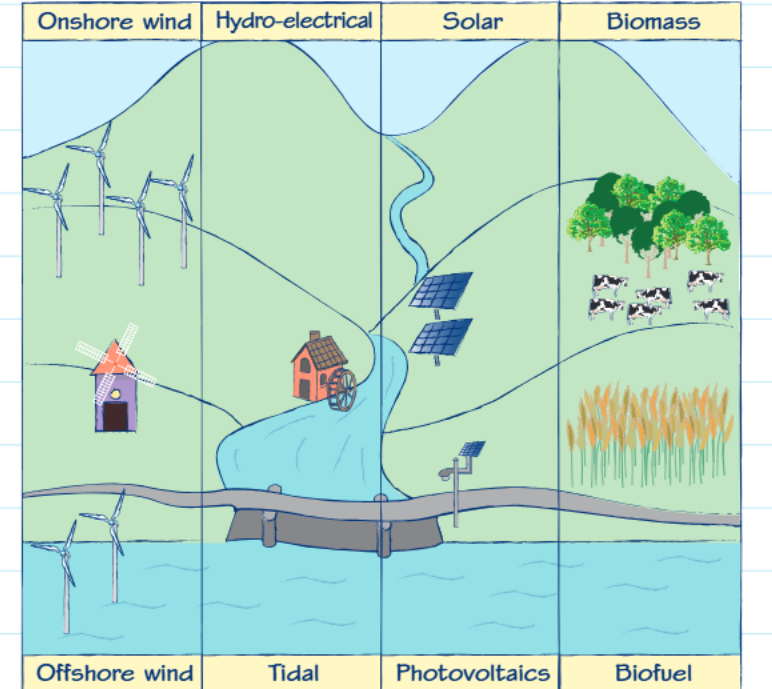
The diagram above shows the main types of renewable energy technologies that are currently being used around the world to generate clean electricity.
Types of renewable energy
Wind energy
Wind power works by using the natural movement of air to turn large turbines that contain generators. These turbines are typically positioned in areas where there are consistent breezes, such as on hills or coastal regions.
Advantages of wind energy:
- Can be installed in remote locations where other power sources might not be practical
- Produces clean electricity without direct carbon emissions
Disadvantages of wind energy:
- Wind turbines can be considered unsightly by local communities
- May interfere with shipping routes when placed offshore
- Wind patterns can be unpredictable, making power generation inconsistent
Note
Strategic placement is crucial for wind energy success. Ideal locations include coastal areas, hilltops, and open plains where wind speeds are consistent and strong enough to maintain efficient turbine operation.
Solar energy
Solar power captures energy from sunlight and converts it into usable electricity through two main methods. Photovoltaic systems directly convert sunlight into electrical energy, while thermal solar systems use the sun's heat to warm fluids or create steam that can drive turbines.
Advantages of solar energy:
- Can provide individual homes with their own independent power supply
- Abundant energy source during daylight hours
Disadvantages of solar energy:
- Performance depends heavily on geographical location and climate
- Effectiveness varies with cloud cover and seasonal changes in daylight hours
Tidal energy
Tidal energy harnesses the predictable movement of ocean tides to generate electricity. This process often involves building artificial barriers called barrages across tidal rivers and coastal bays to channel the moving water through turbines.
Advantages of tidal energy:
- Tides are highly predictable, providing reliable energy generation
- Can produce large amounts of electricity in suitable locations
Disadvantages of tidal energy:
- Construction of barrages can cause significant damage to coastal ecosystems
- Only viable in specific coastal areas with suitable tidal ranges
Important
While tidal energy offers excellent predictability compared to wind and solar power, the environmental impact of building barrages can be severe, affecting marine ecosystems, fish migration patterns, and coastal habitats.
Hydro-electrical energy
Hydro-electrical power systems work by storing water in large reservoirs, then releasing it to flow through turbines that generate electricity. The controlled release of water provides the mechanical energy needed to drive the electrical generators.
Advantages of hydro-electrical energy:
- Can produce substantial amounts of electricity when needed (on-demand power)
- Provides reliable, consistent energy generation
Disadvantages of hydro-electrical energy:
- Building dams and reservoirs requires substantial upfront costs
- Construction can significantly impact local environments and ecosystems
Biomass energy
Biomass energy comes from organic materials including waste gases from landfills, living organisms, agricultural crops, and alcohol-based fuels. Crops can be specifically grown to produce biodiesel fuel, while waste materials like wood can be burned directly for energy.
Advantages of biomass energy:
- Makes use of materials that would otherwise be considered waste
- Generally considered carbon neutral since plants absorb CO2 while growing
Disadvantages of biomass energy:
- Still produces some greenhouse gases like methane during processing
- Requires large areas of land to grow sufficient biomass materials
- Growing biomass crops requires substantial amounts of water
- Poor land management can contribute to deforestation problems
Important
While biomass is often labelled as "carbon neutral," this designation is complex and debated. The carbon neutrality depends on sustainable harvesting practices, transportation distances, processing methods, and the time scale over which carbon absorption and release are measured.
Summary
Key Points to Remember:
- Renewable energy sources can naturally regenerate and don't directly produce carbon emissions during electricity generation
- The five main types are wind, solar, tidal, hydro-electrical, and biomass energy
- All renewable energy systems have high initial setup costs but low ongoing operational costs
- Each type has specific geographical and environmental requirements that affect where they can be used effectively
- While renewable energy is cleaner than fossil fuels, each type still has potential environmental impacts that must be considered