Targeting cancer cells (Edexcel GCSE Biology): Revision Notes
📚Revision Notes
Targeting cancer cells
Cancer treatment has been revolutionised through the development of targeted therapies that focus specifically on cancer cells whilst leaving healthy cells largely unharmed. This approach relies on understanding the unique characteristics that distinguish cancerous cells from normal body cells.
Note
This targeted approach represents one of the most significant breakthroughs in modern oncology, moving away from treatments that affect all rapidly dividing cells to those that can distinguish between healthy and cancerous tissue.
What makes cancer cells different
Cancer cells possess special proteins called antigens on their outer membranes, which are known as tumour markers. These markers are not present on healthy cells in the body, making them excellent targets for treatment. This fundamental difference allows scientists to develop therapies that can distinguish between cancerous and normal cells.
Important
The presence of unique tumour markers on cancer cells is the key principle that makes targeted cancer therapy possible. Without these distinguishing features, it would be impossible to selectively target cancerous cells while sparing healthy tissue.
Methods of targeting cancer cells with monoclonal antibodies
There are three primary approaches to using monoclonal antibodies in cancer treatment:
Stimulating the immune system
Monoclonal antibodies can be designed to attach to tumour markers and then activate the body's natural immune system. Once the antibodies bind to the cancer cell markers, they signal to immune cells that these are dangerous cells that need to be destroyed. This approach harnesses the power of the body's own defence mechanisms.
Example
Worked Example: Immune System Activation
Step 1: Monoclonal antibodies are injected into the patient Step 2: Antibodies circulate and bind specifically to tumour markers on cancer cells Step 3: Bound antibodies act as "flags" that signal to immune cells Step 4: Immune cells recognise the flagged cells as threats and destroy them
Blocking cell division
Another strategy involves using monoclonal antibodies to occupy receptor sites on cancer cell surfaces. When these antibodies bind to these receptors, they prevent growth-promoting molecules from attaching to the cell. Without these growth signals, the cancer cells cannot continue to divide and multiply, effectively stopping tumour growth.
Example
Worked Example: Growth Signal Blocking
Step 1: Growth factor receptors on cancer cells normally receive signals to divide Step 2: Monoclonal antibodies bind to these receptor sites Step 3: Growth factors cannot attach to the blocked receptors Step 4: Without growth signals, cancer cells stop dividing
Delivering toxic treatments
Monoclonal antibodies can also act as guided missiles, carrying harmful substances directly to cancer cells. These antibodies can transport chemotherapy drugs, toxic chemicals, or radioactive materials straight to the tumour site. Because the antibodies only attach to cancer cells with the specific tumour markers, the toxic payload is delivered precisely where it's needed.
Example
Worked Example: Targeted Drug Delivery
Step 1: Toxic drug is chemically attached to a monoclonal antibody Step 2: The antibody-drug complex is injected into the patient Step 3: Antibodies seek out and bind only to cancer cells with matching markers Step 4: Toxic drug is delivered directly to cancer cells, sparing healthy tissue
Diagnostic applications
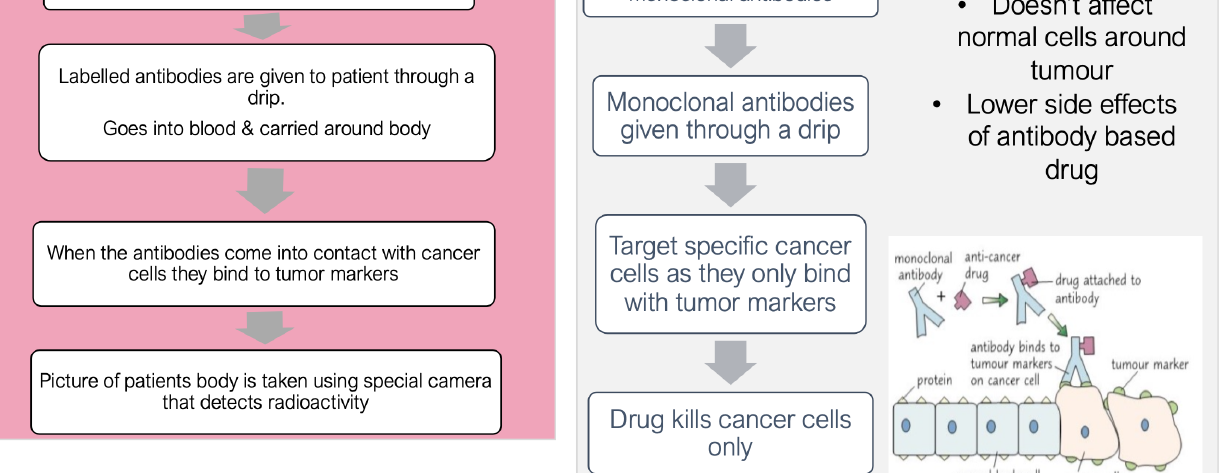
Monoclonal antibodies can be used for cancer diagnosis by attaching radioactive elements to them. When these labelled antibodies are administered to a patient through an intravenous drip, they circulate through the bloodstream and bind specifically to any cancer cells present in the body. Special cameras that can detect radioactivity are then used to create images showing exactly where tumours are located and how large they are.
Note
This diagnostic technique allows doctors to detect even small tumours that might not be visible through conventional imaging methods like X-rays or CT scans. The radioactive labelling provides a highly sensitive way to locate cancer throughout the body.
This technique helps doctors determine the extent of cancer spread throughout the body.
Therapeutic benefits
Targeted cancer treatments using monoclonal antibodies offer significant advantages over traditional treatments like chemotherapy and radiotherapy. The most important benefit is that these treatments cause minimal damage to healthy cells surrounding the tumour. This precision targeting results in fewer side effects for patients, making treatment more tolerable and improving quality of life during therapy.
The specificity of monoclonal antibodies means that patients experience less nausea, hair loss, and other common side effects associated with conventional cancer treatments. This allows for more aggressive treatment of the cancer whilst maintaining the patient's overall wellbeing.
Summary
Key Points to Remember:
- Cancer cells have unique tumour markers on their surfaces that healthy cells don't possess, making targeted treatment possible
- Monoclonal antibodies can work in three ways: stimulating immune responses, blocking cell division, or delivering toxic substances directly to cancer cells
- Radioactively labelled antibodies help doctors locate and measure tumours throughout the body using special detection cameras
- Targeted treatments cause significantly fewer side effects because they specifically attack cancer cells whilst sparing healthy tissue
- This precision approach represents a major advancement in cancer treatment, offering hope for more effective and tolerable therapies