Electron energy levels (Edexcel GCSE Physics): Revision Notes
📚Revision Notes
Electron energy levels
What are Energy Levels?
Note
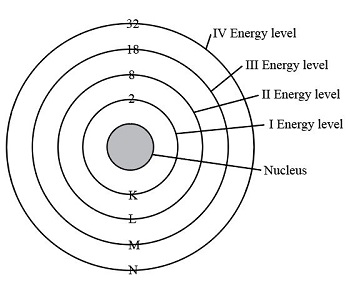
In an atom, electrons move around the nucleus in specific regions called energy levels (these can also be called shells). These energy levels are like steps on a ladder. Electrons can only exist at specific levels, not in between.
- The energy levels closer to the nucleus are lower in energy, while those further away have higher energy.
Electron Excitation and De-excitation
- When an Electron Moves Up an Energy Level:
- Electromagnetic radiation is absorbed by the electron.
- The energy absorbed is exactly the difference between the two energy levels.
- The electron becomes 'excited', meaning it moves to a higher energy level (further away from the nucleus).
- When an Electron Moves Down an Energy Level:
- The electron releases the same amount of energy as electromagnetic radiation when it falls back to a lower energy level.
- The energy released corresponds to the difference between the two levels. This energy is often in the form of light (like the colours you see in neon signs).
Ionisation
Note
An atom becomes ionised when it loses an electron.
- If an electron in the outer energy level absorbs enough radiation, it can gain so much energy that it completely leaves the atom.
- This electron is now called a free electron, and the atom is said to be ionised because it has lost an electron and become positively charged.
Ionising Radiation
Note
Ionising radiation is any type of radiation that has enough energy to knock electrons out of atoms, which turns them into ions.
- Common forms of ionising radiation include alpha particles, beta particles, and gamma rays, which are all types of nuclear radiation.
Understanding Energy Levels
Energy levels get closer together the further they are from the nucleus. This means:
-
An electron moving from a higher energy level to a lower one (e.g., from the 3rd to the 2nd level) releases less energy than an electron moving from a lower level to an even lower one (e.g., from the 2nd to the 1st level). The frequency (or colour) of the radiation emitted depends on the amount of energy released:
-
The greater the energy difference between the levels, the higher the frequency of the radiation emitted.
-
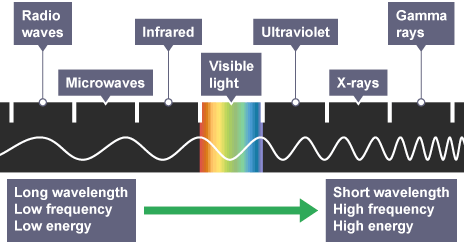
Higher frequencies are closer to ultraviolet or X-rays, while lower frequencies are more like visible light or infrared.