Soccer, Handball, and Touch Rugby (Grade 10 NSC Matric Life Orientation): Revision Notes
📚Revision Notes
Soccer, Handball, and Touch Rugby
Introduction to traditional and non-traditional sports
Note
These three exciting sports offer different ways to develop your physical skills, teamwork abilities, and strategic thinking. Soccer represents the world's most popular traditional sport, handball combines elements from multiple games, and touch rugby provides a safer alternative to full-contact rugby while maintaining the excitement and skill development.
1: Playing soccer

Understanding soccer basics
Soccer brings communities and nations together as the world's most beloved sport. Both men and women participate at all levels, making it perfect for school physical education and after-school activities. Developing your soccer abilities requires consistent practice with the techniques covered in this unit.
South African soccer terminology
South African soccer culture has developed unique terms that reflect our local playing style:
- Diski describes the typical South African approach to soccer, emphasising rhythm and flair. Players focus on enjoyment and skill demonstration rather than just winning
- Shibobo means tricking an opponent by placing the ball between their legs - a move that requires excellent timing and ball control
- Tsamaya refers to various deceptive skills including step-overs, dummy moves, and back-heel touches designed to confuse defenders
Primary objective of soccer
The fundamental goal involves scoring more goals than your opponents. Success requires maintaining focus on your target, which could be either a teammate you're passing to or the goal itself. Always keep the back of the net as your ultimate target when shooting.
Essential equipment and setup
You can create soccer opportunities almost anywhere by adapting to available space. School grounds work perfectly for practice sessions.
Note
Essential requirements include:
- Two goals positioned opposite each other
- A halfway line marking the field centre
- A ball suitable for the playing surface
- Appropriate footwear for safety and ball control
Key soccer regulations
Several important rules govern soccer play:
- Players cannot use hands or arms to control the ball, except during throw-ins
- Throw-ins occur when the ball crosses sidelines - keep both feet grounded and throw over your head
- Corner kicks and goal kicks happen when the ball leaves the field across end lines
- Physical contact rules prohibit hitting, kicking, tripping, jumping on, spitting at, charging, pinching, pushing, or holding opponents
- Penalty kicks result from contact fouls in the penalty area or handball by defending teams
- Yellow cards warn players about misconduct, while red cards remove players from matches
Essential soccer techniques
Goal-scoring skills
Example
Worked Example: Proper Shooting Technique
Step 1: Plant your non-kicking foot towards the goal
Step 2: Draw your other foot back for power
Step 3: Use the inside area of your foot for precision
Step 4: Maintain firm contact to guide the ball into the net
Step 5: Always keep your target in sight throughout the movement
Goalkeeper techniques
Chipping over goalkeepers requires lifting the ball above their body using a short, sharp contact at the ball's bottom. Avoid following through completely, and ensure your non-kicking foot stays close to the ball throughout the movement.
Ball possession strategies
Effective passing forms soccer's foundation. Keep passes simple by finding the nearest unmarked teammate. Sometimes passing to more distant players creates better scoring opportunities. Focus on accurate passing rather than hopeful kicks, always knowing your intended target before making contact with the ball.
Advanced techniques
Example
Worked Example: Bicycle Kick Execution
Step 1: Position yourself with your back to the goal
Step 2: As the ball approaches, jump backwards
Step 3: Keep your elbows bent and hands spread for safety
Step 4: Strike the ball with your dominant foot while airborne
Step 5: Land safely, avoiding your back, shoulders, neck, or head
Bicycle kicks provide spectacular goal-scoring opportunities and help defenders clear dangerous situations. These overhead kicks require extensive practice for safety and effectiveness.
Defensive skills
Good defending involves positioning yourself between the opponent and their target. Wait until opponents commit to their direction before challenging for the ball. Use block tackles by placing your supporting foot down firmly and directing your free foot towards the opponent's movement path.
Ball control and tricks
Practising juggling and ball manipulation develops comfort and control. These skills don't necessarily translate directly into match situations but significantly improve your overall ball-handling abilities. Try moving the ball from your forehead to neck, then to feet for comprehensive skill development.
Safety considerations
Important
Critical Safety Rules:
- Never tackle with studs raised, as this can cause serious injuries
- Avoid tackling from behind, which opponents cannot see coming
- Never grab players around the neck during challenges
- Use proper heading technique to avoid injury to yourself and others
- Always warm up before playing and cool down afterwards
- Don't kick with your toes, as this can cause foot injuries
2: Playing handball
Understanding handball fundamentals
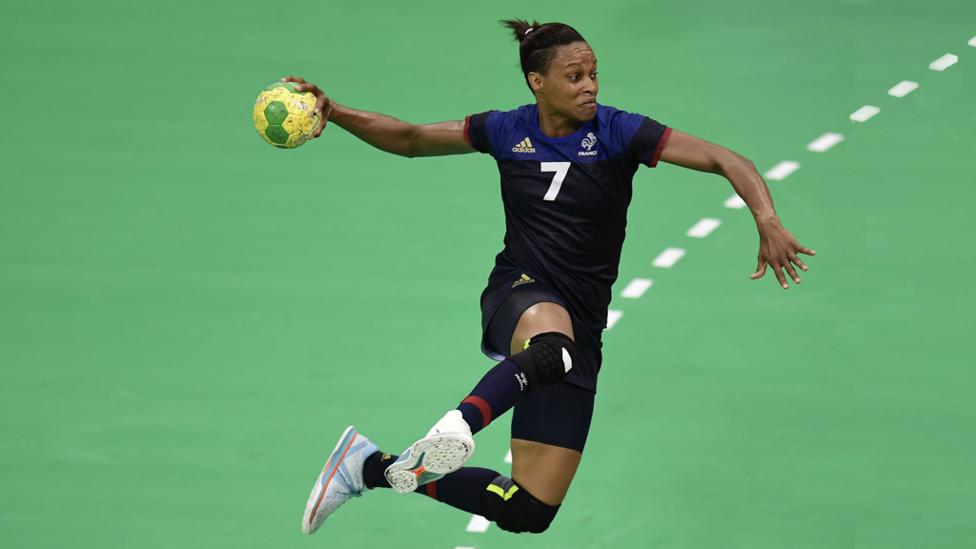
Handball combines soccer and netball elements with techniques from various other sports. Learning handball develops athletic skills that transfer effectively to other sporting activities. The game provides excellent entertainment while building teamwork capabilities. You can enjoy handball indoors or outdoors and easily create your own court space.
Primary handball objective
Teams aim to throw the ball into their opponents' goal area. Defending teams work to prevent scoring by stopping shots or regaining ball possession. This creates opportunities for defenders to launch their own attacking moves towards the opposite goal.
Handball regulations
Note
Key Rules for Fair Play:
- Each team fields six court players plus one goalkeeper
- Players may hold the ball for maximum three seconds before passing or shooting
- Movement with the ball is limited to three steps maximum
- Only goalkeepers can enter goal areas
- Physical contact including tripping, hitting, wrestling, or holding opponents is prohibited
Setting up handball games
Handball offers flexible playing options requiring minimal specific equipment. You can mark court boundaries in any open space, ensuring the area is free from broken bottles or stones for player safety. Standard courts measure 40 metres long by 20 metres wide, with D-shaped goal areas at each end. Use chalk for line marking and create multiple courts if space permits several teams to play simultaneously.
Handball techniques and activities
Shooting and defending practice
Example
Worked Example: Partner Shooting Practice
Step 1: Shooter positions themselves at chosen distance from goal
Step 2: Defender stands arm's length from shooter
Step 3: Defender forces shooter left, right, or over their heads
Step 4: After ten attempts, increase shooting distance by three paces
Step 5: Continue progression to develop accuracy at various distances
Ball movement skills
The bouncing back exercise develops quick reactions and ball control. Players throw balls forwards, catch them on the first bounce, take three steps, bounce to teammates, then return to starting positions while teammates continue the sequence.
Passing techniques
Baseball passing works effectively for moving the ball across longer distances. Grip the ball with one hand while using the other for stability. Position your throwing hand slightly higher than your supporting hand, keep the ball near your ear for quick release, and step towards your target while maintaining hand position behind the ball to prevent excessive spin.
Bounce passing helps when you cannot use baseball or overhead passes. Use both hands or single-hand grips, point fingers towards the ground, hold the ball chest-high, step forwards with bent knees, and push outward with sufficient force so the ball reaches your target directly after ground contact.
Chest passing aims for teammate's chest level. Form a W-shape behind the ball with both hands, bring thumbs together centrally, spread fingers out, step towards your target, push the ball forwards while keeping elbows close to your body, straighten arms and fingers as you release, keep wrists pointed upward to stretch your arms, and maintain eye contact with receivers throughout the movement.
Team game activities
Relay ball games develop handball skills within competitive team formats. Teams run set distances to hit target areas, collect balls, return quickly, and pass to next teammates. Successful target hits earn points, with first teams reaching specific point totals after set time periods declared winners.
3: Playing touch rugby

Touch rugby fundamentals
Touch rugby provides fast-paced action similar to traditional rugby while eliminating tackles, scrums, lineouts, rucks, and mauls. This sport promotes running abilities, ball-handling skills, dodging and chasing techniques, evasion strategies, and support play alongside attacking and defending game plans. Game duration can be adjusted to suit your requirements, with two 20-minute sessions working well with short breaks between periods. Field sizes can vary, though half rugby fields work effectively, requiring only line markings rather than posts.
Touch rugby objectives
Teams work to score touchdowns or tries while preventing opposition scoring opportunities. Success depends on territorial advancement through strategic ball movement and player positioning.
How to play touch rugby
Games begin from field centres with teams passing, knocking, or handing the ball between attacking teammates who may run forwards to score. Defending players prevent territorial gains by touching ball carriers with their hands. Either defending or attacking players may initiate touches.
Note
Touch Contact Rules: Touch contacts can occur on any part of player clothing using minimum necessary force. Excessive force results in penalty awards. After being touched, ball possession must stop, with players placing balls at or as close as possible to touch marks.
After six touches, ball possession transfers to the opposing team. Players claim touches by raising hands and shouting "Touch!" to alert referees and other players.
Scoring system
Example
Worked Example: Scoring in Touch Rugby
Step 1: Attacking player receives the ball
Step 2: Player advances towards the score line
Step 3: Player places ball on the ground on or beyond defending team score line
Step 4: One point is awarded for the touchdown/try
Step 5: Play restarts with tap from field centre by non-scoring team
Touchdowns or tries earn one point each when attacking players place balls on the ground on or beyond defending team score lines. The team accumulating the most tries by game end wins the match.
Key playing strategies
Note
Success in touch rugby requires:
- Quick ball movement to maintain attacking momentum
- Supporting teammates to provide passing options
- Strategic positioning to create space and opportunities
- Effective communication during defensive and attacking phases
- Understanding when to pass versus when to run with the ball
- Maintaining field awareness to exploit gaps in opposition defences
Summary
Summary
Key Points to Remember:
-
Soccer safety first - Never tackle with studs up, from behind, or around the neck. Always warm up properly before playing
-
Master the basics - In soccer, focus on accurate passing over complicated tricks. In handball, remember the 3-second and 3-step rules. In touch rugby, use minimum force when touching opponents
-
South African soccer culture - Learn terms like Diski (rhythmic play), Shibobo (nutmegging), and Tsamaya (skill moves) to understand our local soccer heritage
-
Adaptability is key - All three sports can be played with modified rules and equipment to suit your available space and resources
-
Teamwork wins games - Whether passing in soccer, moving the ball in handball, or supporting teammates in touch rugby, success comes through working together effectively