Biodiesel (AQA A-Level Chemistry): Revision Notes
📚Revision Notes
7.3.3 Biodiesel.
Biodiesel and Carbon Neutrality
Biodiesel is a mixture of methyl esters of long chain carboxylic acids. Biodiesel is a renewable fuel produced from vegetable oils, animal fats, or recycled greases. It has gained popularity as an alternative to fossil fuels due to its potential environmental benefits. However, the debate around whether biodiesel is truly carbon-neutral is complex and involves several factors.
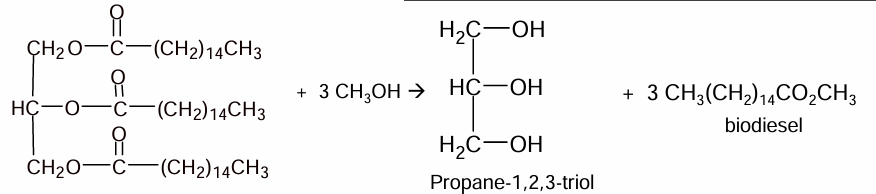
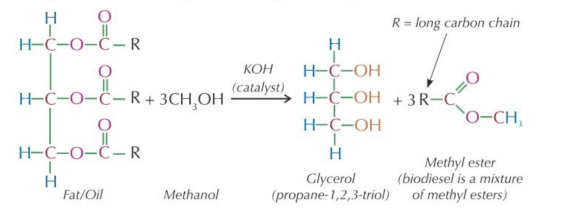
Biodiesel is produced by reacting vegetable oils with methanol in the presence of heat and a strong base catalyst (Like KOH). This process is known as trans-esterification. Trans-esterification is reacting a ester with an alcohol to produce a different ester and a different alcohol.
1. The Concept of Carbon Neutrality
Note
A fuel is considered carbon-neutral if the amount of carbon dioxide () it releases when burned is balanced by the absorbed during the growth phase of the plants used to produce it.
- Biodiesel's Potential for Carbon Neutrality:
- During photosynthesis, plants absorb from the atmosphere to grow. When biodiesel made from these plants is burned, it releases back into the air.
- Theoretically, the CO₂ emitted from burning biodiesel would be offset by the absorbed by the plants during their growth, making biodiesel carbon-neutral.
2. Factors that Challenge Biodiesel's Carbon Neutrality
While biodiesel can be carbon-neutral in theory, the reality is more complex. Several factors in the production and processing stages contribute to emissions, which can undermine its carbon neutrality.
- Energy Consumption in Biodiesel Production:
- Irrigation: Growing biodiesel feedstocks like soybeans or rapeseed often requires significant water resources. If the energy used to pump and distribute water comes from fossil fuels**,** emissions are generated.
- Oil Extraction: Extracting oil from plant sources, such as crushing seeds, consumes energy. This energy often comes from non-renewable sources, adding to the total carbon footprint.
- Transesterification Reaction: To convert vegetable oils into biodiesel, they are heated and reacted with methanol. This heating process and the production of methanol (often derived from fossil fuels) require energy, contributing additional CO₂ emissions.
- Processing and Transport:
- Processing biodiesel to meet fuel standards and transporting it to where it will be used also generates emissions, especially if these activities rely on fossil fuels.
- Land Use and Food Production:
- Competition with Food Crops: Large-scale biodiesel production may take up land that could be used for food production. This is a significant environmental and ethical concern, as using fertile land for biofuel can contribute to food shortages or higher food prices.
- Deforestation: In some regions, forests are cleared to make way for biodiesel crops, leading to loss of biodiversity and significant emissions from burning or decomposing vegetation. This process significantly detracts from the carbon-neutrality goal.
3. Assessing True Carbon Neutrality of Biodiesel
For biodiesel to be genuinely carbon-neutral, all aspects of its production must either be powered by renewable energy or balanced by additional absorption (carbon offsetting). Here are considerations for making biodiesel closer to carbon-neutral:
- Renewable Energy Use: If the energy used in irrigation, extraction, heating, and processing comes from renewable sources such as solar, wind, or hydropower, the carbon footprint of biodiesel production can be significantly reduced.
- Sustainable Land Management: Growing biodiesel feedstocks on non-arable or degraded land rather than using land suitable for food crops can mitigate the impact on food production and reduce deforestation pressures
Advantages:
-
Renewable - Carbon neutral. Disadvantages:
-
Needs lots of farming space to make vegetable oil, crops could be grown for biodiesel production rather than for food leading to food shortages.
-
Not necessarily carbon neutral - energy is used to make the fertiliser to grow crops (If this energy comes from fossil fuels, then the process won't be carbon neutral overall)