Inputs (AQA GCSE Design and Technology): Revision Notes
📚Revision Notes
Electronic systems - inputs
What are electronic systems?
An electronic system consists of components that work together using electrical signals. These systems take an input signal, process it, and create an output response. Understanding different types of input devices is essential for designing and troubleshooting electronic circuits.
Note
There are four main types of input devices you need to understand: light sensors, temperature sensors, pressure sensors, and switches. Each of these converts a different type of physical change into an electrical signal that the system can process.
Light sensors (photoelectric devices)
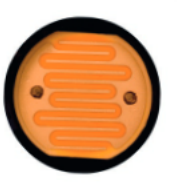
Light sensors use a component called a light dependent resistor (LDR) to detect changes in light levels. These sensors work by changing their electrical resistance based on the amount of light hitting them.
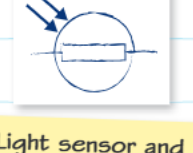
Important
Key Behaviour of Light Sensors:
- When it's dark: the LDR has high electrical resistance, making it difficult for current to flow through
- When light shines on the sensor: the resistance drops significantly, allowing current to flow more easily
Electrical resistance measures how easily current can pass through a component. It's measured in units called ohms, represented by the symbol . Think of resistance like a narrow pipe - high resistance is like a very narrow pipe that restricts water flow, while low resistance is like a wide pipe that allows water to flow freely.
Light sensors are commonly used in automatic lighting systems, security devices, and camera exposure controls. The sensor detects ambient light levels and triggers appropriate responses in the electronic system.
Temperature sensors (thermistors)
Temperature sensors use thermistors to detect changes in temperature and convert them into electrical signals. Like light sensors, thermistors work by changing their electrical resistance, but they respond to temperature instead of light.
Important
Temperature Sensor Resistance Pattern:
- When the temperature is cold: the thermistor has high resistance, restricting current flow
- As temperature increases and becomes hot: the resistance decreases, allowing more current to pass through the circuit
This behaviour makes thermistors perfect for applications like heating system controls, engine temperature monitoring, and weather monitoring equipment. The electronic system can read the resistance changes and determine the exact temperature, then respond accordingly.
Temperature sensors are essential in many everyday devices, from car engines that need to prevent overheating to home heating systems that maintain comfortable temperatures.
Pressure sensors
Pressure sensors detect applied force and convert them into electrical signals. These versatile input devices come in two main forms: switches that turn circuits on or off, and gauges that provide variable resistance based on the amount of pressure applied.
When pressure sensors work as switches, they follow specific operating principles. Many pressure sensors are designed as "normally open" (NO) switches. This means the circuit remains disconnected under normal conditions. When pressure is applied, the switch closes and completes the electrical circuit.
Note
Common Applications of Pressure Sensors:
- Burglar alarms under carpets
- Vehicle braking systems
- Industrial process monitoring
The sensor detects when force is applied and sends an appropriate signal to the control system.
The sensitivity and range of pressure sensors can vary greatly depending on their intended use. Some detect very light touches, while others are designed to handle heavy industrial loads.
Switches
Switches are fundamental input devices that manually control electrical connections in circuits. They allow users to make or break electrical paths, controlling when current flows through different parts of a system.
There are several important types of switches, each designed for specific applications:
Toggle switches
Toggle switches have distinct on and off positions and stay in the position you set them. They're commonly found in household light switches and have a "single throw" design, meaning they control one electrical path. These switches maintain their position until manually changed.
Example
Practical Example: Toggle Switch
A typical household light switch is a toggle switch. When you flip it up to turn on the lights, it stays in that position and keeps the circuit closed. The lights remain on until you flip the switch down, which opens the circuit and turns off the lights.
Push to make switches (PTM)
Push to make switches are normally open circuits that only complete the connection when pressed. As soon as you release the button, the circuit opens again. You'll find these switches in doorbells, computer keyboards, and many control panels where you need momentary activation.
Example
Practical Example: PTM Switch
A doorbell button is a classic PTM switch. The circuit is normally open (no current flows). When you press the button, it completes the circuit and the doorbell rings. As soon as you release the button, the circuit opens again and the ringing stops.
Push to break switches (PTB)
Push to break switches work oppositely to PTM switches. They're normally closed, meaning the circuit is usually complete. When you press the button, it breaks the connection. These switches are essential in safety systems like fire alarms and emergency stop controls.
Example
Practical Example: PTB Switch
An emergency stop button on industrial machinery is typically a PTB switch. The circuit is normally closed, allowing the machine to operate. When pressed in an emergency, it breaks the circuit and immediately stops the machine for safety.
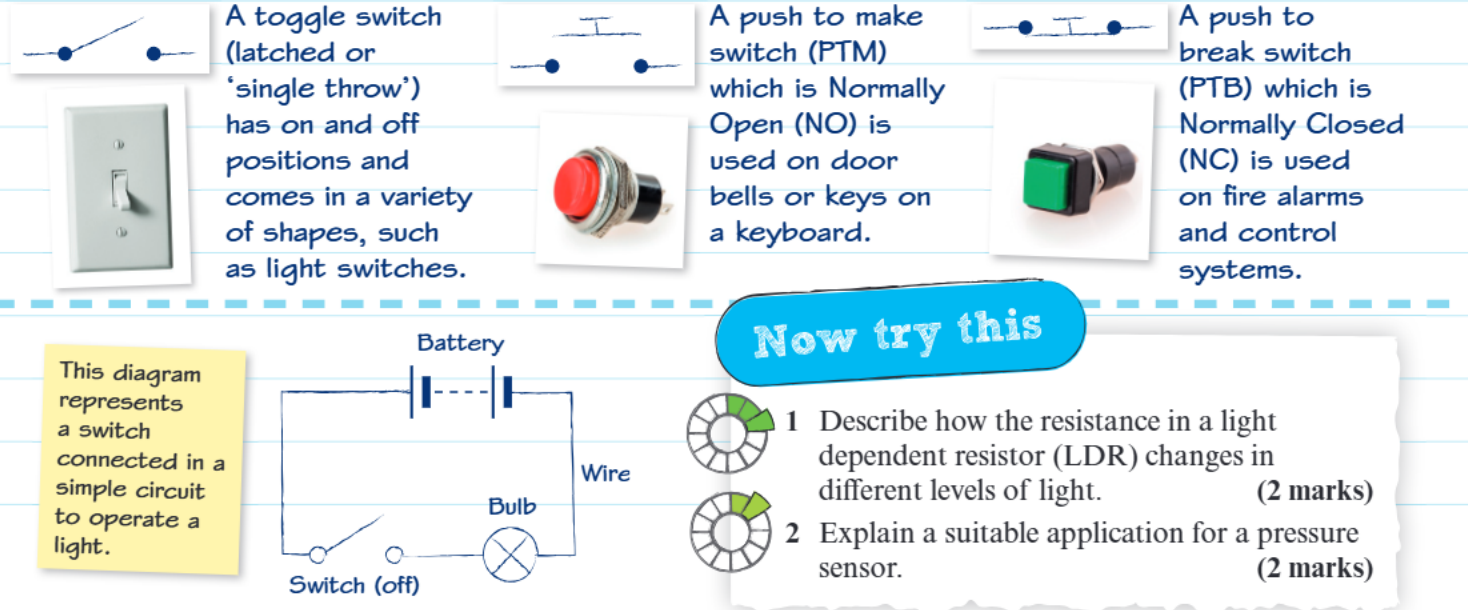 Each switch type serves different purposes in electronic systems. Toggle switches provide permanent control, PTM switches give momentary activation, and PTB switches offer safety disconnection functions.
Important
Understanding the difference between normally open (NO) and normally closed (NC) operation is crucial:
- NO means the circuit is disconnected until activated
- NC means the circuit is connected until the switch is triggered to break it
Circuit integration
All these input devices integrate into electronic circuits to create functional systems. The basic principle involves connecting the input device in series with other components like batteries, wires, and output devices such as lights or motors.
Note
When designing circuits with input devices, consider how the resistance changes or switch operations will affect the overall system behaviour. The input device essentially acts as a variable control point that determines when and how much current flows through the circuit.
Remember!
Summary
Key Points to Remember:
- Light sensors have high resistance in darkness and low resistance in bright light
- Temperature sensors have high resistance when cold and low resistance when hot
- Normally Open (NO) switches need activation to complete the circuit
- Push to Make (PTM) switches only work while pressed, while Push to Break (PTB) switches break circuits when pressed
- All input devices convert physical changes into electrical signals that electronic systems can process