Used in pregnancy tests (Edexcel GCSE Biology): Revision Notes
📚Revision Notes
Used in pregnancy tests
Introduction to monoclonal antibodies
Monoclonal antibodies are incredibly useful tools in modern medicine and science. They have several important applications including pregnancy testing, measuring hormone and chemical levels in laboratories, conducting research, and treating certain diseases. One of their most familiar uses is in the pregnancy tests that you can buy from any pharmacy.
Note
The versatility of monoclonal antibodies stems from their ability to bind specifically to particular target molecules, making them valuable tools across many different fields of medicine and research.
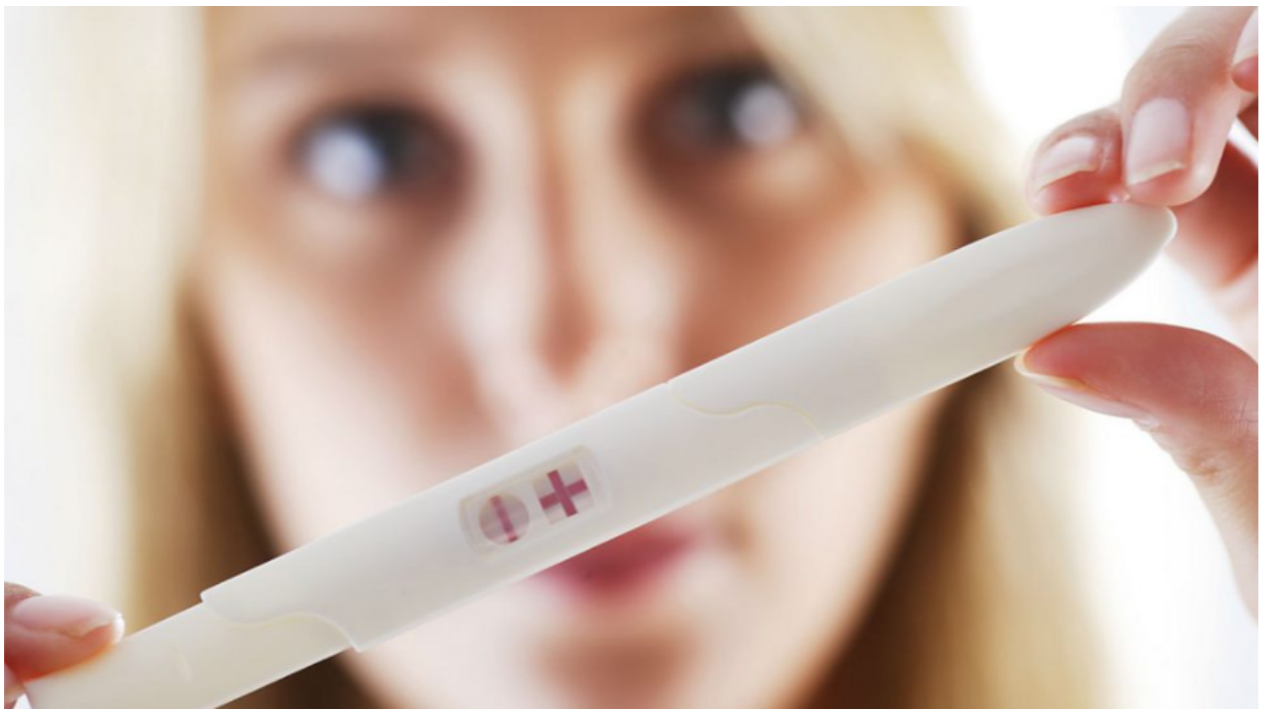
What do pregnancy tests detect?
Pregnancy tests work by detecting a specific hormone called HCG (Human Chorionic Gonadotrophin) that appears in a woman's urine when she becomes pregnant. This hormone is only produced during pregnancy, which makes it an excellent indicator for pregnancy testing.
The detection of HCG is remarkably reliable because this hormone begins to appear in detectable amounts very early in pregnancy, often before a woman even realises she might be pregnant.
How pregnancy tests work
The science behind pregnancy tests is actually quite fascinating and demonstrates how monoclonal antibodies can be used in practical applications.
The test strip mechanism
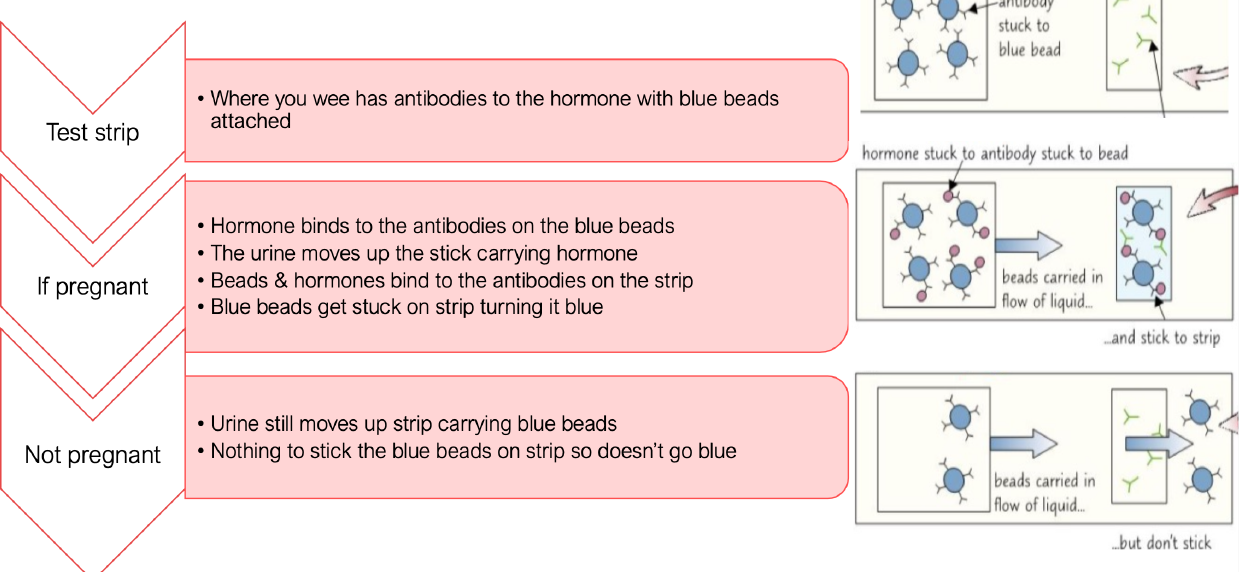
The pregnancy test strip contains special monoclonal antibodies that are designed to recognise and bind specifically to HCG hormone. These antibodies are attached to tiny blue beads, which act as visual indicators for the test result.
When urine is applied to the test strip, it flows up through the testing materials, carrying any HCG hormone that might be present along with it. The clever design of the test relies on the specific binding properties of the monoclonal antibodies.
Important
The key to the test's accuracy is the specific binding between the monoclonal antibodies and HCG hormone. This specificity means the antibodies will only bind to HCG and not to other substances present in urine.
What happens if you're pregnant
If pregnancy hormone (HCG) is present in the urine, the following process occurs:
Example
Step-by-Step Process - Positive Result:
Step 1: HCG hormone binds specifically to the monoclonal antibodies that are attached to the blue beads
Step 2: As urine flows up the test strip, it carries these hormone-antibody-bead complexes along
Step 3: Additional antibodies on the strip capture and hold onto these complexes
Step 4: Blue beads accumulate at the test line location, creating a visible blue line
Result: Positive pregnancy test - blue line indicates pregnancy
What happens if you're not pregnant
If no pregnancy hormone is present in the urine, the process is quite different:
Example
Step-by-Step Process - Negative Result:
Step 1: No HCG hormone available to bind to the antibodies on blue beads
Step 2: Urine flows up the strip carrying unbound blue beads
Step 3: Without hormone-antibody binding, beads don't get trapped at test line
Step 4: Blue beads continue flowing past without sticking
Result: No blue line appears - indicating negative result
The absence of the hormone means there's nothing for the antibodies to specifically bind to, so the visual indicator system doesn't activate.
Remember!
Summary
Key Points to Remember:
- Pregnancy tests use monoclonal antibodies to detect HCG hormone in urine
- Blue beads attached to antibodies act as visual indicators for the test result
- Positive result: HCG hormone binds to antibodies, blue beads get stuck on the strip, creating a blue line
- Negative result: No HCG hormone present, so blue beads don't stick and no line appears
- This technology demonstrates how specific antibody binding can be used for practical medical testing