PET scanning (Edexcel GCSE Physics): Revision Notes
📚Revision Notes
PET Scanning
Note
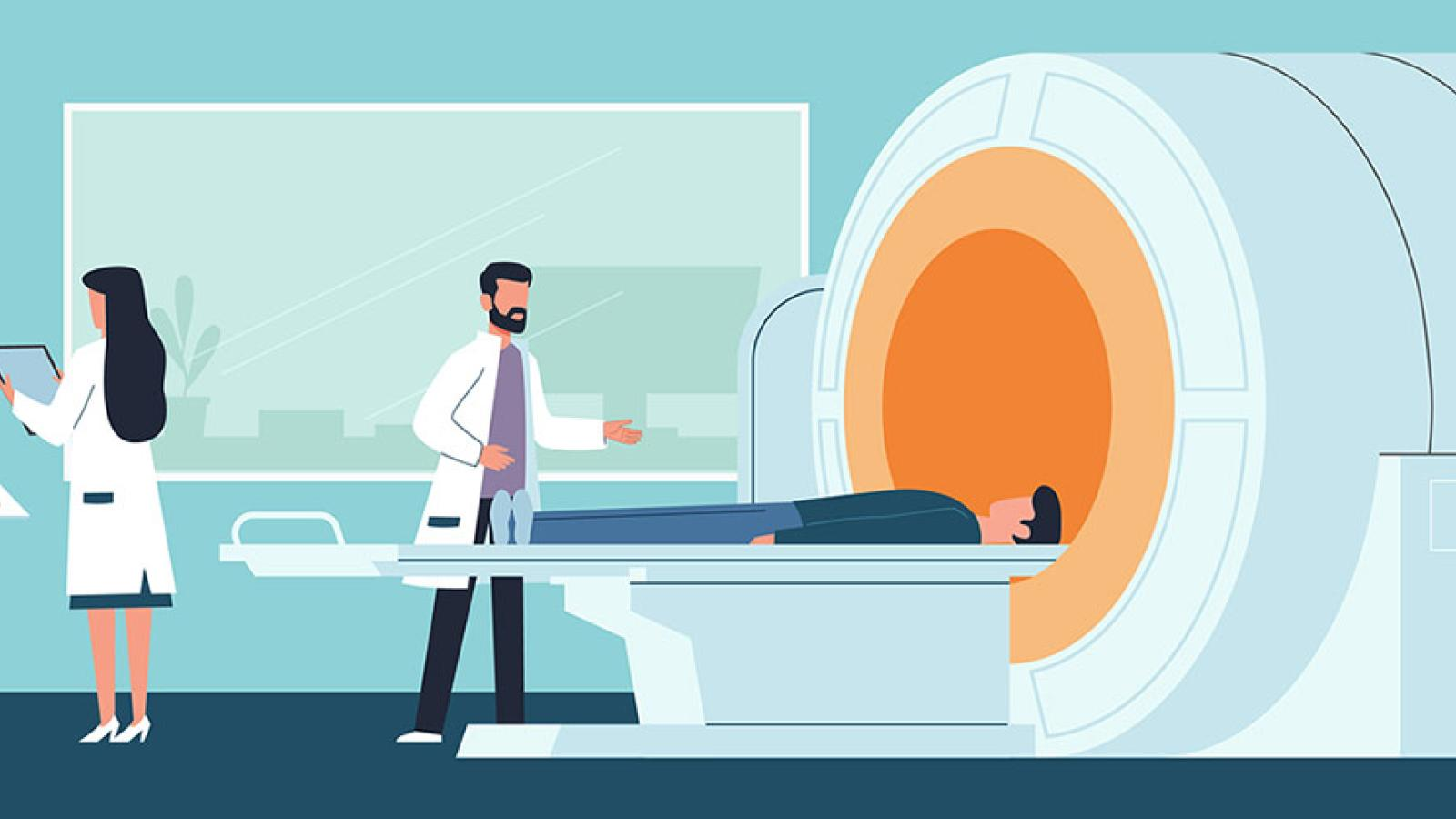
PET scanning (Positron Emission Tomography) is a medical technique that helps doctors see how organs are functioning and diagnose conditions like cancer. It shows areas of high metabolic activity, which can indicate where cancer cells are, as they grow and divide more rapidly than normal cells.
- PET scans show how active cells are in different parts of the body.
- It's used to diagnose medical conditions, like finding active cancer tumours.
- Cancer cells have a higher metabolism (they use more energy) than healthy cells, so they show up clearly on a PET scan.
How PET Scanning Works
Note
- Tracer Injection:
- The patient is injected with a radioactive substance (like glucose) that contains a positron-emitting isotope. This acts as a tracer.
- The tracer moves through the bloodstream and collects in areas with high metabolism, such as cancer cells.
- Positron Emission:
- As the positrons from the isotope move through the body, they meet electrons in the organs.
- When a positron meets an electron, they annihilate each other and release gamma rays in opposite directions.
- Gamma Ray Detection:
- Special detectors around the patient pick up the pairs of gamma rays emitted.
- By detecting at least 3 pairs of gamma rays, the location of the tumour can be pinpointed using a method called triangulation.
- Metabolic Activity:
- The distribution of radioactivity in the scan matches areas of high metabolic activity. Cancer cells show up clearly because they take up more of the radioactive glucose due to their high energy use.
Why Short Half-Life Isotopes Are Used
Note
The radioactive isotope used in PET scans has a short half-life, so it decays quickly and doesn't stay in the body for too long.
Because the isotopes decay so fast, they need to be made close to the hospital. Some hospitals have a special machine called a cyclotron to make the isotopes on-site.
If the isotopes had to be transported from far away, their activity might decrease too much by the time they arrive, making them less useful.