Cricket & Hockey (Grade 10 NSC Matric Life Orientation): Revision Notes
📚Revision Notes
Cricket & Hockey
Cricket
Introduction to cricket
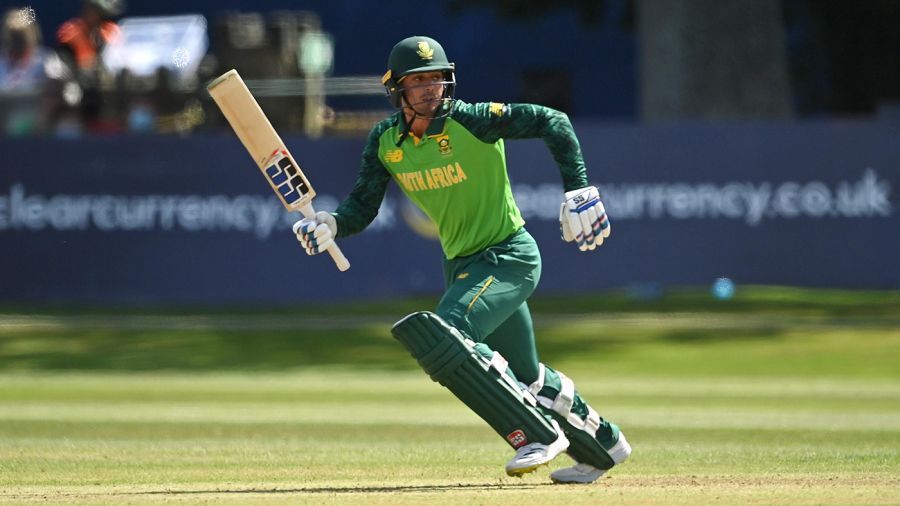
Cricket is a traditional bat and ball game that has been enjoyed for centuries. It's excellent for developing teamwork skills, hand-eye coordination, and strategic thinking. The game involves two teams who take turns batting and bowling, making it accessible for players of all skill levels in open spaces.
Warm up for cricket
Before playing cricket, proper preparation is essential to prevent injury and improve performance:
Note
Pre-Game Warm-up Routine
A thorough warm-up helps prepare your body for the physical demands of cricket and reduces the risk of injury.
- Running warm-up: Jog on the spot to get your blood flowing
- Arm circles: Swing your arms in windmill motions to prepare your shoulders
- Stretching routine: Focus on arms, shoulders, legs, and back muscles
- Cool down: Always remember to stretch and cool down after playing
Basic cricket skills
Cricket requires mastering several key abilities that work together to create successful gameplay:
- Decision making: Batters must quickly decide where to place the ball, how to time their swing, and what strength to use
- Batting technique: Learning to score boundaries (four or six runs) whilst avoiding fielders
- Running strategy: Knowing when there's enough time to complete a run safely
- Ball placement: Understanding how to hit the ball away from fielding positions
Essential cricket terms
Swing of the ball: This describes how the ball moves sideways through the air as it travels towards the batter. Air flow differences over the ball's surface cause this movement, making batting more challenging.
Off side: The area of the field positioned away from the batter's legs when they're in their normal batting stance.
Aim of cricket
The primary objective is straightforward: score more runs than the opposing team. Players achieve this by:
- Hitting the ball and running between wickets
- Preventing the ball from hitting the stumps
- Stopping the opposing team from hitting the wicket
- Getting opposing batters out through various methods
Equipment needed for cricket
For a basic game, you'll need:
- Playing surface: An open, level area (size can be adapted to available space)
- Ball: A tennis ball works well for school games
- Bat: A plank of wood or branch can substitute for a proper cricket bat
- Wickets: Use sticks with stones balanced on top
- Stumps: These are the three vertical posts that form the wicket target
Rules for cricket
Understanding these basic rules will help you enjoy the game safely and fairly:
- Team composition: 11 players per team, including fielders, wicketkeepers, bowlers and batters
- Turn-taking: Teams alternate between batting and bowling
- Scoring runs: Batters score by running between wickets after hitting the ball
- Getting out: Batters can be dismissed by having the ball hit the stumps, being caught, or other methods
- Team roles: Once all batters are out, teams swap positions
Important
Safety Rules
Never aim at a player's head or sensitive areas, and avoid hitting where fielders can easily catch. These safety measures are essential for preventing serious injuries during play.
Cricket techniques
Batting practice:
Developing proper batting technique requires consistent practice and attention to detail:
- Position yourself in line with the ball's path
- Keep your weight balanced and move forwards when batting
- Use both forwards and backwards strokes as your foundation
- Follow through completely after making contact with the ball
- Hold the bat with both hands, placing your stronger hand higher up the handle
- Keep both hands' V-shapes aligned on the same side
- Face the bat towards the ball's direction for better contact
- Strengthen your grip by practising with a small ball for 15 minutes daily
Example
Worked Example: The Sweep Shot
This technique involves kneeling on one knee and swinging the bat horizontally across your body. It's most effective against slower bowling that pitches close to you, with the bat positioned at right angles to the ball's direction.
Step 1: Kneel on your back leg
Step 2: Position bat horizontally across your body
Step 3: Swing through the line of the ball
Best used: Against slow bowling pitching near your feet
Defensive block:
A protective shot where you place the bat in front of the wicket to stop the ball from hitting it. This technique uses minimal force and helps prevent the ball from reaching the stumps.
Bowling practice:
- Release the ball before crossing the crease line (approximately 100cm from the wicket)
- Maintain a straight arm throughout your bowling action
- Take a run-up of 25-30 paces to build momentum
- Hold the ball with your three middle fingers wrapped around it
- Add forwards spin to make the ball bounce faster towards the batter
Fielding practice:
- Position yourself strategically in different field locations
- Keep your eyes focused on the ball at all times
- Anticipate where the batter will hit the ball
- Move quickly to intercept the ball's path
Safety in cricket
Player safety should always be the top priority in any cricket game:
Important
Critical Safety Measures
- Use a tennis ball instead of a hard cricket ball in school games
- Wear protective gear if using a proper cricket ball (head and leg protection)
- Never aim the ball at someone's head or genital area
- Handle bats carefully to avoid accidentally hitting other players
- Maintain awareness of other players' positions during play
These safety rules are non-negotiable and must be followed at all times.
Hockey

Introduction to hockey
Hockey is an ancient sport dating back thousands of years. Two teams compete using hockey sticks to hit, push, pass and dribble a small, hard ball towards their opponent's goal. It's a fast-paced game requiring excellent fitness and coordination.
Aim of hockey
The fundamental objective is to score goals by getting the ball into the opposing team's goal. Teams accomplish this through skilful ball control, strategic passing, and accurate shooting.
How to play hockey
Team structure: Each team fields 11 players - attackers, midfielders, defenders and one goalkeeper.
Essential skills: Players must master controlling, passing, pushing, stopping and shooting the ball using their hockey stick. Success requires the ability to control the ball whilst running at speed, weaving past defenders towards the goal.
Note
Stick Technique
Use the flat, left-hand side of your stick along with its edges to play the ball effectively. This is the only legal surface for ball contact.
Rules of hockey
Understanding hockey rules is essential for fair and safe play:
Ball control restrictions:
Important
Legal Ball Control Methods
- Players cannot use their bodies or feet to control the ball
- Only goalkeepers may use their body to stop the ball within the goal circle
- Players must not raise the ball dangerously towards other players
- When the ball is airborne, players cannot play it if it's above shoulder height
Scoring rules:
- Defenders can use their stick at any height to prevent goals
- Attackers may only raise the ball within the goal's shooting circle when attempting to score
- Goals can be scored through penalty strokes, penalty corners, or field goals
Game duration: Matches last 70 minutes, divided into two halves with a 5-10 minute interval. The team with the most goals wins.
Hockey terms
Penalty strokes: Awarded when a defender commits a serious offence. A chosen player takes a shot at goal, defended only by the goalkeeper. The shot is taken from 6.4 metres directly in front of the goal, with all other players positioned outside the circle, approximately 23 metres away.
Penalty corners: Given when the defending team breaks rules. Play stops to allow teams to organise their attack and defence positions.
Field goals: Regular goals scored during open play from within the shooting circle (semi-circular area in front of the goal). Goals only count if an attacker hits the ball from inside this circle, or if a defender touches it on the way in.
Example
Worked Example: Scoring a Field Goal
Situation: Player receives pass 2 metres outside the shooting circle
Step 1: Dribble the ball into the shooting circle
Step 2: Position for a clear shot at goal
Step 3: Strike the ball towards the goal
Result: Goal counts because the ball was hit from inside the circle
Fouls: Include blocking opponents from playing the ball, obstructing opponent's sticks or bodies during tackles, and playing the ball dangerously or too high.
Free hits: Awarded for general fouls occurring in the main playing area.
Summary
Key Points to Remember
- Cricket safety first: Always use tennis balls for school games and never aim at players' heads or sensitive areas
- Cricket's main goal: Score more runs than the opposing team by hitting the ball and running between wickets
- Hockey ball control: Only use your stick (and goalkeepers can use their body in the circle) - no hands or feet allowed
- Hockey scoring: Goals must be scored from within the shooting circle to count
- Both sports require teamwork: Success comes from good communication, strategic thinking, and supporting your teammates