Physical Fitness Activities (Weeks 4-6) (Grade 10 NSC Matric Life Orientation): Revision Notes
📚Revision Notes
Physical Fitness Activities (Weeks 4-6)
Physical fitness activities for weeks 4-6 focus on two main types of exercise: cardio-kickboxing and circuit training. These activities are designed to improve your overall fitness, build strength, and enhance your cardiovascular health whilst keeping you engaged and motivated.
Note
These fitness activities are specifically designed to work together, with cardio-kickboxing providing high-intensity cardiovascular training and circuit training offering comprehensive strength and endurance development. Both activities can be adapted to suit different fitness levels and abilities.
Cardio-kickboxing
What is cardio-kickboxing?
Cardio-kickboxing is an exciting fitness activity that blends elements of boxing, martial arts, and aerobics into one dynamic workout. This combination provides your entire body with an effective exercise routine whilst allowing you to enjoy fast-paced music and varied, challenging movements.
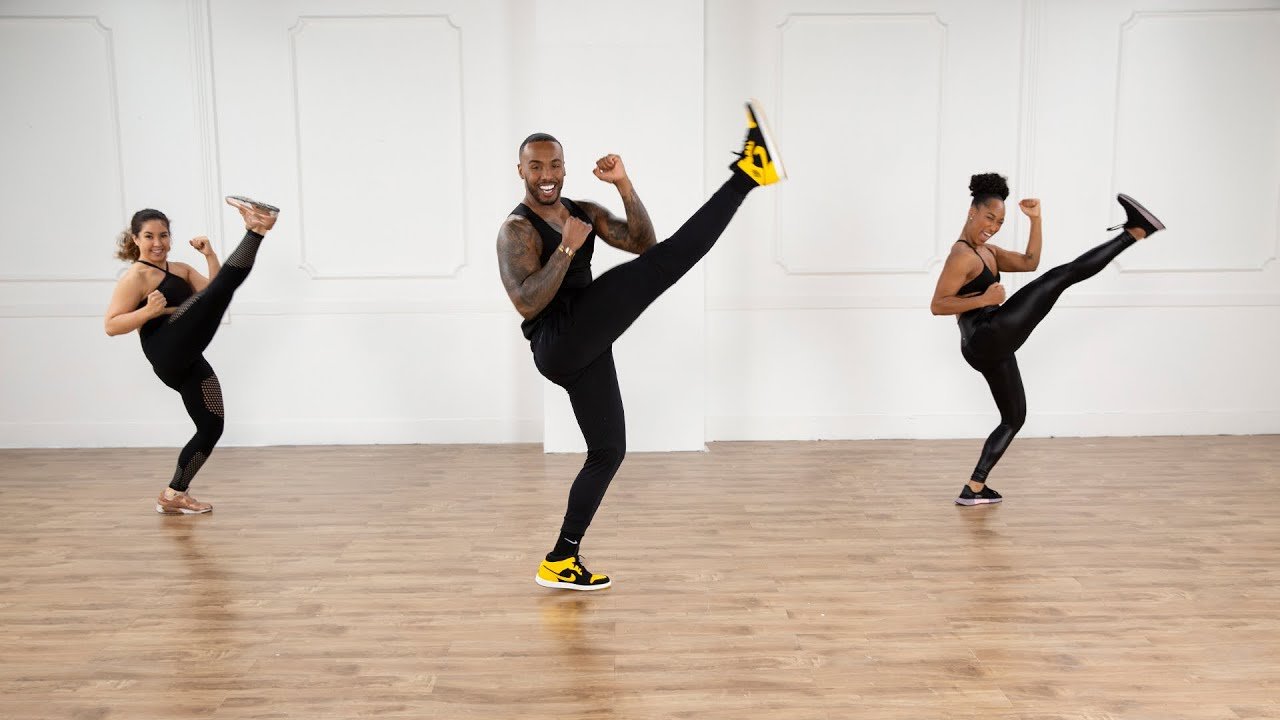
Health benefits of cardio-kickboxing
Note
Why Cardio-kickboxing Works So Well
Cardio-kickboxing offers numerous advantages for your physical and mental wellbeing:
- Strengthens your body and mind: The high-powered exercise routines help build physical strength whilst reducing stress and sharpening your reflexes
- Improves cardiovascular fitness: Regular participation significantly boosts your heart health and endurance levels
- Enhances self-confidence: The activity helps improve your self-esteem and makes you feel more confident about your appearance
- Burns calories effectively: You can burn approximately to calories per hour, making it excellent for maintaining a healthy weight
Music and tempo guidelines
When practising cardio-kickboxing, music plays a crucial role in maintaining proper pace:
- Use music with approximately 125 beats per minute (bpm) during the main workout
- Begin with a warm-up tempo of 120 bpm
- Finish with a cool-down tempo of 118 bpm or less
Safety guidelines for cardio-kickboxing
Important
Essential Safety Rules - Never Skip These!
Following proper safety measures is essential for preventing injury:
- Listen carefully to all instructions before beginning
- Keep your knees slightly bent to help absorb impact and reduce joint stress
- Start gradually: If you're new to kickboxing, perform only five repetitions of any movement initially
- Breathe normally throughout the exercises - never hold your breath
- Avoid locking joints when performing kicks or punches
- Control your movements: Don't kick too far out or too high up, and gradually increase flexibility over time
- Maintain safe distance: Never hurt or touch another person, as this is a non-contact activity
Basic cardio-kickboxing techniques
Basic stance: Stand with feet shoulder-width apart, chin tucked in, arms slightly bent at the elbows, and hands positioned near your chin.
Example
Key Movement Demonstrations
Front Kick Technique:
- Stand with feet apart, arms at 90 degrees
- Pull knee to chest
- Point knee towards target
- Kick out with the ball of your foot
Side Kick Technique:
- Pull your knee up towards your opposite shoulder
- Turn on your left foot whilst kicking with your right leg
- Keep movements controlled and balanced
Roundhouse Kick Technique:
- Stand in basic stance
- Lift your right knee with your left leg supporting your weight
- Kick out with the top of your right foot
Key movements include:
- Forearm extension: Straighten your forearm in a chopping motion or curl it in
- Front kick: Stand with feet apart, arms at 90 degrees, pull knee to chest, point knee towards target, then kick out with the ball of your foot
- Knee raise: Kick with your knee or lift it as in a leg raise
- Leg extension: Kick your leg forwards, diagonally, sideways or backwards whilst keeping the knee straight
- Side kick: Pull your knee up towards your opposite shoulder, turn on your left foot whilst kicking with your right leg
- Toe raises: Lift your heels and stand on your toes
- Trunk movements: Tilt your trunk forwards or twist it in a turning motion whilst punching
- Roundhouse kick: Stand in basic stance, lift your right knee with your left leg supporting your weight, then kick out with the top of your right foot
Circuit training
Understanding circuit training
Circuit training involves completing a series of different exercises arranged in stations. This training method effectively builds both strength and endurance whilst developing flexibility and coordination. A typical circuit includes approximately ten stations, each targeting different parts of your body.
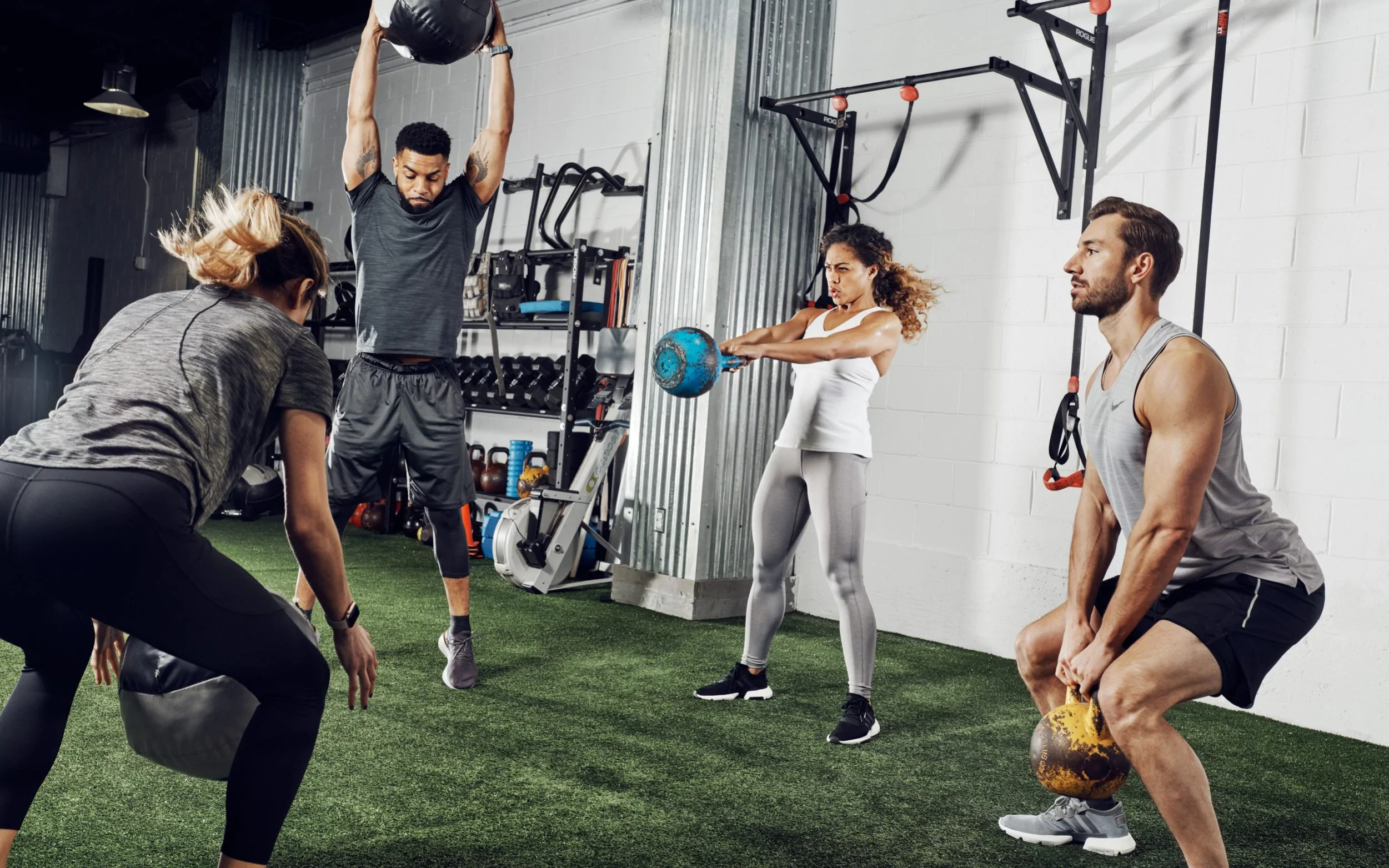
Circuit training structure and benefits
Note
Why Circuit Training is So Effective
Circuit training offers an efficient and versatile workout approach:
- Multiple exercise stations: Usually about ten different stations with varied exercises
- Quick transitions: Move rapidly from one exercise to the next station
- Short rest periods: Rest for only to seconds between stations
- Time-efficient: Complete the entire circuit in approximately minutes
- Flexible intensity: Repeat the circuit one, two, or three times depending on your fitness level
- No expensive equipment needed: You can set up a circuit anywhere using basic equipment
Circuit training safety considerations
Important
Safety First - Circuit Training Essentials
- Warm up for five minutes before starting the circuit
- Cool down for five minutes after completing the circuit
- Maintain adequate space between yourself and other participants
- Step out and rest if you become too tired, breathe deeply, then return when ready
Complete fitness circuit breakdown
Note
The following circuit consists of 10 stations designed to work different muscle groups and fitness components. Each station should be performed with proper technique - focus on quality of movement rather than speed.
Station 1: Star jumps
Star jumps provide excellent exercise for your legs and shoulders whilst improving coordination.
Example
Star Jump Step-by-Step
- Start by standing straight with arms at your sides
- Squat down and bend your legs at the knees
- Jump upwards and outwards, spreading your legs wide and moving your arms out to create a star shape
- Land with bent knees until your hands touch the ground on either side
- Keep your back straight and look ahead, not down
- Repeat 10 times
Station 2: Weight lifting
This station builds upper body strength using improvised weights.
Equipment and technique:
- Use two 1.5 kg containers (such as empty soap boxes or plastic bottles filled with sand or water)
- Hold one container in each hand
- Lift the weights high above your head, then return to shoulder level
- Repeat 10 times as quickly as possible
- Stretch your arms straight out in front, still holding weights, then bring back to shoulders
- Repeat 10 times
Station 3: Wall stretches, wall sit and free stretches
This station combines flexibility and strength exercises using a wall for support.
Example
Wall Stretch Technique
- Sit with straight legs facing a wall
- Place feet flat against the wall, keeping them 30 cm apart
- Stretch your hands forwards towards the wall without bouncing
- Hold the stretch for five seconds, trying to touch the wall with fingertips, then palms
- Repeat 5 times
Wall sit technique:
- Lean your back against a wall with feet positioned a short distance from the wall
- Bend your knees and slide down until your thighs are parallel to the floor
- Ensure your ankles are directly below your knees
- Hold for 10 seconds or more
- Repeat 5 times
Free stretches: Perform various stretches such as windmills, side stretches, front lunges, or hamstring stretches. Repeat each stretch 5 times.
Station 4: Controlled sit-ups
Controlled sit-ups focus on developing your abdominal muscles through slow, precise movements rather than speed.
Important
Key Point: Control Over Speed
The emphasis here is on controlled movement using your abdominal muscles during both the upward and downward phases. Work slowly for maximum effectiveness - you should feel your abdominal muscles working throughout the exercise.
Proper technique:
- Lie on your back with knees bent and feet flat on the floor
- Place hands on your thighs, then slowly move them towards your knees whilst lifting your upper body
- Control the movement using your abdominal muscles during both the upward and downward phases
- Keep your chin off your chest; support your head with one hand if your neck aches
- Repeat 10 times
Station 5: Burpees
Burpees strengthen your arms, legs, and core muscles through a dynamic full-body movement.
Example
Burpee Breakdown
- Stand up straight
- Get into a squat position with hands on the ground in front of you
- Kick your feet back to a push-up position
- Immediately return your feet to the squat position
- Jump up as high as possible from the squat position and land standing straight
- Repeat 20 times
Station 6: Rope jumping
Rope jumping develops coordination, cardiovascular fitness, and leg strength.
Proper form:
- Jump on a padded surface or lawn to protect your joints
- Keep knees slightly bent with arms relaxed at your sides
- Look straight ahead rather than down at your feet
- Maintain moderate jump height - avoid jumping too high or kicking feet up behind you
- Develop a steady jumping rhythm similar to a regular drum beat
- Alternate between fast and regular jumping, occasionally letting the rope pass under your feet twice per jump
Station 7: Crunches
Crunches specifically target your abdominal muscles and come in two variations.
Example
Crunch Variation 1
- Lie on your back, bend your knees, keep feet flat on the ground
- Place hands at the sides of your head
- Tighten your abdominal muscles and lift your shoulders off the ground
- Maintain space between your chin and chest
- Hold for two seconds, keeping your neck relaxed
- Lower yourself to the ground slowly
- Repeat 20 times
Crunch 2 technique:
- Lie on your back and raise your feet off the ground
- Bend your knees at 90 degrees with hands at the sides of your head
- Tighten your abdominal muscles and lift your shoulders off the ground
- Curl your shoulders forwards whilst keeping your lower back on the ground
- Lower yourself to the ground slowly
- Repeat 20 times
Station 8: Sprints
Sprints help develop acceleration, speed, and anaerobic fitness.
Example
Sprint Pattern Setup
Distance Markers: Place markers at 10m, 20m, and 30m distances
Sprint Sequence:
- Run to the 10m mark, touch the ground, run back to start
- Run to the 20m mark, touch the ground, run back to start
- Run to the 30m mark, touch the ground, run back to start
- Repeat this entire sequence 5 times
Variations: Use very large strides, high knees, and high skips to add variety
Sprint setup and technique:
- Time yourself to monitor improvement and track your progress
Station 9: Shadow boxing
Shadow boxing strengthens your oblique muscles and abdominals through non-contact boxing movements.
Example
Horse Stance and Shadow Boxing
Horse Stance Setup:
- Stand with feet wider than shoulder-width apart
- Point your toes forwards and bend your knees at a 60-degree angle
- Keep your back straight and hold your abdominal muscles tight
- Put your hands up in a boxing pose
Boxing Movement:
- Turn your trunk (upper body) to your left
- Turn on the balls of your feet
- Strike out as if you are boxing an imaginary opponent
- Repeat 20 times
Station 10: Step-ups
Step-ups effectively build strength in your leg muscles through repetitive stepping movements.
Proper technique:
- Stand in front of a step or raised platform
- Keep your back straight throughout the exercise
- Step up with your right foot, placing your whole foot flat on the step
- Step up with your left foot
- Step down with your right foot first, then your left foot
- Continue without pausing, maintaining a rhythm of one second up, one second down
- Keep your shoulders relaxed and breathing steady
- Perform for 3 minutes, rest, then repeat 3 times
Summary
Key Points to Remember:
-
Cardio-kickboxing combines boxing, martial arts, and aerobics for a complete workout that burns - calories per hour and improves cardiovascular fitness
-
Circuit training uses multiple stations (typically ) with short rest periods (- seconds) to efficiently build strength and endurance in minutes
-
Safety is paramount - always warm up before starting, listen to instructions carefully, and never perform movements beyond your current ability level
-
Proper technique is more important than speed - focus on controlled, precise movements rather than rushing through exercises
-
Progressive improvement comes from consistent practice - start with fewer repetitions if you're a beginner and gradually increase intensity as your fitness improves