Self-Defence (Grade 10 NSC Matric Life Orientation): Revision Notes
📚Revision Notes
Self-Defence
Introduction to self-defence
Personal protection is a vital life skill that helps you stay safe while also improving your fitness and posture. Understanding how to defend yourself properly means knowing when and how to react in dangerous situations.
The most important principle in self-defence is that running away is always the best option. However, when escape is not possible, you need to know how to protect yourself effectively.
Important
Critical Safety Principle
Always remember that the best self-defence is avoiding dangerous situations entirely. Physical techniques should only be used as a last resort when escape is impossible and you genuinely fear for your safety.
Safety principles for self-defence
Before learning any techniques, you must understand these essential safety rules:
Important
Essential Safety Rules
- Never practise attacking moves on others - these techniques are designed to cause harm and should only be used in genuine self-defence situations
- Only use self-defence to protect yourself - never use these skills to bully or intimidate others
- Respect everyone's constitutional rights - remember that all people have the right to safety and freedom from harm
- Always warm up properly before practising any physical techniques to prevent injury
- Practise techniques safely without making contact with training partners
Remember that bullying is never acceptable and goes against school policies. Self-defence should only be used when you genuinely fear for your safety.
Different self-defence styles
There are several martial arts and combat systems you can learn for personal protection:
Jujitsu focuses on restraining and grappling techniques. This martial art originated in China and Japan and teaches you to use an attacker's own weight and strength against them through holds and throws.
Note
Jujitsu is particularly effective for smaller individuals as it relies on technique and leverage rather than brute strength, making it an excellent choice for personal protection.
Karate is a traditional Japanese system that emphasises sharp strikes and kicks to pressure-sensitive points on an opponent's body. It's designed for unarmed combat situations.
Mixed Martial Arts (MMA) combines techniques from various fighting styles, including wrestling. This approach gives you a broader range of defensive options.
Muay Thai comes from Thailand and is similar to boxing but allows you to strike with your feet, elbows, and knees. It's often called "the art of eight limbs."
Tae kwon do originated in Korea and specialises in kicking techniques and defensive stunts. It emphasises flexibility and powerful leg movements.
Note
Each martial art has its own philosophy and approach to self-defence. The key is finding one that suits your physical abilities, personality, and personal protection needs.
Understanding distance ranges
Self-defence techniques vary depending on how close you are to a potential attacker. Understanding these distances helps you choose the most effective response:
Short range
When an attacker is very close to you, you can use short range techniques:
- Throw punches with your fists
- Jab with your fingers or use your elbows
- Deliver knee strikes while blocking attacks with your arms
Medium range
At medium range, you can kick vulnerable areas that your attacker cannot easily protect, such as the groyne area. This range gives you more options for defensive strikes.
Long range
Long range is the safest distance because it allows you to:
- Turn and run away quickly
- Avoid kicking or punching (which could leave you off-balance)
- Move your feet and change position while blocking or counter-attacking
Important
Distance Safety Warning
Never attempt kicks or punches from long range as your limbs can be grabbed, leaving you vulnerable. Always prioritise escape over engagement when possible.
Fundamental stances
Your stance is how you position your body for balance and defensive readiness. Proper stance gives you stability and prepares you to react quickly.
Ready stance
The ready stance is your basic defensive position that prepares you to counter an attacker's movements:
Example
Mastering the Ready Stance
Step 1: Stand with one foot slightly ahead of the other, about shoulder-width apart
Step 2: Point your feet towards your attacker
Step 3: Bend your knees slightly for balance
Step 4: Lift your arms into a basic boxing position with hands about from your body
Step 5: Keep your head up and maintain eye contact with the attacker

Forwards stance
The forwards stance provides stability when advancing or blocking:
Example
Executing the Forwards Stance
Step 1: Move your left leg forwards about two shoulder-widths
Step 2: Keep your right leg straight with toes pointed forwards
Step 3: Bend your left knee directly over your heel
Step 4: Keep your back straight and shoulders square
Step 5: Extend your right arm straight ahead at shoulder height while making a fist
Step 6: Bend your left arm and bring it close to your body with an upturned fist at rib level

Horse stance
The horse stance provides a strong base for blocking and defending:
Example
Forming the Horse Stance
Step 1: Spread your feet in a straight line, about two shoulder-widths apart
Step 2: Keep your spine and head upright
Step 3: Grip the floor with your toes and bend your knees forwards
Step 4: Push your bottom out while keeping your back straight
Step 5: Drop both hands to waist level with bent elbows and make upturned fists

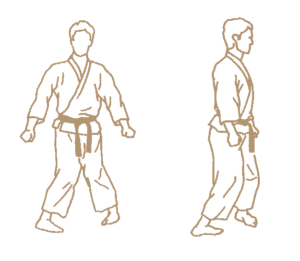
Hourglass stance
The hourglass stance provides excellent stability for blocking techniques:
Example
Achieving the Hourglass Stance
Step 1: Place one foot's heel and the other foot's ball on a horizontal line, shoulder-width apart
Step 2: Turn your forwards foot inward and point your back foot straight ahead
Step 3: Bend your legs until your knees nearly touch
Step 4: Grip the floor with your toes and tighten your core muscles
Blocking techniques
Blocking protects you from incoming attacks to different parts of your body.
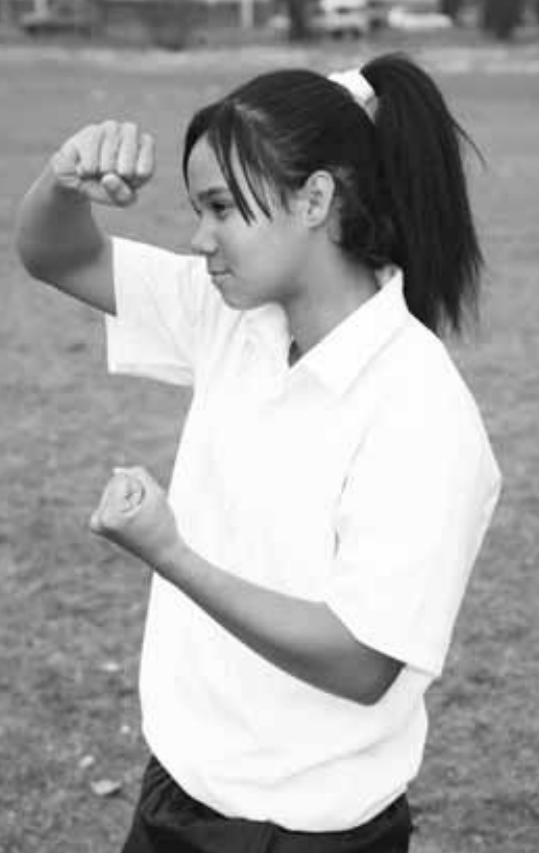
Blocking face attacks
To protect your head from strikes:
Example
Face Block Technique
Step 1: Bend your arm to form a angle at the elbow
Step 2: Lift your elbow upward to just above your forehead
Step 3: Use a pushing motion to deflect the attack
Step 4: Maintain the angle throughout the movement
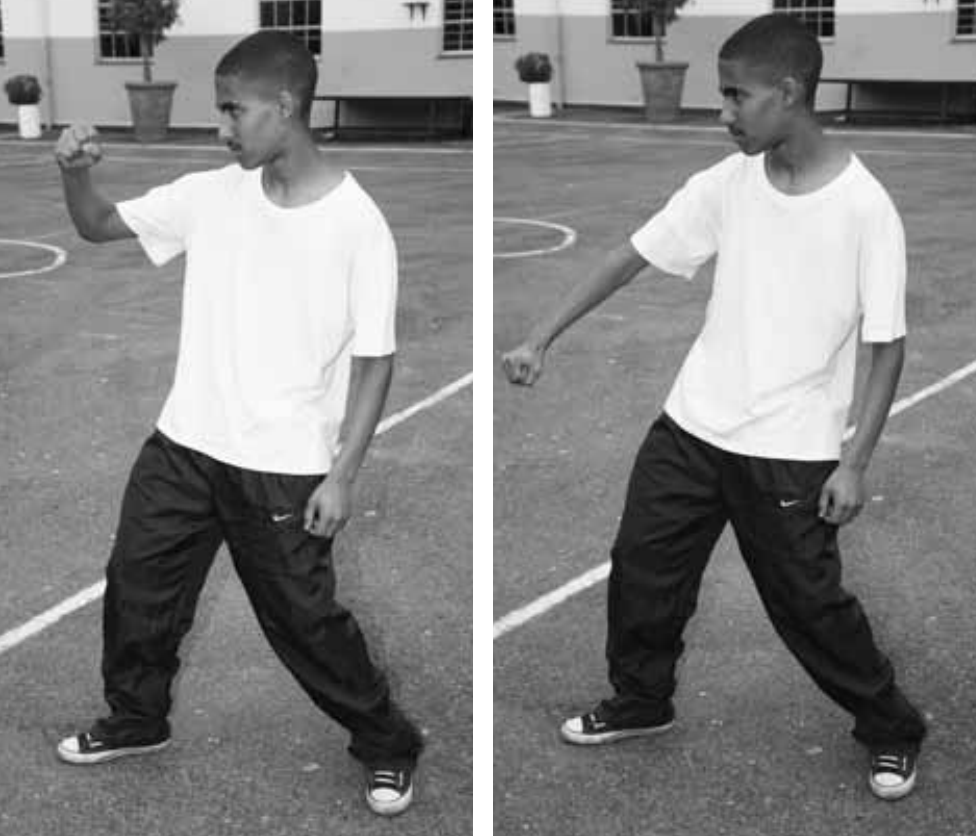
Blocking body attacks
To protect your chest, stomach, and lower body:
Example
Body Block Technique
Step 1: Bend your arm and position your hand at ear level
Step 2: Keep your elbow close to your body
Step 3: Swing your arm downward and slightly away from your body to deflect strikes
Note
Effective blocking requires timing and positioning. The goal is to deflect attacks rather than absorb their full impact, which reduces the force transmitted to your body.
Defending moves
When blocking isn't enough, you may need to use active defensive techniques to disable an attacker.
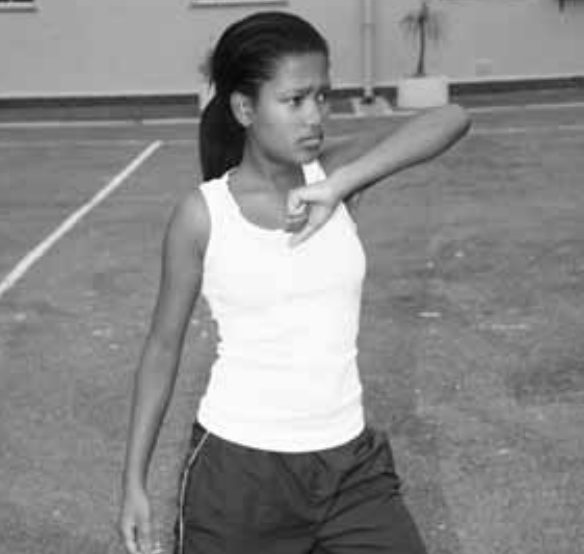
Elbow swing
This technique targets the attacker's head area:
Example
Elbow Swing Technique
Step 1: Stretch your arm across your face initially
Step 2: Quickly bend your arm and swing your elbow towards the attacker with maximum force
Step 3: Aim for the head, ear, eyes, or nose to cause disorientation
Step 4: This movement will put the attacker off balance, giving you a chance to escape
Front snap kick
This surprise attack uses your instep:
Example
Front Snap Kick Execution
Step 1: While facing your attacker, raise your knee until it's level with your hips
Step 2: Drive your foot upward by extending your leg quickly
Step 3: Aim for the attacker's groyne area for maximum effectiveness
Step 4: Use the element of surprise to your advantage

Palm strike
This is one of the most basic yet effective defensive moves:
Example
Palm Strike Technique
Step 1: Keep your fingers back in the direction of your head while facing your palm forwards
Step 2: Use the heel of your palm for striking
Step 3: Bring your hand back to your shoulder, then extend your elbow and snap your palm forwards
Step 4: Aim for the nose or chin area - striking these points may cause your attacker to lose balance
Rear kick
Use this technique if attacked from behind:
Example
Rear Kick Defense
Step 1: Lift your knee and kick backwards
Step 2: Aim for your attacker's thigh, inner leg, or groyne
Step 3: Strike with your heel while keeping your upper body relatively still

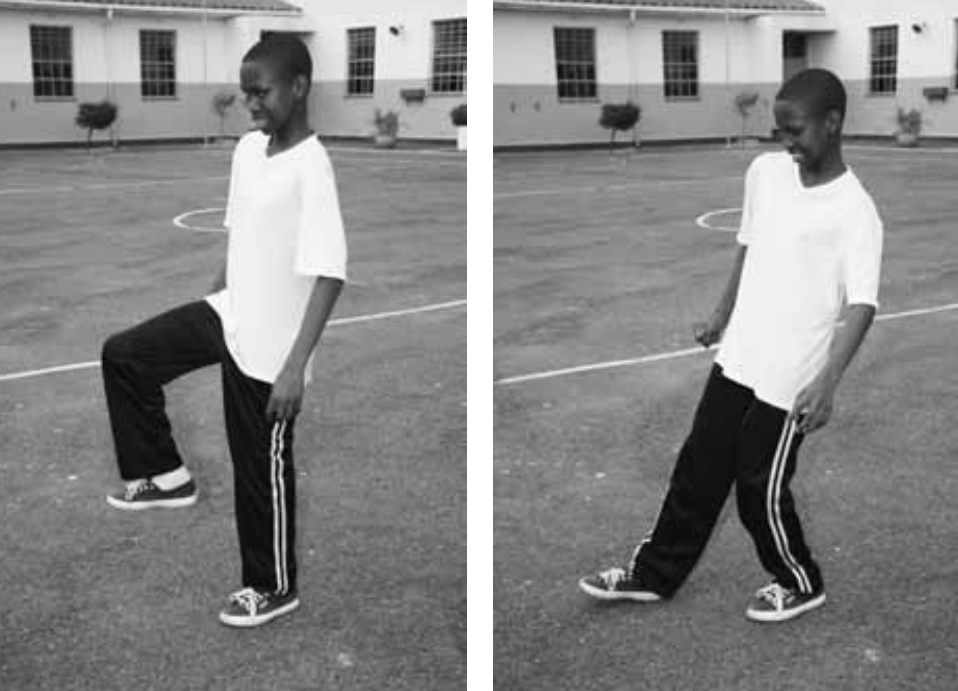
Stomping kick
This technique works when an attacker grabs you:
Example
Stomping Kick Technique
Step 1: Lift the knee of your strongest leg as high as possible
Step 2: Kick down hard towards the centre of the attacker's foot
Step 3: Practice by lifting your knee high, holding it close to your chest, then kicking down forcefully
Step 4: Stop just before your heel touches the ground and repeat with your other leg
Step 5: Always maintain your balance throughout the movement
Note
The stomping kick is especially effective when your arms are restrained, as it requires only leg movement and can cause significant pain and disorientation.
Shadow boxing
Shadow boxing involves moving and fighting against an imaginary opponent. This practice helps you develop movement skills, stamina, and defensive techniques in a safe environment.
Basic boxing stance
Establish your foundation with proper positioning:
- Stand with your feet shoulder-width apart
- Tuck your chin down slightly
- Bend your arms slightly at the elbows
- Keep your hands near your chin for protection
Shadow boxing exercises
Hook punches: Punch while turning on your hip or knee, aiming your arm in front of your body.
Combination punching: Practice one-two combinations (left-hand jab followed immediately by right-hand cross) for five punches at a time.
Example
Shadow Boxing Movement Patterns
Basic routine:
- Shadow box for three minutes, then rest for one minute before starting again
- Keep imagining an opponent in front of you
- Throw strong punches while blocking imaginary attacks
- Move your feet, body, and head constantly to avoid imaginary strikes
- Move your head from side to side as if avoiding punches
Advanced combinations:
- Double hook: Step forwards with your left foot while throwing a left hook, keep your right hand up to protect your face, then immediately throw another left hook
- Jumping-jack punch: Perform a normal jumping jack but instead of clapping above your head, throw swift punches to the front
- Boxing jog in place: Keep your hands in boxing stance while jogging on the spot, incorporating small knee lifts and heel kicks
- Bunny hop: Keep legs together, bend knees slightly, jump forwards , land gently on the balls of your feet, then jump back to starting position while maintaining boxing stance
Summary
Key Points to Remember:
- Running away is always the best self-defence strategy - only fight when escape is impossible
- Different martial arts styles offer various approaches to personal protection, from grappling to striking
- Distance determines technique - use different moves for short, medium, and long-range situations
- Proper stance provides balance and power - master the ready, forwards, horse, and hourglass stances
- Practice safely and responsibly - never use self-defence techniques to bully or harm others unnecessarily