Warming Up 1 (Grade 10 NSC Matric Life Orientation): Revision Notes
📚Revision Notes
Warming Up 1
Warming up is an essential part of any physical activity session. These exercises prepare your body for more intense movement by gradually increasing your heart rate, loosening your muscles, and improving your flexibility. Proper warm-up routines help prevent injuries and improve your overall performance during physical activities.
Growing plant stretch
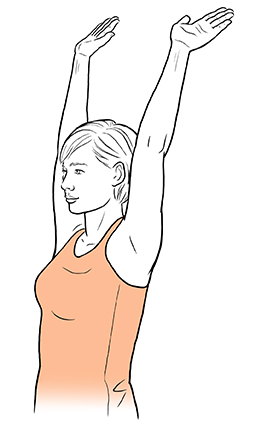
This creative warm-up exercise helps you stretch your entire body while engaging your imagination. The movement mimics the growth of a plant from a tiny seed to a tall sunflower.
Note
This exercise effectively stretches your spine, legs, and arms while also serving as a gentle cardiovascular warm-up. The slow, controlled movement helps prepare your body gradually for more intense activity.
How to perform the growing plant stretch:
- Begin by standing in a circle with your classmates
- Lower yourself down as much as possible without sitting on the ground - crouch down and make yourself as small as possible
- Imagine you are a tiny seed buried in the soil
- Very slowly begin to "grow" by moving your body upwards, pretending you are sprouting into a flower
- Gradually raise yourself bit by bit until you reach a full standing position - this movement should be done very slowly to avoid injury
- Once standing, rise up onto your toes and stretch your entire body upwards as high as possible
- Extend your arms, neck, and head towards the sky, reaching as far as you can
- Hold this tall position for 30 seconds, maintaining the stretch
- Take a deep breath and give a big sigh to release tension
- Allow your arms to drop naturally to your sides and return to standing flat on your feet
- Slowly return to the seed position by crouching down low again
- Repeat the growing movement once more until you reach full height
- Complete the exercise with an energetic jump and shout "sunflower!" to celebrate your growth
Jumping jacks
Jumping jacks are an excellent cardiovascular warm-up that gets your blood flowing and prepares your heart for more intense activity. This exercise works your entire body and improves coordination.

Example
Practice Tip: Finding Your Rhythm
Start slowly with jumping jacks to establish your rhythm:
- Count "1, 2, 3, 4" as you jump
- On "1" - jump and spread arms and legs
- On "2" - return to starting position
- Gradually increase speed while maintaining control
Proper technique for jumping jacks:
- Start by standing with your arms at your sides and feet placed together
- Point your toes forwards and hold your head in a comfortable, straight position
- Keep a slight bend in your knees throughout the movement
- Jump upwards while simultaneously spreading your arms and legs apart
- Raise your arms up to ear level and spread your feet wider than shoulder-width
- At the top of the movement, clap your hands together above your head or simply touch your fingertips together
- Perform all movements in one smooth, quick motion
- Return to the starting position by jumping again and bringing your arms back down to your sides
- Simultaneously bring your feet back together as you land
- Maintain a rhythmic pace and keep the movements flowing smoothly
Jumping jacks are particularly effective for warming up your cardiovascular system and preparing your joints for movement in multiple directions.
Front lunge
The front lunge is an excellent warm-up exercise that prepares your leg muscles for activity while improving balance and flexibility. This movement targets your quadriceps, hamstrings, and glutes.
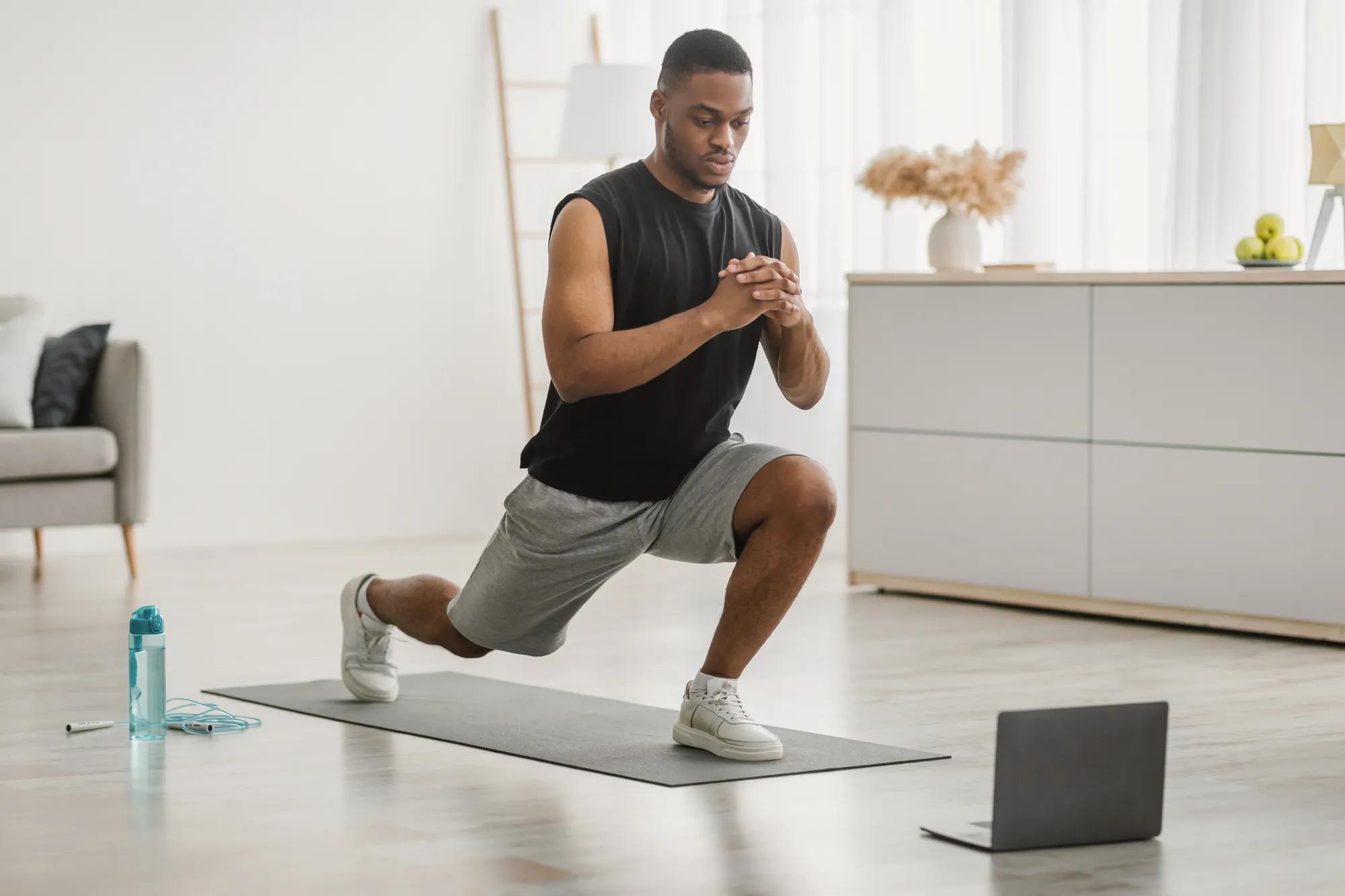
Step-by-step instructions for front lunges:
- Begin in a standing position with your feet slightly apart and toes pointing forwards
- Take a large step forwards with one foot, keeping your upper body straight
- Shift most of your body weight onto your front heel for stability
- Lift your back heel off the ground so only the ball of your back foot remains in contact with the floor
- Keep your body upright and pull your shoulders back to maintain good posture
- Bend both knees simultaneously, lowering your body towards the ground
- Lower your back knee until it almost touches the ground, but don't let it actually make contact
- Push upward using your front leg to return to the starting standing position
- Keep your feet slightly apart when you return to the starting position
- Repeat the movement by stepping forwards with your opposite foot
- Remember to breathe properly: inhale as you lower down and exhale as you push back up
- Keep your upper body straight throughout the entire exercise - avoid leaning forwards or backwards
This exercise effectively prepares your leg muscles for more intense activity while also improving your balance and coordination.
Toe touch
The toe touch is a simple yet effective stretching exercise that improves flexibility in your hamstrings (back of thighs) and lower back muscles. This stretch helps prepare your body for activities that require bending and reaching.

Note
Flexibility is Individual
Remember that flexibility varies from person to person, so don't worry if you can't touch your toes initially. With regular practice, your flexibility will improve over time. Focus on gradual progress rather than forcing the stretch.
How to perform the toe touch safely:
- Stand with your feet positioned comfortably apart
- Slowly bend forwards at your waist, reaching your fingers towards your toes
- Keep your knees either completely straight or slightly bent, depending on what feels most comfortable for your body
- Focus on reaching as far as you can without forcing the stretch or causing pain
- Hold this position for 30 seconds to allow your muscles to relax and lengthen
- Breathe normally throughout the stretch - don't hold your breath
- Slowly return to standing position when the time is complete
Assessment considerations
Important
Assessment Information
Your movement performance during physical education lessons will be evaluated as part of your overall assessment. Remember that active participation in each PE period contributes to your final mark. During the term, your movement performance will be assessed twice - once during weeks 4-6 and again during weeks 7-10. Focus on demonstrating proper technique and consistent effort in all warm-up activities.
Summary
Key Points to Remember:
- Warm-ups prevent injuries - Always complete your warm-up routine before engaging in more intense physical activities
- Move slowly and controlled - Rushing through warm-up exercises defeats their purpose and can lead to injury
- Listen to your body - If something feels painful or uncomfortable, modify the movement or ask your teacher for guidance
- Breathe properly - Don't hold your breath during exercises; maintain steady, rhythmic breathing throughout
- Consistency matters - Regular participation in warm-up routines will improve your flexibility, strength, and overall fitness level over time