Dry Matter in Silage (Leaving Cert Agricultural Science): Revision Notes
📚Revision Notes
Dry Matter in Silage
What is dry matter testing?
Dry matter testing is a crucial laboratory technique used to determine the exact amount of solid material in silage samples. This measurement tells us how much water has been removed from the original plant material during the silage-making process. Understanding dry matter content is essential for farmers as it affects the nutritional value, storage quality, and feeding calculations for livestock.
Why test silage for dry matter?
Silage quality depends heavily on its moisture content. Too much moisture can lead to poor fermentation, whilst too little can prevent proper compaction. By measuring dry matter percentage, farmers can assess whether their silage has been made correctly and calculate accurate feed rations for their animals.
Note
Proper moisture levels are critical for successful silage fermentation. The dry matter test helps determine if the silage-making process achieved optimal conditions for preservation and nutritional value.
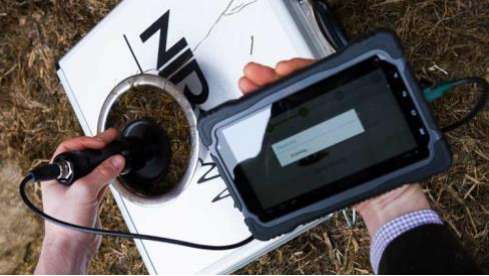
Equipment required
The experiment uses standard laboratory equipment that you'll find in most agricultural science labs:
- Balance - for accurate weighing measurements
- Oven - capable of reaching and maintaining 105°C
- Silage sample - fresh sample from the clamp or pit
- Beaker - heat-resistant glass beaker for containing the sample
Step-by-step method
The dry matter determination follows a systematic eight-step process that removes all moisture from the silage sample through controlled heating.
Initial weighing stage
Begin by weighing your empty beaker using an accurate balance and carefully record this weight. This initial measurement is crucial as it will be subtracted from all subsequent weighings to give you the true sample weights.
Next, place your silage sample into the beaker and weigh the combined beaker and sample. Record this total weight. To find the wet weight of your silage sample, subtract the empty beaker weight from this total weight.
Important
Accurate initial weighing is essential for reliable results. Double-check all measurements and record them immediately to avoid errors in your calculations.
Drying process
The drying stage is the heart of this experiment. Place the beaker containing your silage sample into an oven heated to exactly 105°C. This temperature is specifically chosen because it's hot enough to remove all water content but not so hot that it burns or chemically changes the organic matter.
During the drying process, you must remove the sample every 10 minutes to weigh it. This regular checking continues until you achieve a constant weight - meaning no further water is being lost. This process typically takes several hours depending on the moisture content of your original sample.
Note
The 105°C temperature is a standard in dry matter analysis across many industries. This temperature ensures complete water removal while preserving the integrity of the organic compounds being measured.
Final measurements and calculations
Once the sample reaches a constant weight, immediately weigh the beaker and dried sample together. Record this final weight while the sample is still hot to avoid any moisture reabsorption from the air.
Calculate the dry weight of your sample by subtracting the original empty beaker weight from this final total weight.
Calculating dry matter percentage
The dry matter percentage uses a straightforward formula that compares the dry weight to the original wet weight:
This calculation tells you what percentage of your original silage sample was actually solid matter, with the remainder being water content.
Example
Worked Example: Calculating Dry Matter
Step 1: Record your measurements
- Empty beaker weight = 50g
- Beaker + wet sample = 200g
- Beaker + dry sample = 80g
Step 2: Calculate sample weights
- Wet sample weight = 200g - 50g = 150g
- Dry sample weight = 80g - 50g = 30g
Step 3: Apply the formula Dry Matter % = (30g ÷ 150g) × 100 = 20%
Recording your results
Accurate record-keeping is essential for this practical. You should record:
- Empty beaker weight
- Beaker and sample weight before drying
- Wet sample weight (calculated)
- Beaker and sample weight after drying
- Dry sample weight (calculated)
- Final dry matter percentage
Note
Create a data table before starting the experiment to ensure you capture all measurements systematically. This will help prevent errors and make calculations easier.
Interpreting your results
Good quality silage typically contains between 25-35% dry matter, though this varies depending on the crop type and harvesting conditions. Results outside this range might indicate problems with the silage-making process or storage conditions.
Higher dry matter percentages suggest the crop was harvested at optimal maturity, while very low percentages might indicate the crop was too immature or that storage conditions allowed continued fermentation.
Important
Results significantly below 25% or above 35% may indicate quality issues that could affect animal health and feed efficiency. Always interpret results in context with other quality indicators.
Practical applications
Understanding dry matter content helps farmers make informed decisions about:
- Feed ration calculations for different livestock
- Storage requirements and expected keeping quality
- Economic value of the silage produced
- Adjustments needed for future silage making
This practical skill is directly applicable to real farming situations and forms part of quality assurance procedures used throughout Irish agriculture.
Summary
Key Points to Remember:
- Dry matter testing determines the solid content of silage by removing all moisture through oven drying at 105°C
- The process involves careful weighing before and after drying, with regular weight checks every 10 minutes
- The calculation is: (Dry Weight ÷ Wet Weight) × 100 = Dry Matter %
- Good quality silage typically contains 25-35% dry matter
- Accurate record-keeping and precise weighing are essential for reliable results