Texture of Soil - Soil Sieve (Leaving Cert Agricultural Science): Revision Notes
📚Revision Notes
Texture of Soil - Soil Sieve
Understanding soil texture is essential for successful farming. The sieve method allows you to determine the exact proportions of different particle sizes in your soil, helping you make informed decisions about crop selection, irrigation, and soil management.
Why soil texture matters
Soil texture refers to the relative proportions of sand, silt, and clay particles in a soil sample. This physical property significantly influences:
- Drainage patterns - how quickly water moves through the soil
- Aeration levels - the amount of air space available for root respiration
- Nutrient availability - how well the soil can hold and release nutrients
- Root penetration - how easily plant roots can grow through the soil
- Water retention - the soil's ability to store moisture for plants
Understanding your soil's texture helps you choose appropriate crops, plan irrigation schedules, and apply fertilisers effectively.
Equipment needed for the sieve method
You'll need the following equipment to carry out this practical:
Note
Essential Equipment List:
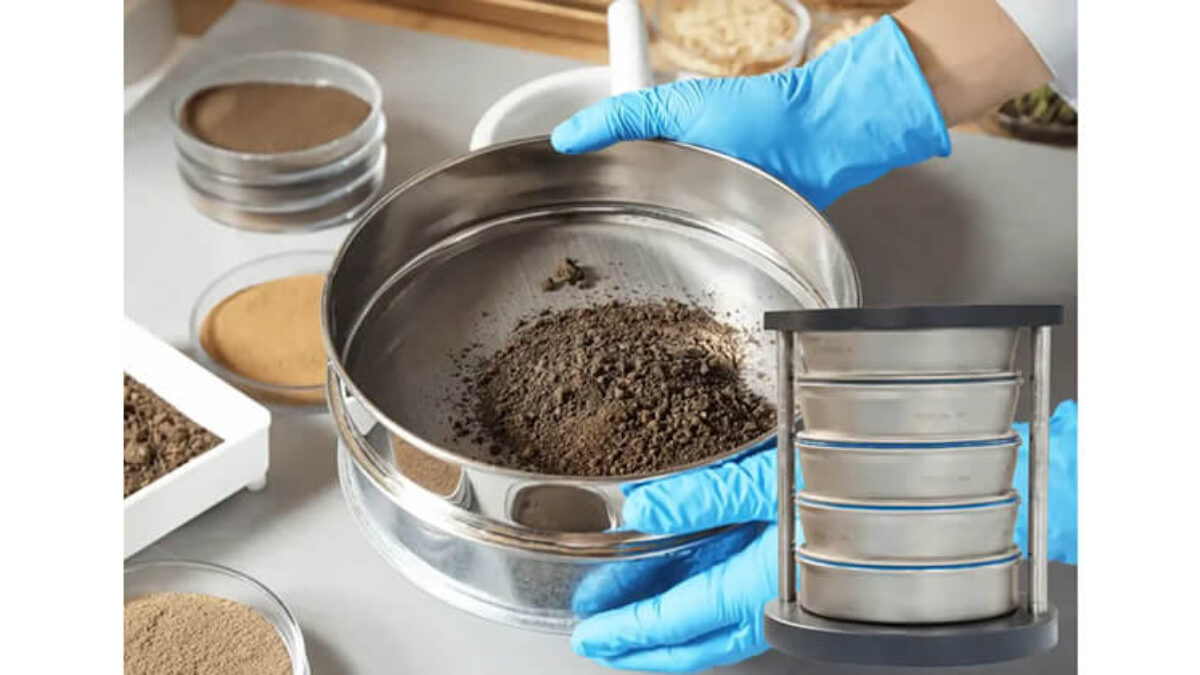
- Soil sieves with different mesh sizes (typically 2mm, 0.2mm, and 0.02mm)
- Soil sample that has been air-dried and ground to break up lumps
- Weighing balance for accurate measurements
- Sieve shaker (can be manual or mechanical) to ensure thorough separation
- Brush and tray for collecting and cleaning soil particles
The different sieve sizes separate particles into three main categories: sand (largest), silt (medium), and clay (smallest).
Step-by-step method
Follow these steps carefully to obtain accurate results:
- Prepare your soil sample by removing any debris, stones, or organic matter. Ensure the soil is completely air-dried and crush any remaining lumps.
- Weigh your sample accurately (typically 100g for easier percentage calculations).
- Stack the sieves with the largest mesh (2mm) at the top and the smallest (0.02mm) at the bottom, placing a collection tray underneath.
- Place the soil sample in the top sieve of the stack.
- Shake the sieves vigorously for approximately 10 minutes to ensure complete separation. Use consistent motion to avoid uneven results.
- Weigh the soil retained on each individual sieve carefully.
- Calculate the percentages of sand, silt, and clay using the formula:
Understanding your calculations
The calculation process allows you to determine the exact composition of your soil sample and classify it according to established soil texture categories.
Example
Worked Example: Soil Texture Calculation
Let's work through a complete example:
Given data:
- Total soil sample: 100g
Step 1: Record the weights
- Sand fraction (retained on 2mm and 0.2mm sieves): 65g
- Silt fraction (retained on 0.02mm sieve): 25g
- Clay fraction (passed through all sieves): 10g
Step 2: Calculate percentages
- Sand percentage: sand
- Silt percentage: silt
- Clay percentage: clay
Step 3: Verify and classify
- Check: ✓
- Soil classification: Sandy loam
Always check that your percentages add up to 100% - if they don't, review your measurements and calculations.
Interpreting your results
Different soil textures have distinct characteristics that affect farming decisions:
Sandy soils (high sand content):
- Contain large particles with significant spaces between them
- Provide excellent drainage but may dry out quickly
- Allow good aeration for root development
- Tend to have lower fertility as nutrients wash away easily
- Suitable for crops that prefer well-drained conditions
Clay soils (high clay content):
- Consist of very small particles that pack tightly together
- Often have drainage problems and may become waterlogged
- Can be difficult to cultivate when wet
- Generally have higher fertility as they retain nutrients well
- May require drainage improvements for optimal crop growth
Loam soils (balanced mixture):
- Combine the benefits of sand, silt, and clay
- Provide ideal growing conditions for most crops
- Offer good drainage while retaining adequate moisture
- Support healthy soil structure and biological activity
Important
Common sources of error
Be aware of these potential problems that could affect your results:
- Incomplete drying - moisture can cause particles to clump together, leading to inaccurate separation
- Insufficient crushing - lumps may not break down properly, affecting particle size distribution
- Inadequate shaking - insufficient agitation means particles don't separate completely
- Soil loss during handling - be careful not to spill sample during transfers between sieves
- Inaccurate weighing - ensure your balance is calibrated and use consistent weighing techniques
Note
Exam tips
For your Leaving Cert Agricultural Science exam, remember these key points:
- Know the process sequence: Sample preparation → Drying → Sieving → Weighing → Calculating percentages
- Understand the practical applications: Link soil texture to drainage, fertility, and crop suitability
- Practice calculations: Be comfortable converting weights to percentages and classifying soil types
- Connect to Irish agriculture: Consider how different soil textures affect common Irish crops like potatoes, cereals, and grassland
Summary
Key Points to Remember:
- Soil texture analysis using the sieve method determines the proportions of sand, silt, and clay particles in soil samples
- Sandy soils drain well but have lower fertility, while clay soils hold nutrients but may have drainage issues
- Loam soils provide the ideal balance for most agricultural crops
- Accurate sample preparation and careful measurement techniques are essential for reliable results
- Understanding soil texture helps farmers make better decisions about crop selection, irrigation, and soil management