Factors Affecting Heart Rate and Respiratory Rate (VCE SSCE Biology): Revision Notes
📚Revision Notes
Factors Affecting Heart Rate and Respiratory Rate
Introduction to homeostasis and exercise
For cells to work effectively, they need consistent conditions around them. However, our bodies constantly experience different environments and situations. To keep our internal environment as stable as possible, our bodies use various processes to maintain homeostasis.
Note
Maintaining consistent cellular conditions is essential for life. Even small changes in temperature, pH, or nutrient availability can significantly affect how well cells function and, ultimately, how well our bodies work.
Homeostasis is the maintenance of a stable internal environment despite external changes.
Exercise is one factor that significantly affects the environment of our cells. During physical activity, muscle cells carry out increased amounts of cellular respiration. This means they:
- Use more oxygen than usual
- Produce more carbon dioxide than when at rest
To maintain homeostasis during exercise and ensure cells function normally, our bodies must correct these changes as quickly as possible.
The role of body systems in homeostasis
Two internal systems are crucial for maintaining homeostasis during and after exercise:
The circulatory system:
- Transports oxygen and nutrients throughout the body to reach all cells
- Removes waste products that cells create
- Responds to increased demands during exercise by increasing heart rate
The respiratory system:
- Oxygenates the blood
- Removes carbon dioxide from the body
- Responds to exercise by increasing breathing rate
Note
Working Together for Homeostasis
These two systems don't work in isolation. The respiratory system adds oxygen to the blood and removes carbon dioxide, while the circulatory system transports this oxygen-rich blood to cells throughout the body and carries carbon dioxide waste back to the lungs for removal. This coordination is essential for maintaining homeostasis during exercise.
When exercise increases oxygen consumption by cells, both systems must work together to compensate for these increased demands and the increased production of waste products.
Investigating the effects of exercise
Aim
To observe and record how exercise affects heart rate and respiratory rate.
Materials
- 1 stopwatch
- Groups of 3-4 people
- One volunteer per group
Method
Part A: Measuring resting rates
Finding the pulse:
There are two main locations where you can measure pulse:
Radial pulse (wrist):
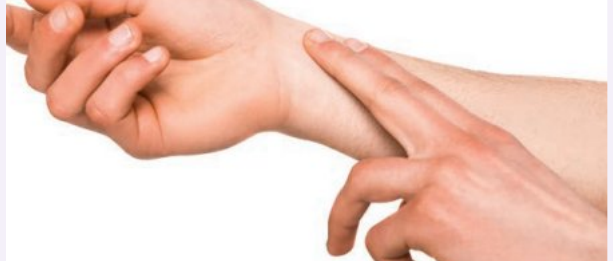
- Place two fingers on the groove in the wrist below the thumb
- Move your fingers around until you feel a slight pulsation
- This is the radial artery
Carotid pulse (neck):
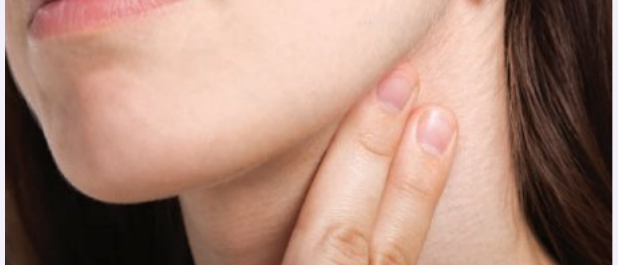
- Place two fingers on the neck, roughly near the trachea (which can be found near the Adam's apple)
- Move your fingers around until you feel a slight pulsation
- This is the carotid artery
Important
Safety Note: Only check the pulse on one side of the neck at a time. Pressing on both carotid arteries simultaneously can restrict blood flow to the brain.
Taking measurements:
- Have your volunteer sit quietly, breathing calmly
- One group member should find and count the pulse for 15 seconds
- Multiply this number by four to calculate heart rate in beats per minute
- Simultaneously, another group member should count how many breaths the volunteer takes in the same 15 seconds
- Multiply this by four to get respiratory rate in breaths per minute
- Record both measurements in your results table
Example
Worked Example: Calculating Heart Rate
If you count 18 pulse beats in 15 seconds:
Step 1: Note the count Count in 15 seconds = 18 beats
Step 2: Calculate beats per minute Heart rate = 18 × 4 = 72 beats per minute
The same method applies to respiratory rate calculations.
Part B: Low-intensity exercise (Exercise A)
- Have the volunteer perform as many push-ups or sit-ups as they can in 20 seconds
- Immediately after finishing, measure pulse and respiratory rate (using the same pulse location as before)
- Record the results
- Allow the volunteer to rest for one minute, then repeat measurements
- Continue recording measurements at one-minute intervals for a total of five minutes
- Allow the volunteer to rest for another five minutes before the next exercise
Part C: High-intensity exercise (Exercise B)
- Once recovered, have the volunteer jog on the spot as fast as they can for two minutes
- Immediately after finishing, measure pulse and respiratory rate
- Record the results
- Allow the volunteer to rest for one minute, then repeat measurements
- Continue recording measurements at one-minute intervals for a total of five minutes
- Give your volunteer a drink of water
Note
Timing is Critical
For accurate results, measurements must be taken immediately after exercise stops. Even a few seconds' delay can result in heart rate and respiratory rate beginning to decrease, affecting the accuracy of your data.
Results
Record your data in a table like this:
| Time point | Heart rate (beats per minute) | Respiratory rate (breaths per minute) |
|---|---|---|
| Resting | ||
| Immediately post-Exercise A | ||
| 1-minute post-Exercise A | ||
| 2-minute post-Exercise A | ||
| 3-minute post-Exercise A | ||
| 4-minute post-Exercise A | ||
| 5-minute post-Exercise A | ||
| Immediately post-Exercise B | ||
| 1-minute post-Exercise B | ||
| 2-minute post-Exercise B | ||
| 3-minute post-Exercise B | ||
| 4-minute post-Exercise B | ||
| 5-minute post-Exercise B |
After collecting your data, create a line graph showing how heart rate and respiratory rate change over time for both exercises.
Understanding the results
The connection to cellular respiration
During exercise, cells need more energy, which they produce through aerobic cellular respiration. The chemical formula for this process is:
This shows that:
- Glucose () and oxygen () are needed as reactants
- Carbon dioxide (), water (), and energy (ATP) are produced
During exercise, cells use more oxygen and produce more carbon dioxide, which is why both heart rate and respiratory rate increase.
Homeostasis and negative feedback
The body maintains homeostasis largely through negative feedback loops. This means:
- When a change occurs (stimulus), the body detects it
- The body responds to counteract the change
- Once conditions return to normal, the response stops
Example
Worked Example: Negative Feedback During Exercise
Stimulus: Muscle cells use more oxygen and produce more carbon dioxide during exercise
Detection: Sensors in blood vessels detect:
- Decreased oxygen levels
- Increased carbon dioxide levels
Response: The body increases:
- Heart rate (to deliver more oxygenated blood)
- Respiratory rate (to take in more oxygen and remove more carbon dioxide)
Result: Oxygen and carbon dioxide levels return closer to normal
Feedback: Once levels stabilize, heart rate and respiratory rate begin to decrease back to resting levels
In the context of exercise:
- Stimulus: Increased carbon dioxide and decreased oxygen in blood
- Response: Increased heart rate and respiratory rate
- Result: Oxygen levels increase and carbon dioxide levels decrease, returning to normal
Variables in this investigation
Independent variable: The type and intensity of exercise (Exercise A vs Exercise B)
Dependent variables:
- Heart rate (beats per minute)
- Respiratory rate (breaths per minute)
Control: The resting measurements provide a baseline for comparison
Note
Understanding Variables
In any scientific investigation, it's crucial to identify what you're changing (independent variable) and what you're measuring (dependent variables). The control gives you a reference point to see how much change has occurred due to your independent variable.
Expected observations
You should notice:
- Both heart rate and respiratory rate increase immediately after exercise
- High-intensity exercise (Exercise B) causes greater increases than low-intensity exercise (Exercise A)
- Both rates gradually return to resting levels during the recovery period
- The more intense the exercise, the longer it takes to return to resting levels
Other physiological changes
During exercise, you might also observe:
- Increased sweating (to regulate body temperature)
- Flushed skin (due to increased blood flow to the skin)
- Deeper breathing (to take in more oxygen per breath)
- Tiredness in muscles (due to accumulation of metabolic waste products)
Note
Why Does Skin Flush?
During exercise, blood vessels near the skin surface dilate (widen) to allow more blood flow. This helps release excess heat generated by muscle activity, maintaining a stable body temperature as part of homeostasis.
Exam tips
Important
Key Points for Exam Success:
- When describing homeostasis, always mention it maintains a stable internal environment
- Remember that heart rate is measured in beats per minute and respiratory rate in breaths per minute
- For pulse measurement, multiply the 15-second count by 4 to get the per-minute rate
- Be able to explain why both heart rate and respiratory rate increase during exercise (increased oxygen demand and carbon dioxide removal)
- Understand the difference between independent and dependent variables in experimental design
- Know the equation for aerobic cellular respiration and what it tells us about the need for increased oxygen during exercise
Remember!
Summary
Key Points to Remember:
-
Homeostasis is the maintenance of a stable internal environment, essential for proper cell function
-
Exercise increases oxygen demand as muscle cells undergo more cellular respiration, producing more carbon dioxide
-
Heart rate and respiratory rate both increase during exercise to meet oxygen demands and remove carbon dioxide more efficiently
-
The body uses negative feedback loops to detect changes and respond appropriately, then stop the response once balance is restored
-
Recovery time depends on exercise intensity - more intense exercise requires longer recovery periods for heart rate and respiratory rate to return to resting levels