Natural Selection in Mice (VCE SSCE Biology): Revision Notes
📚Revision Notes
Natural Selection in Mice
What is natural selection?
Natural selection is the process by which organisms that are better adapted to their environment have an increased chance of surviving and passing their alleles on to the next generation. This fundamental mechanism of evolution depends on variation within populations.
Important
Core Definition: Natural selection requires three key elements:
- Variation in traits within a population
- These traits must be heritable (passed to offspring)
- Differential survival and reproduction based on these traits
For natural selection to work effectively, there must be genetic variation within a population. This variation means that different individuals carry different versions of genes, called alleles. When certain alleles help organisms survive better in their specific environment, those individuals have what we call a selective advantage - they're more likely to survive, reproduce, and pass these helpful alleles to their offspring.
Note
Why Variation Matters
Without genetic variation, all individuals in a population would be essentially identical. If environmental conditions changed, either everyone would survive or everyone would die - there would be no opportunity for some individuals to do better than others. Variation is the raw material that natural selection works with.
The role of mutations and genetic diversity
Where do these different alleles come from? The original source of advantageous alleles is mutations - changes to an organism's DNA sequence. Mutations create new variations that didn't exist before.
Genetic diversity is crucial for a species' survival. Without a high degree of variation, the chances of advantageous alleles being present decrease significantly. This makes a population vulnerable to extinction because they cannot adapt when their environment changes or when new challenges arise.
Important
The Extinction Risk
A genetically diverse population has a better chance of containing some individuals with traits that help them survive new environmental selection pressures. Populations with low genetic diversity are like putting all your eggs in one basket - if conditions change, the entire population may lack the traits needed to survive.
The deer mouse: A case study
The deer mouse (Peromyscus maniculatus) is a species found throughout North America, primarily in woodlands but also in desert areas. In these desert regions, the sand can be either dark-brown or light-brown in colour, creating different environments for the mice.
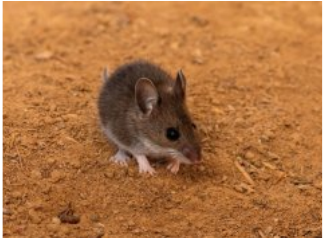
Deer mice come in two main colour variations: dark-brown mice and light-brown mice. The genetics behind this is straightforward - the dark-brown colour is controlled by a dominant allele (B), while the light-brown colour is controlled by a recessive allele (b).
Note
Understanding Genotype and Phenotype
The genotype is the genetic makeup (which alleles an individual carries), while the phenotype is the visible trait (what the mouse looks like). Here's how they relate:
- BB genotype: Homozygous dominant → dark-brown mouse
- Bb genotype: Heterozygous → dark-brown mouse (because B is dominant)
- bb genotype: Homozygous recessive → light-brown mouse
Notice that both BB and Bb mice look identical (dark-brown), even though they have different genotypes. This is because the B allele is dominant and masks the effect of the b allele.
How environment affects survival
The colour of a mouse matters for its survival because of camouflage. In light-brown sand, dark-brown mice are more easily spotted by predators such as snakes, hawks, and owls. They stand out against the pale background, making them easier targets.
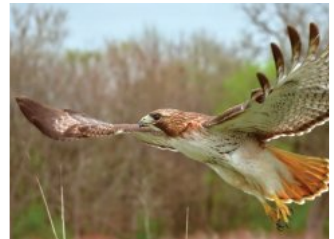
Conversely, light-brown mice blend in with light-brown sand, making them harder for predators to see. This is an example of an environmental selection pressure - the environment (sand colour) influences which mice are more likely to survive and reproduce.
Note
The Camouflage Effect
Think of it as "match or be caught":
- In light-brown sand: light-brown mice have a selective advantage
- In dark-brown sand: dark-brown mice have a selective advantage
The mice that match their environment are harder to see and less likely to be eaten by predators before they can reproduce and pass on their alleles.
The simulation experiment
Aim
To simulate natural selection and observe how it affects the genetic makeup of a mouse population over time. This simulation helps us understand how allele frequencies change when selection pressures are applied.
Materials
- Six-sided die
- Set of 30 mouse cards:
- 10 BB cards (dark-brown mice)
- 10 Bb cards (dark-brown mice)
- 10 bb cards (light-brown mice)
- 20 extra mouse cards (mixture of genotypes for offspring)
Method: Part A - Light-brown sand environment
This part simulates a population living in light-brown coloured sand, where dark-brown mice are at a disadvantage.
Step 1: Random mating
Shuffle the 30 mouse cards thoroughly to simulate random mating. Deal the cards into 15 pairs by placing one card on top of another. The sex of the mice doesn't matter for this simulation.
Step 2: Determining offspring genotypes
For each pair of parent mice, determine the genotype of their one offspring using these rules. Use the six-sided die when specified:
- BB × BB = BB (always)
- bb × bb = bb (always)
- BB × bb = Bb (always)
- BB × Bb = Roll the die:
- Even number (2, 4, 6) = BB
- Odd number (1, 3, 5) = Bb
- Bb × Bb = Roll the die:
- Roll 1 = BB
- Roll 2 or 3 = Bb
- Roll 4 = bb
- Roll 5 or 6 = Roll again
- Bb × bb = Roll the die:
- Even number (2, 4, 6) = Bb
- Odd number (1, 3, 5) = bb
Note
Why Use a Die?
The die simulates the random nature of which alleles get passed to offspring. When a heterozygous (Bb) mouse reproduces, it can pass either the B or b allele with equal probability - just like rolling a die gives random outcomes.
Step 3: Simulating predation
After all 15 offspring are produced, the population consists of 45 mice (15 original pairs + 15 offspring). Now predators eat one-third of the population (15 mice), leaving 30 mice.
Important
Critical Predation Rules for Light-Brown Sand
Roll the die 15 times. Each roll represents one mouse being eaten:
- Roll 1, 2, 3, 4, or 5: Remove a dark-brown mouse (BB or Bb)
- Roll 6: Remove a light-brown mouse (bb)
Notice that dark-brown mice have a 5 in 6 chance of being eaten, while light-brown mice have only a 1 in 6 chance. This reflects their visibility in light-brown sand - dark mice stand out and are easier targets.
Step 4: Repeat
Repeat steps 1-3 another four times to simulate five years in total. Record your results in the table after each year.
Method: Part B - Dark-brown sand environment
This part simulates a separate population living in dark-brown sand, where light-brown mice are now at a disadvantage.
Step 5: Repeat with different selection pressure
Start with a fresh population (10 BB, 10 Bb, and 10 bb). Follow the same steps 1-4 as in Part A, but with different predation rules:
Important
Critical Predation Rules for Dark-Brown Sand
Roll the die 15 times. Each roll represents one mouse being eaten:
- Roll 1: Remove a dark-brown mouse (BB or Bb)
- Roll 2, 3, 4, 5, or 6: Remove a light-brown mouse (bb)
Now light-brown mice have a 5 in 6 chance of being eaten, while dark-brown mice have only a 1 in 6 chance. The selection pressure has reversed - light mice now stand out against dark sand.
Record your results in the second table.
Results
Record your data in these tables as you conduct the simulation:
Table 1: Natural selection of mice in light-brown sand
| Genotype | Starting population | Year 1 | Year 2 | Year 3 | Year 4 | Year 5 |
|---|---|---|---|---|---|---|
| BB (dark) | 10 | |||||
| Bb (dark) | 10 | |||||
| bb (light) | 10 | |||||
| Total | 30 | 30 | 30 | 30 | 30 | 30 |
Table 2: Natural selection of mice in dark-brown sand
| Genotype | Starting population | Year 1 | Year 2 | Year 3 | Year 4 | Year 5 |
|---|---|---|---|---|---|---|
| BB (dark) | 10 | |||||
| Bb (dark) | 10 | |||||
| bb (light) | 10 | |||||
| Total | 30 | 30 | 30 | 30 | 30 | 30 |
Note
What to Watch For
As you fill in these tables year by year, pay attention to:
- Which genotype frequencies increase over time?
- Which decrease?
- Do any genotypes disappear completely?
- How quickly do the changes occur?
Discussion questions
After completing the simulation, consider these questions to deepen your understanding:
- Describe the process of natural selection. Think about the four key components: variation, inheritance, differential survival, and reproduction.
- Explain whether natural selection increases or decreases genetic diversity. Consider what happens to rare alleles during selection.
- Explain the importance of genetic diversity with respect to the survivability of a species. Why might a genetically diverse population be more resilient?
- Identify the environmental selection pressure(s) acting on the mice in this simulation. What aspect of the environment drives the selection?
- Explain why the number of light-brown mice increased in the light-brown coloured habitat. Think about visibility and predation rates.
- Explain why the number of light-brown mice decreased in the dark-brown habitat. How does the environment change which mice are at risk?
- Identify the independent and dependent variables in the simulation. What did you change, and what did you measure?
Understanding your results
When you analyse your simulation data, you should notice clear patterns:
In light-brown sand: Over the five years, the frequency of bb (light-brown) mice should increase, while BB and Bb (dark-brown) mice should decrease. This happens because dark-brown mice are more visible and more likely to be eaten by predators before they can reproduce.
In dark-brown sand: The opposite pattern occurs. The frequency of BB and Bb (dark-brown) mice should increase, while bb (light-brown) mice decrease. Light-brown mice stand out against the dark sand and face higher predation.
Example
Example Pattern: Light-Brown Sand Simulation
Starting population: 10 BB, 10 Bb, 10 bb (equal frequencies)
After Year 1: Might see 8 BB, 7 Bb, 15 bb After Year 3: Might see 4 BB, 5 Bb, 21 bb After Year 5: Might see 1 BB, 3 Bb, 26 bb
The bb allele frequency increases dramatically because light-brown mice have better camouflage and survive to reproduce more often.
This simulation demonstrates how natural selection changes allele frequencies in a population over time. The B allele becomes less common in light sand environments but more common in dark sand environments. The b allele shows the opposite pattern.
Note
Selection Acts on Phenotypes, Changes Genotypes
An important concept to grasp: Natural selection "sees" the phenotype (the mouse's visible coat colour) and determines which mice are more likely to survive. However, what actually changes over time is the genotype frequency - the proportion of BB, Bb, and bb individuals in the population. This is because survivors pass their alleles (genotypes) to the next generation.
Exam tips
- Remember that natural selection acts on phenotypes (what you can see - coat colour), but it changes genotype frequencies (the genetic makeup) in the population.
- Be clear about the difference between dominant and recessive alleles. Both Bb and BB mice look dark-brown, but they carry different allele combinations.
- Understand that environmental selection pressures can vary between locations. What's advantageous in one place might be disadvantageous in another.
- Natural selection doesn't create new alleles - it only changes how common existing alleles are in the population. Mutations create new alleles.
Important
Common Mistakes to Avoid
- Don't confuse natural selection with evolution by saying organisms "try to adapt" or "choose to change." Natural selection is not a conscious process - it's simply differential survival based on existing traits.
- Don't forget that advantageous alleles depend on the environment. The B allele is advantageous in dark sand but disadvantageous in light sand. There's no such thing as a universally "good" or "bad" allele.
- Remember that natural selection works on populations over generations, not on individual organisms during their lifetime. A dark mouse in light sand won't change colour - but over many generations, the population will have more light mice.
Remember!
Summary
Key Points to Remember:
-
Natural selection is the process where organisms better adapted to their environment survive and reproduce more successfully, passing advantageous alleles to the next generation.
-
Genetic variation is essential for natural selection to work. Without variation in alleles, populations cannot adapt to environmental changes.
-
Mutations are the original source of new alleles, creating the genetic diversity that selection acts upon.
-
Environmental selection pressures, such as predation and camouflage, determine which traits are advantageous in a particular habitat.
-
In the deer mouse simulation, coat colour that matches the sand colour provides a selective advantage, leading to higher survival rates and increased allele frequency over generations.
-
Selection acts on phenotypes but changes genotype frequencies - this is the key mechanism by which populations evolve over time.