Bacterial Quality of a Sample of Milk (Leaving Cert Agricultural Science): Revision Notes
📚Revision Notes
Bacterial Quality of a Sample of Milk
Introduction and purpose
The resazurin test is a practical method used to assess the bacterial quality of milk samples. This test works by using a special dye called resazurin, which changes colour when bacteria are present. The more bacteria in the milk, the faster and more dramatic the colour change will be. This makes it an excellent way to compare the safety and freshness of different milk samples.
This experiment is particularly important in the dairy industry as it helps determine whether milk is safe for consumption and how effective pasteurisation has been in reducing harmful bacteria.
Note
The resazurin test is widely used in food safety laboratories because it provides quick, visual results that don't require expensive equipment or complex analysis techniques.
Equipment and materials required
To carry out this practical, you will need the following apparatus:
- 3 test tubes - for holding the different milk samples
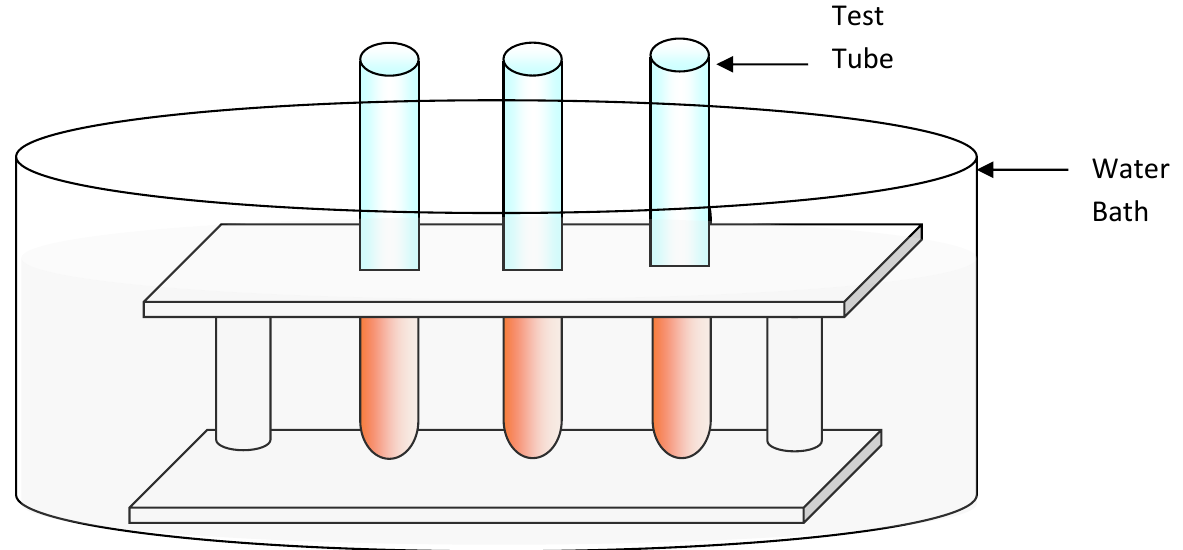
- Test tube rack - to keep tubes organised and stable
- 10ml graduated cylinder - for measuring precise volumes of milk
- Water bath set at 37°C - to maintain optimal temperature for bacterial activity
- Resazurin solution - the indicator dye that responds to bacterial activity
- Dropper - for adding the resazurin solution accurately
You will also need three different milk samples:
- Fresh unpasteurised milk
- Fresh pasteurised milk
- Stale pasteurised milk
Note
The choice of these three milk types allows you to compare the effects of pasteurisation treatment and storage time on bacterial content.
Method and procedure
Example
Step-by-Step Procedure: Conducting the Resazurin Test
Step 1: Prepare your test tubes by labelling them clearly as A, B, and C. This organisation is crucial for accurate results.
Step 2: Add the milk samples using your graduated cylinder to measure exactly 10ml of fresh unpasteurised milk into tube A.
Step 3: Continue with tube B by adding 10ml of fresh pasteurised milk.
Step 4: Complete the setup by placing 10ml of stale pasteurised milk into tube C.
Step 5: Place all three tubes into the water bath, ensuring they are properly supported by the rack and fully immersed to maintain the 37°C temperature.
Step 6: Add the indicator by carefully placing 1ml of resazurin solution into each test tube using the dropper.
Step 7: Record initial observations by noting the starting colour in each tube immediately after adding the resazurin.
Step 8: Wait and observe by leaving the test tubes in the water bath for exactly 10 minutes, then recording any colour changes that have occurred.
The 37°C temperature is important because it mimics body temperature and creates optimal conditions for bacterial activity, making the colour changes more pronounced and reliable.
Recording and interpreting results
Accurate recording is essential for this experiment. You should use a systematic approach to document your observations:

Create a table with three columns showing the test tube designation, initial colour, and final colour after 10 minutes. This allows you to clearly compare the different milk samples and their bacterial content.
Expected results typically show:
- Fresh pasteurised milk should show little to no colour change, indicating low bacterial count
- Fresh unpasteurised milk may show moderate colour change due to naturally occurring bacteria
- Stale pasteurised milk often shows the most significant colour change, indicating bacterial growth over time
Note
The intensity and speed of colour change directly correlates with the level of bacterial activity in each milk sample.
Understanding the resazurin test
The resazurin test works because bacteria consume oxygen during their metabolic processes. When bacteria are actively growing and multiplying, they use up the available oxygen in the milk. Resazurin is a redox indicator, meaning it changes colour based on the oxygen levels in the solution.
The colour changes follow this pattern:
- Blue colour indicates high oxygen levels (few bacteria present)
- Pink colour shows moderate oxygen depletion (some bacterial activity)
- White or colourless indicates severe oxygen depletion (high bacterial activity)
This is why fresher milk with fewer bacteria maintains its original colour, while milk with higher bacterial counts shows more dramatic colour changes towards pink or white.
Important
Understanding the Science: The colour change occurs because bacteria use up dissolved oxygen through respiration. As oxygen levels decrease, the resazurin changes from blue (oxidised form) through pink to colourless (reduced form). This makes it an excellent visual indicator of bacterial activity.
Safety considerations and exam tips
Important
Safety Points to Remember:
- Handle all milk samples carefully, especially unpasteurised milk which may contain harmful bacteria
- Ensure the water bath temperature is monitored and maintained at exactly 37°C
- Dispose of all milk samples properly after the experiment
- Wash hands thoroughly after handling any milk samples
Exam success tips:
- Always mention the specific temperature (37°C) and time period (10 minutes) in your answers
- Explain why pasteurisation is important for reducing bacterial content
- Be able to describe what different colour changes indicate about bacterial quality
- Remember that this is a comparative test - you're comparing different treatments of milk
Remember!
Summary
Key Points to Remember:
- The resazurin test uses colour changes to indicate bacterial activity in milk samples
- Three types of milk are compared: fresh unpasteurised, fresh pasteurised, and stale pasteurised
- The test requires precise conditions: 37°C water bath, 10-minute incubation period, and 1ml of resazurin solution
- Colour changes from blue to pink to white indicate increasing bacterial activity and decreasing milk quality
- This practical demonstrates the effectiveness of pasteurisation in reducing harmful bacteria in milk