Botanical Composition (Leaving Cert Agricultural Science): Revision Notes
📚Revision Notes
Botanical Composition
Introduction and purpose
Botanical composition refers to the different types and amounts of plant species found in grassland areas. This practical investigation is essential for understanding how different grassland management practices affect the variety and abundance of plants growing in pastures. The main goal is to compare the plant species present in established permanent grassland with newly sown temporary grassland, and to measure how much space each type of plant occupies.
Note
Understanding botanical composition is crucial for farmers because it directly influences several important factors including the nutritional value of the grass for livestock, the overall yield of the pasture, how long the grassland will remain productive, and what management strategies will be most effective.
Understanding grassland types
There are two main types of grassland that you'll encounter in this practical investigation, each with very different characteristics.
Permanent pasture represents long-established grassland that has developed naturally over many years. These areas typically contain a diverse mixture of plant species including various native grasses like ryegrass and fescues, nitrogen-fixing legumes such as clover, and a variety of weed species including docks, dandelions, and rushes. While this diversity can be beneficial for soil health and wildlife, it often means lower overall productivity for farming purposes.
New ley refers to recently established temporary grassland that has been deliberately sown with selected species, primarily high-yielding ryegrass varieties combined with clover. These pastures are designed for maximum productivity and typically show much more uniform plant coverage with fewer unwanted weed species present.
Note
The key difference lies in management approach: permanent pastures develop naturally over time creating diverse ecosystems, while new leys are artificially created for optimal agricultural productivity.
The practical investigation method
The investigation uses a systematic approach called quadrat sampling to ensure accurate and reliable results. This method involves using a square frame, typically measuring between 0.5 and 1 square metre, which is placed randomly across the grassland area being studied.
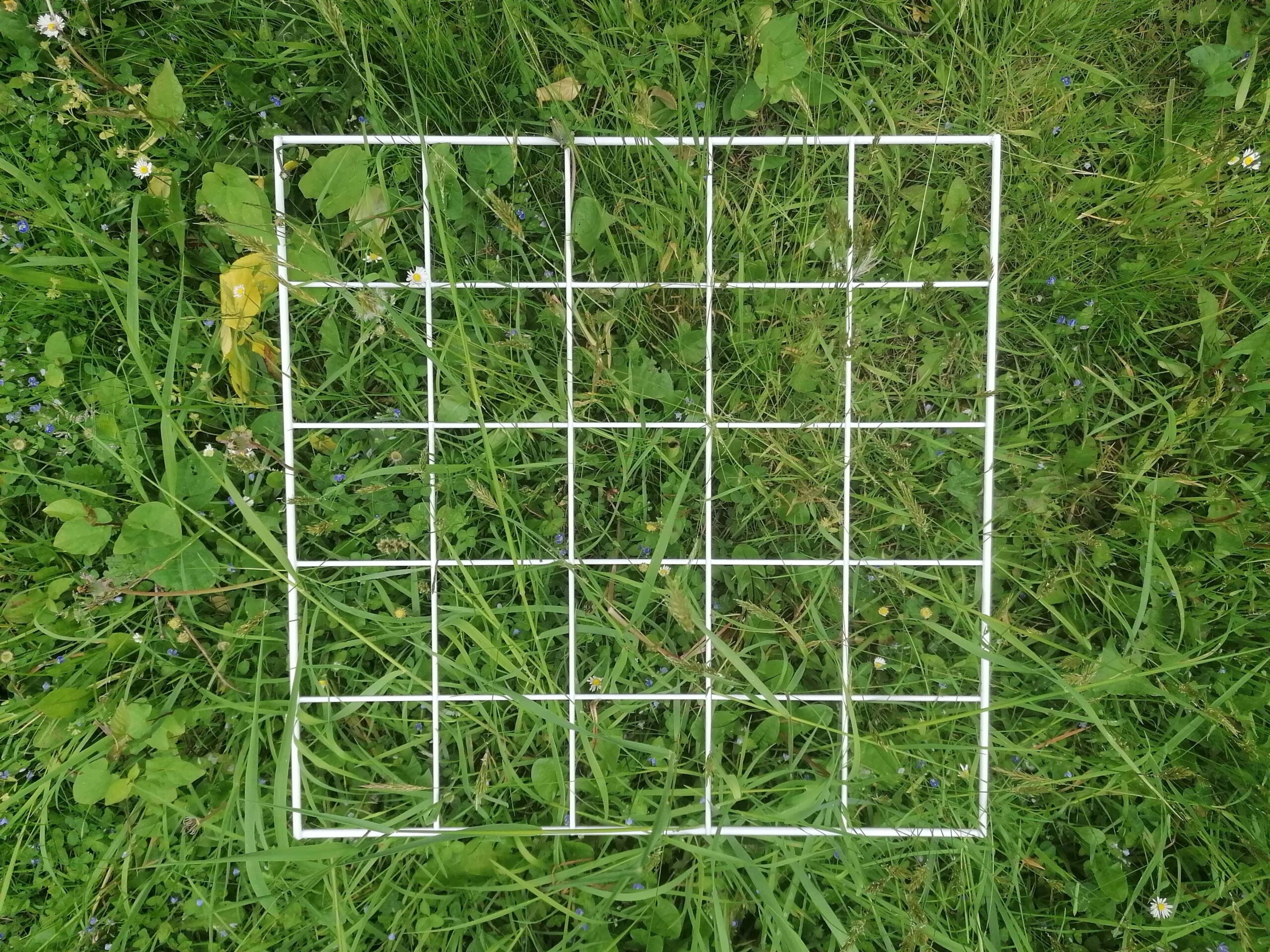
The process begins with selecting representative areas of both permanent pasture and new ley for comparison. The quadrat frame must be placed randomly at least 10 times across each area to ensure the results represent the overall composition rather than just isolated patches. At each sampling point, you carefully identify every plant species present within the quadrat frame and record your findings.
Important
Random placement of quadrats is essential to avoid bias. Never deliberately choose areas that look more interesting or typical - truly random sampling ensures your results accurately represent the entire grassland area.
For each species identified, you estimate what percentage of the quadrat area it covers or alternatively count the number of individual shoots or tillers present. This data collection process is repeated multiple times, and the results are averaged to provide reliable measurements of species abundance and distribution patterns.
Equipment needed
The practical requires several essential pieces of equipment. A quadrat frame forms the core sampling tool, along with recording sheets, pencils, and a clipboard for data collection in field conditions. A comprehensive plant identification guide covering grasses, legumes, and common weeds is essential for accurate species recognition. Finally, a calculator helps with determining percentage coverage calculations during data analysis.
Results and data analysis
The results typically reveal striking differences between the two grassland types, demonstrating how management practices influence botanical composition.
The data shows that permanent pasture contains a more diverse but less uniform plant community. Grasses typically make up around 60% of the coverage but consist of mixed species rather than a single dominant type. Legumes, mainly clover, usually account for approximately 10% of the area. However, weeds can represent a significant 30% of the coverage, including species like docks, dandelions, and rushes that may be less desirable for livestock feeding.
In contrast, new ley pastures demonstrate much more uniform composition with grasses, predominantly ryegrass, covering around 90% of the area. Legumes from sown clover varieties typically account for about 7% coverage, while weeds represent only 3% of the total area due to recent establishment and active management.
Example
Data Interpretation Example:
If your quadrat sampling shows:
- Permanent pasture: 65% grasses, 8% legumes, 27% weeds
- New ley: 88% grasses, 9% legumes, 3% weeds
This demonstrates the typical pattern where permanent pastures have higher weed content and species diversity, while new leys show dominance of sown grass species with minimal weed invasion.
Safety considerations
When conducting fieldwork, several safety precautions are essential. Always be aware of uneven ground conditions that could cause trips or falls, and watch out for any livestock that may be present in the area. Appropriate footwear with good grip is necessary for working on grassland, especially in wet conditions. Suitable outdoor clothing should be worn to protect against weather conditions and potential contact with plants that might cause skin irritation.
Important
Safety First: Always inform someone of your fieldwork location and expected return time. Never work alone in remote areas, and be particularly cautious around livestock or farm machinery that may be operating nearby.
Key findings and interpretations
The comparative analysis reveals important agricultural principles about the relationship between plant diversity and pasture productivity. Permanent pastures, while supporting greater biodiversity with their mixture of native species, tend to be less uniform and often contain higher levels of weeds that can reduce overall nutritional quality and yield for livestock production.
New ley pastures demonstrate the opposite pattern - they achieve higher uniformity and productivity through deliberate species selection, primarily featuring high-yielding ryegrass varieties combined with beneficial legumes. However, this increased productivity comes at the cost of reduced biodiversity and potentially less resilience to environmental stresses.
Note
This practical investigation clearly demonstrates the fundamental trade-off that exists in grassland management between maximising yield and maintaining biological diversity. Understanding this relationship helps farmers make informed decisions about pasture management strategies based on their specific production goals and environmental considerations.
Remember!
Summary
Key Points to Remember:
- Botanical composition refers to the types and amounts of different plant species in grassland areas
- Permanent pasture is diverse but contains more weeds (typically 60% grasses, 10% legumes, 30% weeds)
- New ley is more uniform and productive with fewer weeds (typically 90% grasses, 7% legumes, 3% weeds)
- Quadrat sampling provides a systematic method for measuring plant species abundance and distribution
- There's a trade-off between maximising yield and maintaining biodiversity in grassland management