Capillarity in a Plant Stem (Leaving Cert Agricultural Science): Revision Notes
📚Revision Notes
Capillarity in a Plant Stem
What is capillarity?
Capillarity is the ability of water to move up through narrow spaces, such as the tiny tubes found inside plant stems. This process allows plants to transport water from their roots all the way up to their leaves, even in very tall plants. Think of it like water climbing up through a very thin straw without anyone sucking on the other end.
The process works because water molecules stick to each other and to the walls of narrow tubes. This creates a pulling force that draws water upwards against the force of gravity.
Note
This natural process is so effective that it can transport water up trees that are over 100 metres tall, such as giant redwoods, without requiring any energy input from the plant itself.
Purpose of this experiment
This practical investigation demonstrates how water can travel up through a plant stem using capillary action. By using coloured water, we can actually see the path that water takes as it moves through the plant's transport system.
Equipment needed
You'll need these simple materials for the experiment:
- Two beakers (or similar containers)
- Scissors or sharp knife
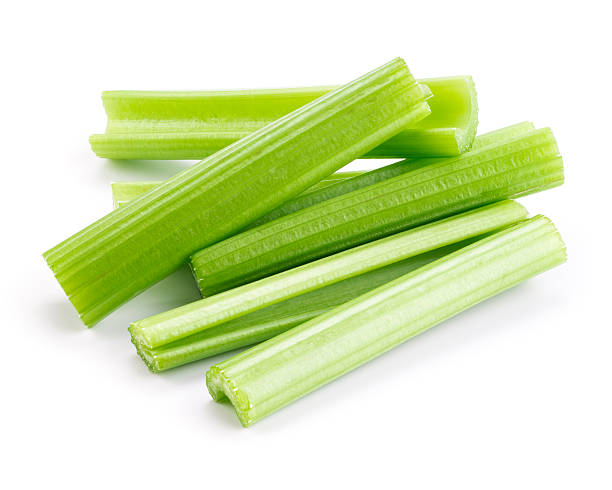
- Fresh celery sticks (with leaves removed)
- Food colouring (any bright colour works well)
- Water
Important
Safety Note: Always handle scissors and sharp knives carefully when cutting plant material. Cut away from your body and keep fingers clear of the blade.
Step-by-step method
Example
Worked Example: Capillarity Investigation Procedure
Setting up the experiment
-
Prepare the coloured water: Add several drops of food colouring to two containers filled with water. The colour should be quite strong so you can easily see the results.
-
Prepare the celery: Take a fresh celery stick and remove any leaves. Cut the bottom of the stem cleanly with scissors to create a fresh surface.
-
Set up the test: Place the celery stick into one of the containers with coloured water, making sure the cut end is fully submerged.
-
Create a control: Use the second container of coloured water as a control - this helps you confirm that any changes you observe are due to the celery stem rather than other factors.
-
Wait and observe: Allow the experiment to run for 30 minutes, then examine your results.
Examining the results
After 30 minutes, carefully cut across the celery stem at different heights and examine the cross-sections. You should be able to see the coloured water has travelled up through specific channels in the stem.
What you should observe
When you cut across the celery stem, you'll notice that the food colouring has moved up through the stem in distinct patterns. The colour appears as small dots arranged around the edge of the stem's cross-section. These dots show you exactly where the water-carrying tubes (called xylem vessels) are located within the plant.
The higher up the stem you cut, the less intense the colour becomes, showing you how far the water has travelled in the time allowed.
Why does this happen?
The coloured water moves up through the celery stem because of capillary action. Here's what's happening:
- The celery stem contains tiny tubes that transport water from the roots to the leaves
- These tubes are so narrow that water can climb up them naturally
- Water molecules stick to the tube walls and to each other, creating an upward pulling force
- This process continues even after the celery has been cut from its roots
Note
In a living plant, this same process helps transport water and dissolved minerals from the soil up to the leaves where photosynthesis takes place. The plant's vascular system is essentially a network of natural straws that work continuously.
Importance of capillarity in plants
Capillary action is essential for plant survival because it:
- Transports water from roots to leaves, sometimes over great distances
- Delivers nutrients dissolved in the water to all parts of the plant
- Maintains plant structure by keeping cells full of water (turgid)
- Enables photosynthesis by bringing water to the leaves where it's needed
- Works without energy - the plant doesn't need to 'pump' water like animals pump blood
Exam tips
Important
Essential Exam Points to Remember:
- Remember the control: Always mention that you used a second beaker as a control in your method
- Timing matters: 30 minutes is usually sufficient to see clear results, but longer times give more dramatic effects
- Fresh cuts: Cutting the stem cleanly ensures good water uptake
- Cross-sections: Cutting across the stem (not lengthwise) shows the circular arrangement of transport tubes
- Safety: Always mention using scissors carefully when cutting plant material
Applications in agriculture
Irish farmers benefit from understanding capillarity because:
- It helps explain how crops can access water from different soil depths
- Understanding water transport helps with irrigation planning
- Knowledge of plant water systems aids in selecting drought-resistant varieties
Summary
Key Points to Remember:
- Capillarity is the natural movement of water up through narrow tubes in plant stems
- The experiment uses celery sticks and food colouring to make water transport visible
- 30 minutes is sufficient time to observe clear results
- Cross-sections of the stem reveal the location of water-carrying tubes
- This process is essential for plant survival as it transports water and nutrients throughout the plant
- The experiment requires a control to ensure valid results