Percentage of Water and Solids in a Sample of Milk (Leaving Cert Agricultural Science): Revision Notes
📚Revision Notes
Percentage of Water and Solids in a Sample of Milk
This practical experiment is essential for understanding the composition of milk and developing skills in quantitative analysis. By determining the water and solid content, you'll learn valuable techniques used in the dairy industry for quality control and nutritional labelling.
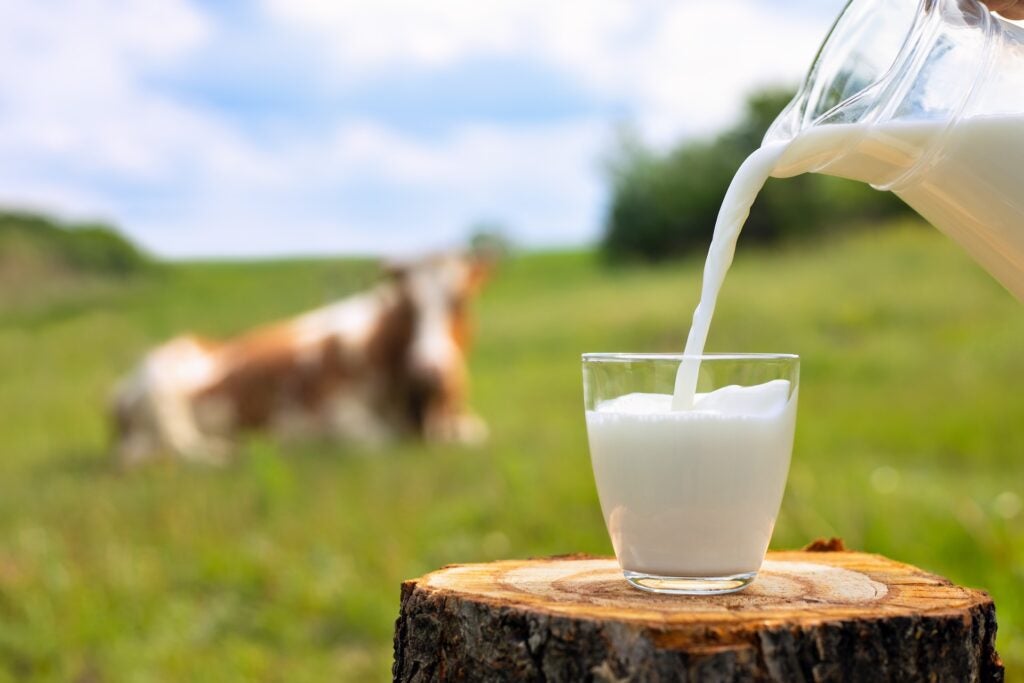
Purpose of the experiment
The main objective is to calculate the exact percentages of water and solids present in a milk sample through evaporation and precise measurement techniques. This analysis helps us understand milk's nutritional composition and quality characteristics.
Note
Understanding milk composition is fundamental to dairy science, as it affects everything from nutritional value to processing requirements and shelf life.
Equipment and apparatus required
You'll need the following laboratory equipment to carry out this experiment safely and accurately:
- Evaporating basin - holds the milk sample during heating
- Electronic balance - provides precise mass measurements
- Bunsen burner - heat source for evaporation
- Tripod stand - supports the evaporating basin
- Tongs - for safe handling of hot equipment
- Wire gauze - distributes heat evenly
- Sample of milk - the material being analysed
Note
Equipment Precision is Key
The accuracy of your results depends heavily on using calibrated equipment, especially the electronic balance. Even small measurement errors can significantly affect your final percentage calculations.
Step-by-step methodology
The experimental procedure involves careful measurement and controlled evaporation to separate water from solid components:
Example
Worked Example: Complete Experimental Procedure
Step 1: Initial weighing Use the electronic balance to determine the mass of an empty evaporating dish. Record this value accurately as it's essential for later calculations.
Step 2: Adding the sample Place your milk sample into the evaporating dish and weigh the dish plus milk together. This gives you the total starting mass.
Step 3: Calculating milk mass Subtract the weight of the empty dish from the total weight to find the actual mass of the milk sample you're analysing.
Step 4: Evaporation process Heat the milk sample using the Bunsen burner until all water has evaporated. You'll know this is complete when no more steam is produced and the remaining material appears dry. Weigh the dish and remaining solids.
Step 5: Determining solid mass The final step involves subtracting the dish weight from the total weight after evaporation. This gives you the mass of solids that remained after all water was removed.
Mathematical calculations
The experiment requires two key percentage calculations to determine milk composition. These formulas allow you to express the composition of milk as percentages, which is how nutritional information is typically presented on dairy products.
For water content:
Take the mass of water (found by subtracting the final weight from the initial milk weight) and divide by the original milk sample mass. Multiply by 100 to get the percentage.
For solid content:
Take the mass of solids remaining after evaporation and divide by the original milk sample mass. Multiply by 100 to get the percentage.
Important
Critical Calculation Check
Remember that water percentage + solid percentage must always equal 100%. If your calculations don't add up to 100%, check your measurements and calculations for errors.
Safety considerations
When conducting this experiment, always prioritise laboratory safety:
Important
Essential Safety Procedures
- Handle the Bunsen burner carefully and ensure proper ventilation
- Use tongs when moving hot equipment to prevent burns
- Allow all apparatus to cool before handling directly
- Wear appropriate safety equipment including safety glasses
- Ensure your work area is clear and organised
Warning: Hot evaporating dishes can cause severe burns. Never handle them directly - always use tongs or allow adequate cooling time.
Practical applications
This type of analysis is crucial in the dairy industry for several reasons:
Quality control - Farmers and processors need to verify that milk meets compositional standards before processing or sale.
Nutritional labelling - Food manufacturers must provide accurate nutritional information, including water and solid content percentages.
Product development - Understanding milk composition helps in developing dairy products with specific characteristics.
Economic value - The solid content of milk affects its commercial value, as higher solids typically mean higher nutritional value.
Note
Industry Applications
The techniques you learn in this experiment are used daily in commercial dairy operations. Many dairy processing plants perform similar analyses multiple times per day to ensure product quality and consistency.
Expected results and interpretation
Typical cow's milk contains approximately 87-88% water and 12-13% solids. The solid fraction includes proteins, fats, lactose, and minerals. Variations in these percentages can indicate:
- Differences in cow breed or diet
- Seasonal variations in milk production
- Processing or storage effects
- Quality issues that may need attention
Note
Result Interpretation
Significant deviations from expected values (87-88% water, 12-13% solids) may indicate issues with your experimental technique or unusual characteristics of your milk sample. Always compare your results to established standards.
Remember!
Summary
Key Points to Remember:
- Water and solids must add up to 100% - this serves as a check for your calculations
- Precise measurements are crucial - small errors in weighing will affect your final percentages significantly
- Complete evaporation is essential - any remaining water will incorrectly increase your solid percentage
- Safety first - always use proper laboratory techniques when working with heat sources
- This method is widely used in industry - the skills you learn apply directly to real-world dairy analysis