The Activity of Earthworms in Soil (Leaving Cert Agricultural Science): Revision Notes
📚Revision Notes
The Activity of Earthworms in Soil
This practical investigation demonstrates how earthworms actively change and improve soil structure through their natural behaviours. Understanding earthworm activity is crucial for agricultural science as these organisms play a vital role in maintaining healthy, fertile soils.
Note
This experiment is particularly valuable because it allows you to directly observe biological processes that normally occur hidden underground in agricultural soils.
Purpose of the experiment
The main aim of this experiment is to observe and document how earthworms move through different soil layers and break down organic matter. This helps us understand their essential role in soil formation and nutrient cycling in agricultural systems.
Materials and apparatus needed
To conduct this investigation successfully, you'll need these materials:
- Wormery - A clear, transparent container that allows observation of soil layers
- Earthworms - Live specimens for the experimental group
- Soil materials in layers:
- Gravel (drainage layer)
- Sand (coarse particles)
- Clay (fine particles)
- Chalk (mineral component)
- Organic matter - Fresh leaves or plant material
- Light-proof cover - To create dark conditions
- Water - For maintaining moisture levels
Note
Sourcing Materials
Earthworms can often be found in garden compost or purchased from fishing supply shops. Ensure you have permission before collecting from private property, and always return specimens to their natural habitat after the experiment.
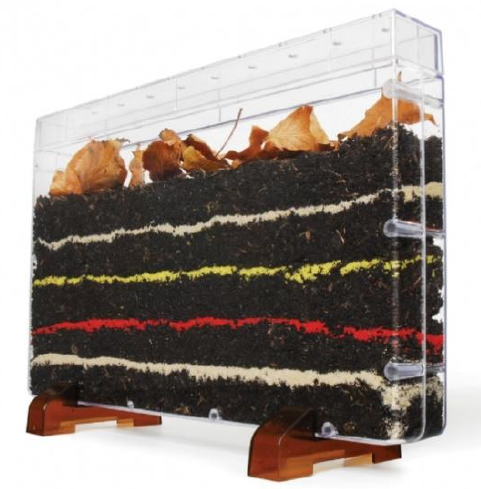
The experimental setup shows distinct coloured layers that make it easy to observe how earthworms mix and redistribute soil materials over time.
Experimental method
Follow these steps carefully to ensure reliable results:
Setting up the wormery
Begin by creating your layered soil system in the transparent container. Place each material - sand, clay, chalk, and gravel - in separate, distinct layers. This stratification is important because it allows you to clearly see how earthworms disturb and mix these materials through their movement and feeding activities.
Important
Layer Thickness Matters
Make each layer approximately 2-3 cm thick for optimal visibility. Thinner layers may become completely mixed too quickly, while thicker layers may not show clear changes within the observation period.
Adding the biological components
Once your soil layers are established, add the earthworms and organic matter (leaves) to the surface. The earthworms will naturally burrow down through the layers, while the organic matter provides food and encourages normal earthworm behaviour.
Creating optimal conditions
Cover the wormery with light-proof material and place it in a cool, dark location. This mimics the natural underground environment that earthworms prefer. The darkness is essential because earthworms are photophobic (avoid light) and will become stressed in bright conditions.
Example
Setting Up Optimal Conditions
Temperature: 10-15°C (cool room or unheated area) Lighting: Complete darkness using cardboard or black cloth Moisture: Soil should feel like a wrung-out sponge Location: Stable surface away from vibrations
Maintaining the experiment
Keep the soil mixture slightly moist by adding small amounts of water every few days. However, avoid overwatering as this can create anaerobic conditions that are harmful to earthworms. Don't disturb the container during the observation period.
Observation period
Leave the experiment undisturbed for 7-10 days, then carefully observe and record any changes to the soil layers and organic matter.
Control experiment setup
Important
The Control Group is Essential
Scientific validity requires a control group. Set up an identical wormery using exactly the same materials and conditions, but do not add any earthworms. This control allows you to determine which changes are specifically due to earthworm activity rather than other factors like water movement or settling.
Expected observations and results
After the observation period, you should notice several important changes in the experimental wormery compared to your control:
Layer mixing and bioturbation
The previously distinct soil layers will show signs of mixing, with materials from different layers being redistributed. This process, called bioturbation, occurs as earthworms burrow through the soil and transport particles in their digestive systems.
Organic matter breakdown
The organic matter (leaves) will show varying degrees of decomposition. Earthworms fragment and partially digest organic materials, speeding up the decomposition process and incorporating organic matter throughout the soil profile.
Tunnel formation
You may observe tunnels or burrows created by earthworm movement. These channels improve soil aeration and water infiltration, both crucial for plant root development and overall soil health.
Castings production
Earthworm castings (waste products) may be visible as small, nutrient-rich pellets distributed throughout the soil layers. These castings are excellent natural fertilisers.
Example
What to Look For
In the experimental wormery:
- Mixed soil layers with blurred boundaries
- Tunnels and burrows throughout the soil
- Partially decomposed leaf material
- Dark, crumbly castings scattered in layers
In the control wormery:
- Distinct, unchanged soil layers
- No tunnel formation
- Minimal decomposition of organic matter
- No evidence of biological activity
Scientific significance for agriculture
This experiment demonstrates several key processes that make earthworms valuable for agricultural systems:
Soil structure improvement occurs through bioturbation, creating better drainage and aeration. Nutrient cycling is enhanced as earthworms break down organic matter and distribute nutrients throughout soil layers. Chemical properties are improved as earthworm castings typically have higher pH and nutrient content than surrounding soil.
These processes contribute directly to improved crop yields and sustainable farming practices, making earthworms essential contributors to agricultural productivity.
Practical tips for success
Summary
Keys to Experimental Success:
- Maintain consistent moisture without waterlogging the system
- Keep the temperature cool but not cold, ideally around 10-15°C
- Handle earthworms gently and return them to their natural habitat after the experiment
- Record your observations with sketches and detailed notes about changes you observe
- Take photos at the start and end of the experiment for comparison
Exam relevance
Note
Common Exam Questions
This practical activity commonly appears in Leaving Certificate Agricultural Science examinations. You may be asked to:
- Describe the experimental method and justify each step
- Explain the importance of the control group
- Discuss the role of earthworms in soil formation processes
- Interpret results showing bioturbation effects
- Relate earthworm activity to agricultural soil management
Summary
Key Points to Remember:
- Earthworms actively mix soil layers through their burrowing and feeding behaviour
- A control experiment without earthworms is essential to prove that observed changes are due to earthworm activity
- Earthworms improve soil structure, aeration, and nutrient availability in agricultural systems
- Proper experimental conditions (dark, cool, moist) are crucial for observing natural earthworm behaviour
- This practical demonstrates the important ecological role of soil fauna in sustainable agriculture
- Bioturbation is the scientific term for biological mixing of soil layers