Getting Exercise 1 (Grade 11 NSC Matric Life Orientation): Revision Notes
📚Revision Notes
Getting Exercise 1
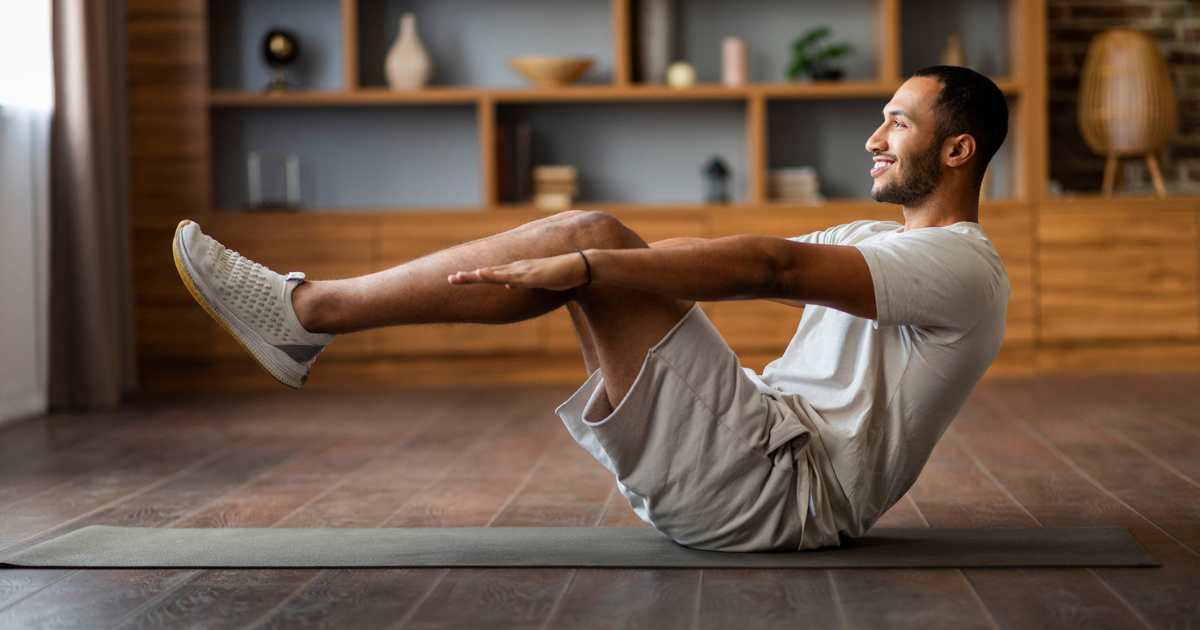
Introduction to exercise sessions
Every good exercise session follows a simple structure that helps keep you safe and gets the best results. This structure includes three main parts: warm-up exercises, main activities (like aerobic dance or fitness exercises), and cool-down activities. This approach helps prepare your body for physical activity and prevents injury.
Note
The Three-Part Exercise Structure: Understanding this fundamental structure will help you approach any exercise session safely and effectively. Each part serves a specific purpose in preparing your body, maximising your workout benefits, and ensuring proper recovery.
Warm-up exercises
Warm-up exercises are essential before starting any aerobic dance or fitness activities. These exercises gradually increase your heart rate and prepare your muscles for more intense movement. Here are the key warm-up exercises you should know:
Movement-based warm-ups
Slow jog: Start by jogging slowly around your exercise area. This gentle movement helps increase blood flow to your muscles and gets your body ready for more activity.
Side-to-side run: Begin with your knees slightly bent and step out to the right with your right foot whilst pushing off with your left foot. Continue this alternating pattern, which helps improve your coordination and warms up your leg muscles.
Run backwards: This exercise challenges your balance and coordination. When running backwards, land on your toes and keep your knees slightly bent. Be very careful not to snap your knee back, as this could damage your ligaments.
Strength and flexibility warm-ups
Lunge exercises: These help strengthen your leg muscles and improve flexibility. Start by standing tall with your feet together, then step forwards into a lunge position. Your front thigh should be parallel to the ground whilst your back thigh is more vertical. Alternate between legs, doing 10 repetitions with each leg.
Lunge walk: This builds on the basic lunge by adding forwards movement. Step forwards into another lunge position, keeping your chest up and coordinating your arm movements with your legs as you move forwards.
Backside kick: Perform fast leg movements on the balls of your feet. Lift your knee up and bring your heel towards your bottom, keeping your thigh parallel with the ground.
High-energy warm-ups
High knee lift: Stand on your toes and walk forwards, lifting your knees up so your thigh is parallel with the ground with each step. This exercise improves your balance and leg strength.
High knee march: Similar to the high knee lift, but march in place whilst lifting your knees as high as you can to waist level or higher. Alternate between right and left knees.
Jumps: Skip on the balls of your feet, lifting your free leg so your thigh is parallel with the ground. Your supporting leg must remain vertical throughout the movement.
Upper body warm-ups
Simulated running arm action: Move your arms as if you're running, but remain standing or sitting still. Vary the speed of your movement, performing for 15-60 seconds and changing from fast to slow to fast again.
Trunk rotator: Extend your arms sideways at shoulder height and rotate your trunk in a twisting motion until you feel the stretch in your upper body. Keep your knees slightly bent and hold for 10 seconds. Repeat five times on both sides.
Windmills: Stand with your legs spread wide and feet slightly turned outward. Extend your arms sideways at shoulder height, then twist at the waist and bend down to reach and hold your right ancle with your left hand. Hold for three to five breaths, keeping your legs straight. Then windmill your right arm down to hold your left ancle with your right arm. Repeat five times.
Arm swings: Stand tall with your feet slightly wider than shoulder-width apart. Keep your knees slightly bent and your back straight throughout. Start with your arms extended above your head, then circle both arms simultaneously forwards, downwards and backwards. Repeat 10 times, then swing both arms out to your sides and cross them in front of your chest. Repeat 10 times.
Stretching exercises
Important
Safety First: Stretching Rules Only perform these stretches after your body has warmed up through the movement exercises above. Stretching cold muscles can lead to injury and reduced effectiveness.
Hamstring stretches
Hamstring stretch 1: Lie on your back, bend your right leg and place your right foot on the floor. Lift your left leg and hold onto the back of your calf. Pull your leg gently towards you and hold for 10 seconds. Repeat five times on each leg, alternating sides.
Hamstring stretch 2: Sit on the ground with both legs straight out in front of you. Bend your left leg and place the sole of your left foot against your right knee. Let your left leg lie relaxed on the ground, then bend forwards from the hip towards your right leg, keeping your back straight. You'll feel the stretch in the hamstring of your right leg. Repeat with your left leg.
Hip and thigh stretches
Hip and thigh stretch: Stand tall with your feet about two shoulder-widths apart. Turn your feet and body to face to your right, then bend your right leg so your right thigh is parallel with the ground whilst your right lower leg is vertical. Gradually lower your body, keeping your back straight and using your arms for balance. You'll feel the stretch along the front of your left thigh and the hamstring of your right leg. Repeat facing to the left.
Quadriceps stretch: Balance on your left leg, bend your right knee and lift your right foot up behind you. Hold your right foot in your right hand and gently move your right heel as close to your buttocks as you can. Feel the stretch on the front of your thigh in your quadriceps. Switch legs and repeat.
Calf stretch
Calf stretch: Stand with one leg in front of the other, facing a wall. Lean forwards to place your hands flat against the wall at shoulder height. Move your back leg further away from the wall, keeping it straight and pressing your heel firmly into the floor. Keep your hips facing the wall - your back leg and spine should form a diagonal line. Feel the stretch in the calf of your back leg. Hold for one minute and repeat on the other leg.
Cool down
At the end of your PE class, it's essential to cool down properly. This helps your body recover and prevents muscle stiffness.
Note
Cool Down Process: The cool down phase is just as important as your warm-up. It helps your heart rate return to normal gradually and prevents blood from pooling in your muscles.
- Jog slowly around the exercise area to gradually reduce your heart rate
- Repeat stretching exercises - perform all the stretching exercises you did during your warm-up session to help your muscles relax and maintain flexibility
Aerobic dance
Aerobic dance combines rhythmic movement with music to provide an excellent cardiovascular workout. The step patterns are measured in beats per minute, with common patterns having , , or beats per minute. When keeping time, count in intervals of four or eight beats.
Checking your exercise intensity
When doing cardiovascular exercise like aerobic dance, you must raise your heart rate to get the full benefits. To check if you're working at the right intensity, monitor your breathing. If you're not breathing faster than usual, you need to increase the intensity level of your exercise.
Note
Intensity Check Method: Your breathing is a reliable indicator of exercise intensity. During effective cardiovascular exercise, you should be able to speak in short phrases but find it difficult to hold a long conversation.
Step-touch aerobic dance
Example
Worked Example: Basic Step-Touch Routine
This basic aerobic dance routine helps you learn coordination whilst providing a good workout:
Step 1: Master the basic movement
- Keep your body facing forwards and step to the right with your right foot
- Bring your left foot to the right to touch your right foot
- Repeat the sequence to the left: step left with your left foot and bring your right foot in to touch the left
Step 2: Add arm movements
- Practice the side-to-side step-touch movement, and when you feel ready, add arm movements to increase your heart rate
- Arms: Open your arms sideways to shoulder height when you step, then bring them in to your chest when your feet touch
Step 3: Progress to forwards movement
- Now practice stepping forwards instead of to the side: step forwards on the right foot, touch with left foot, step back on left foot, touch with right foot
- Repeat the step sequence 20 times
Jump and march routine
Example
Worked Example: High-Energy Jump and March Sequence
For this routine, use fast music with about beats per minute:
Complete Sequence (repeat 10 times):
- March in place on counts 1-8, meaning you march eight steps without moving forwards. Lift your knees high and swing your arms as you march
- Do four jumping jacks, allowing two counts for each jump
- Perform four knee jumping jacks - alternate between right and left knees. Do one jumping jack, then bring your right knee up, step your right foot to the right and bring your left foot in on count 4. This takes 4 counts. Repeat the jumping jack and bring your left knee up, step left and bring your right foot in (another 4 counts)
- March in place on counts 1-8
- Do eight imaginary jump ropes in place
- March in place on counts 1-8
Macarena dance
The Macarena is a popular line dance that provides good exercise whilst being fun to perform. Use Macarena music if available, or ask a learner who knows the dance to clap a rhythm or beat using an upturned bin.
Important
Safety Tip for Group Dancing Make sure you stand two arm-lengths away from other learners to avoid collisions. Always be aware of your surroundings when performing group dance routines.
Example
Worked Example: Macarena Dance Pattern
The dance follows a 16-beat pattern that repeats throughout the song:
Beats 1-4: Arm movements
- Right arm straight, left arm straight, right arm up, left arm up
Beats 5-8: Hand on shoulder movements
- Right hand on left shoulder, left hand on right shoulder, hold back of head positions
Beats 9-12: Hand in pocket movements
- Right hand on left front pocket, left hand on right front pocket, right hand on right back pocket, left hand on left back pocket
Beats 13-16: Hip movements and clap
- Move hips left, right, left again, then clap and turn to the right
Progression: Start slowly until everyone knows the steps, then increase your speed and the beat. Rest for 30 seconds, then repeat 10 times.
Fitness exercises
These exercises help build strength and endurance in different muscle groups.
Upper body exercises
Modified push-ups: Begin on the floor with your arms straight, hands palm down with fingers facing forwards. Rest your knees on the floor and lift up your feet. Position your hands just outside your shoulders. Lower and raise your body by bending your arms to about 90 degrees, keeping your knees on the ground and your feet up. Your body should form a straight line from your knees to your shoulders, with only your hands and knees touching the ground.
Corner stretch: This is essentially a push-up against a wall. Stand upright facing a corner with your feet parallel. Breathe in, then breathe out and gently pull your stomach towards your spine. Keep your eyes forwards with your chin slightly tucked in, bend your knees slightly, and place your forearms and palms on each side of the wall at shoulder level. Breathe in again, then breathe out and bend your arms to lean your body weight towards the wall. Continue until it feels challenging but not painful. Hold for 5-30 seconds, then push yourself back to the starting position. Repeat 10 times.
Lower body exercises
Chair squat: From a standing position, bend your knees and move your backside backwards to squat just above a chair or bench. Then use your thigh muscles to push you back to a standing position. Repeat 10 times. This exercise helps build leg strength safely.
Squat with weights (Version 1): Fill a 500ml plastic bottle with sand. Stand with your feet shoulder-width apart and hold the bottle in front of your body with arms straight and elbows slightly bent. Bend your knees and lower yourself into a squat, keeping your knees in line with your toes. Stop when your knees are at a 90-degree angle to the ground, then slowly return to standing without locking your knees. Repeat 10 times.
Squat with weights (Version 2): Stand with your feet shoulder-width apart and hold a 1.5-litre plastic bottle filled with sand in each hand. Bend your knees and lower into a squat, stopping when your knees are at 90 degrees. At the bottom of the movement, move your hips back as though you're about to sit in a chair. Don't bend your knees so they go beyond your toes. Slowly stand up without locking your knees. Repeat 10 times.
Wall squat: Stand against a wall with your legs out in front of you. Inhale and then exhale, looking straight ahead. Bend your knees slightly and keep the back of your head touching the wall. As you exhale, bend your knees to slide your back down the wall until your thighs are parallel to the ground. Hold the position for 5-10 seconds whilst breathing evenly, then move slowly back to your starting position. Repeat 10 times.
Important
Safety Reminder Remember to cool down after completing your fitness exercises! This is crucial for proper recovery and injury prevention.
Assessment information
Note
Movement Performance Assessment Details During this term, your Movement Performance will be assessed twice - once during weeks 4-6 and once during weeks 7-10. You'll receive a mark out of five for each movement assessment session. Remember to actively participate in each PE period, as your participation forms part of your assessment.
Remember!
Summary
Key Points to Remember:
- Always warm up before starting any aerobic dance or fitness exercises to prevent injury and prepare your body for activity
- Check your breathing during cardiovascular exercise - if you're not breathing faster than usual, increase your intensity
- Maintain proper form in all exercises, especially keeping knees in line with toes during squats and lunges
- Cool down properly after exercise by jogging slowly and repeating your stretching routine
- Stay safe by giving yourself enough space during dance activities and only stretching after your body is warmed up