Recreational Dance (Grade 11 NSC Matric Life Orientation): Revision Notes
📚Revision Notes
Recreational Dance
Recreational dance is a fun and engaging way to stay active whilst exploring different cultures and dance styles. This unit covers various dance forms from South African traditional dances to international styles, helping you develop coordination, rhythm, and leadership skills.
Note
Dance is not just about physical movement - it's a powerful way to connect with different cultures, express creativity, and build confidence while staying fit and healthy.
Getting started with recreational dance
Warm up activities
Before starting any dance session, it's important to warm up your body properly. This preparation helps prevent injury and gets your mind and body ready for the rhythmic movements ahead.
Example
Warm-up Routine: Musical Movement
Step 1: Choose an upbeat song for your PE lesson
Step 2: Begin jogging around the playing area whilst singing along to the song
Step 3: Focus on stepping in time with the rhythm
Step 4: Continue for 3-5 minutes until your body feels warm and ready
Understanding rhythm and timing
A key concept in dance is the off-beat count. This refers to the beat that falls between the main beats in a rhythm. When learning dances, instructors often use the word "and" to indicate these off-beats.
Important
Understanding Off-Beat Timing
In a 4/4 rhythm, you would count: "1 and 2 and 3 and 4 and". The "and" represents the off-beat. Mastering this timing is essential for moving smoothly and accurately with the music - it's what separates basic stepping from true dancing.
South African traditional dances
Pantsula dance
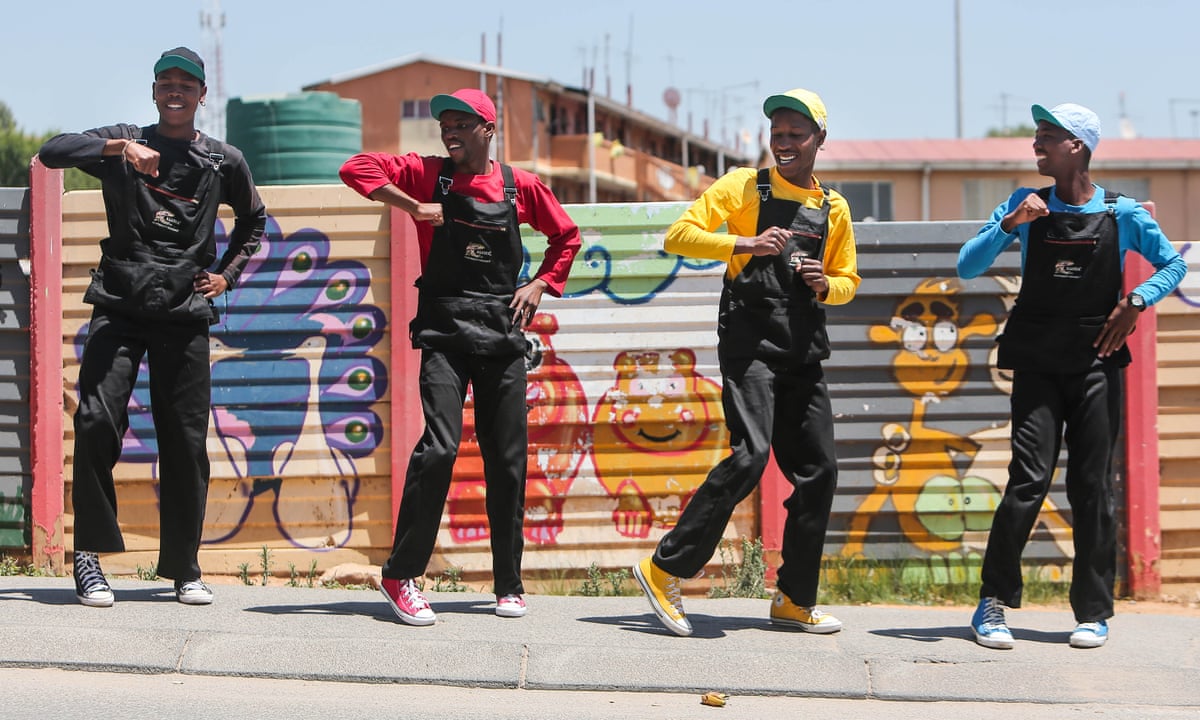
Pantsula originates from the townships of South Africa and is deeply rooted in our cultural heritage. The name comes from the isiZulu word meaning "to waddle like a duck" or "to walk with protruded buttocks."
Example
Basic Pantsula Movement Sequence
Step 1: Turn your body slightly to the right and stomp your right foot diagonally to the right twice
Step 2: Keep your arms relaxed and moving naturally with your body
Step 3: Alternate the same leg movement to the left side with your left foot
Step 4: Practice the characteristic "duck" movement by sticking your bottom out whilst bending your knees sideways
Step 5: Add variations by turning your body to face different directions with jumps
The beauty of pantsula lies in its freestyle nature - you can create your own sequences and have fun developing unique moves that express your personality.
Pata Pata dance
Pata Pata is a lively isiXhosa dance where the name literally means "touch touch". This dance involves rhythmic patting movements that create a joyful, community atmosphere.
Example
Basic Pata Pata Sequence
Step 1: Pat the ground on each side of your body
Step 2: Pat your thighs with each hand for four counts
Step 3: Make a V-shape with your arms and clap your hands together for four counts
Step 4: Lift your arms across your body and pat the ground on each side again
Step 5: Finish by punching your arms forwards before patting the ground once more
Note
This dance is often performed at social gatherings and celebrates the spirit of togetherness in South African culture. The patting movements symbolise connection and community bonding.
Toyi-toyi dance
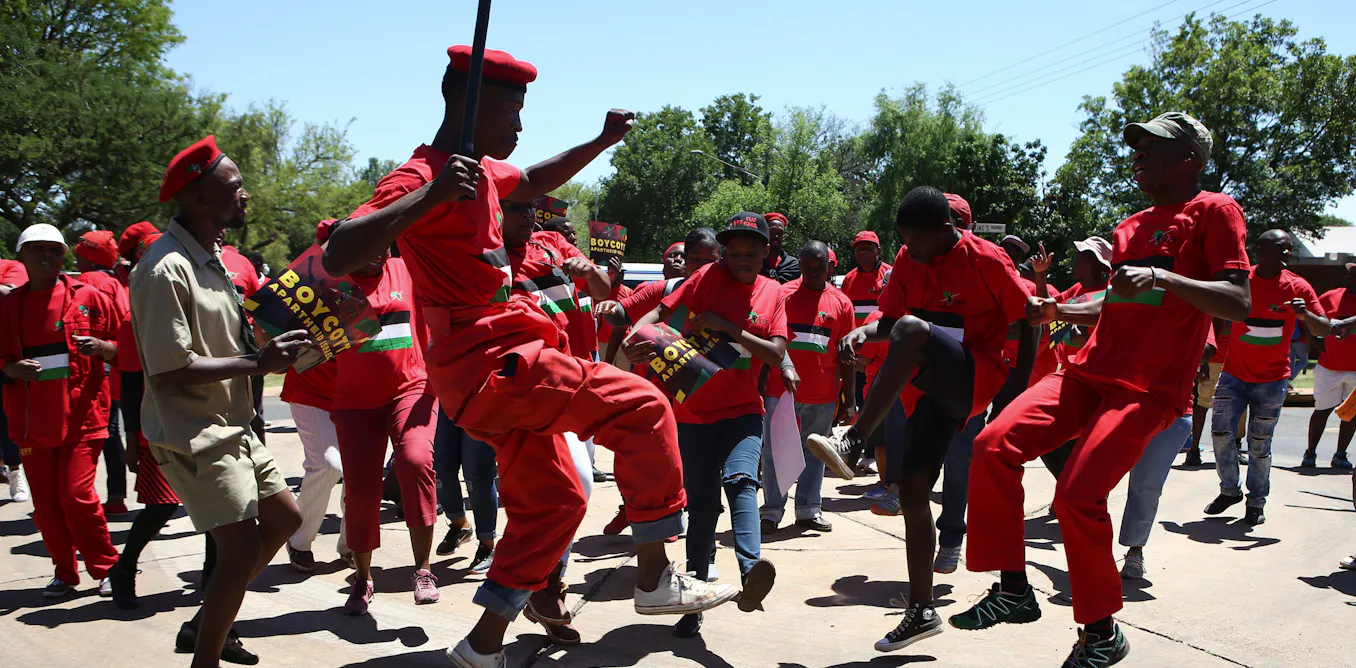
The toyi-toyi is a powerful southern African dance traditionally used during protest marches, accompanied by chanting. It represents resistance and unity in our history.
Example
Basic Toyi-toyi Movement Pattern
Step 1: Begin jogging on the spot, gradually lifting your knees higher
Step 2: Raise your left arm in front of your face as if defending yourself with an imaginary shield
Step 3: Lift your right arm above your head as if holding a spear
Step 4: Move your raised hand in forwards and backwards motions
Step 5: Add the traditional chant "Hai, hai" on specific beats whilst continuing the jogging movement
Note
The whole class can form a line and perform toyi-toyi around the exercise area, creating a sense of solidarity and shared purpose. This dance carries deep historical significance as a symbol of peaceful resistance.
Sokkie dance
Sokkie is an informal South African dance style that gets its name from the Afrikaans word for "sock". People often danced in their socks to twist and slide more easily on the floor. It's typically performed to music with a 4/4 beat rhythm, similar to boogie music.
Example
Sokkie Partnership Dancing Steps
Step 1: Choose a partner - one will lead (A), one will follow (B)
Step 2: Partner A holds Partner B close, with hands positioned on the back and shoulder
Step 3: The leading partner steps forwards with the left foot whilst the following partner steps backwards with the right foot
Step 4: Continue walking to the beat in a smooth, sliding motion on your toes
Step 5: Advanced dancers can add twisting and turning movements, similar to rock-and-roll dancing
International dance styles
Beat it - Michael Jackson's dance
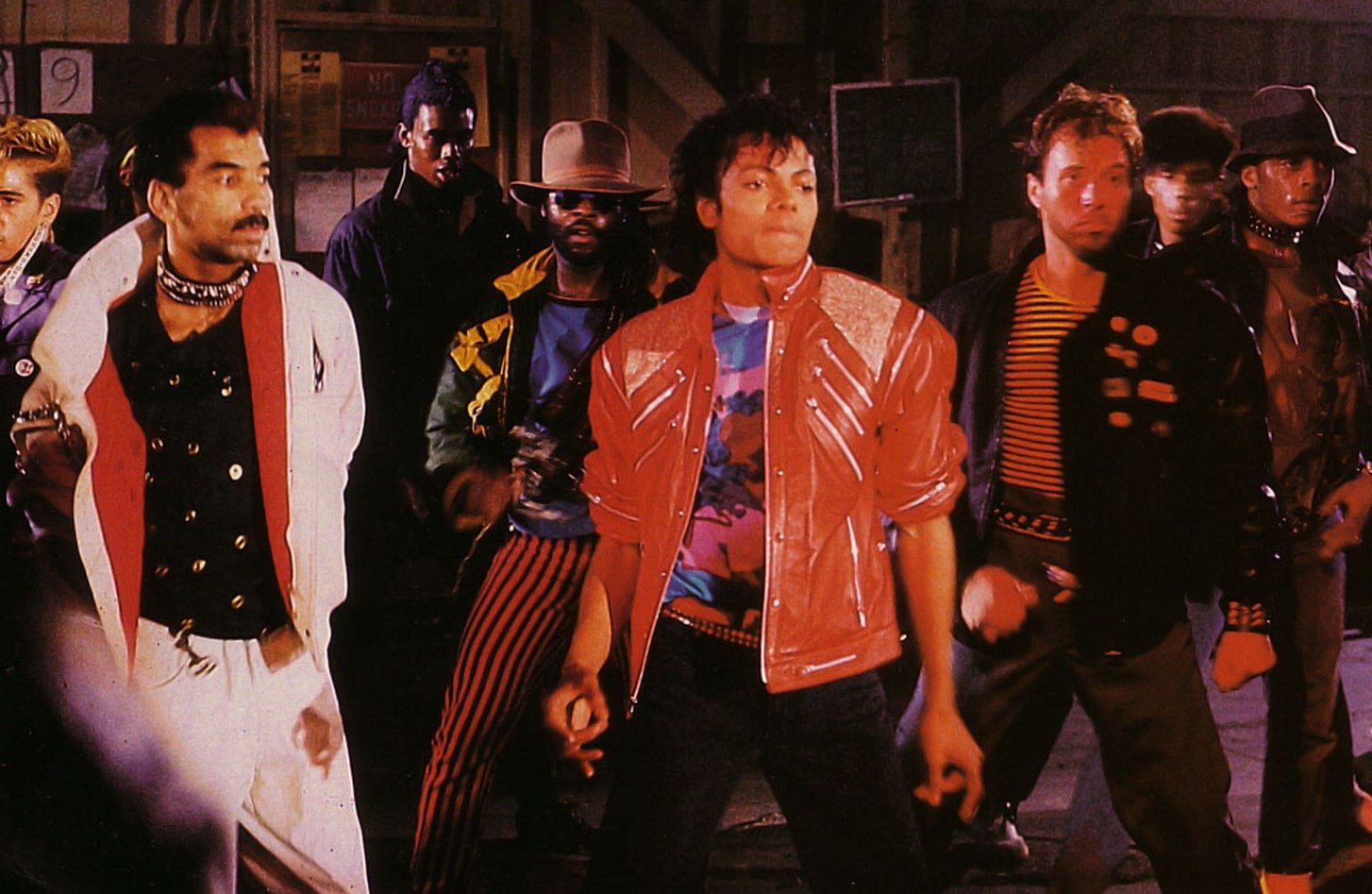
This energetic 32-count dance is performed to Michael Jackson's famous song "Beat It" and incorporates many of his signature moves.
Example
Key "Beat It" Movement Sequence
Right foot steps: Four steps forwards whilst clicking fingers and adding bounce to your movements
Arm stretches: Alternating arm reaches over your head to each side
The back scoot: Leaning slightly forwards with arms extended, then thrusting hips forwards whilst sliding your foot back
Grapevine twist: Crossing feet whilst opening arms sideways and swivelling
Deal cards: Moving your right hand as if dealing cards with attitude
Note
Practice the sequence several times until you memorise the steps, then add your own personal style to make it unique. Michael Jackson's moves are all about attitude and sharp, precise movements.
Cha-cha slide dance
The cha-cha slide is a popular modern American line dance where someone calls out instructions to guide the dancers through the movements.
Example
Basic Cha-cha Slide Sequence
- Step to the side in both directions, touching feet together
- Take three steps backwards
- Hop forwards with both feet
- Stomp your right foot whilst moving arms to the music rhythm
- Perform the signature "cha-cha" cross-step combination
- Add jumps, slides, and hand clapping in time with the beat
- Include knee bouncing and pose striking
- Repeat the sequence to match the music's rhythm
Conga dance
The conga is a celebration dance where dancers form a line, holding onto each other's shoulders, and follow the leader around the dance area.

Example
Conga Line Formation and Steps
Step 1: Line up behind each other with hands on the shoulders of the person in front
Step 2: Learn the basic step pattern: step forwards with left foot, then right foot, then left foot, then kick your right foot out to the side
Step 3: Repeat the pattern starting with the opposite foot
Step 4: Practice the steps 10 times to get comfortable with the rhythm
Step 5: Divide into groups and take turns leading the conga line
Step 6: Move around the dance area in circles, triangles, and squares
Zumba fitness dance
Zumba combines dance with fitness, based on Latin dances like salsa. The name comes from the Spanish phrase "¿Qué te mueve?" meaning "What moves you?"
Example
Basic Zumba Movement Pattern
Step right: Step with right foot, bring left foot in, step right again, then jump feet together
Step left: Mirror the movement on the left side
Add upper body: Twist your torso as you step, with your body following the direction of your feet
Arm coordination: Swing arms in the opposite direction to your body twist
Keep your feet facing forwards whilst your body twists side to side
Note
Zumba is all about having fun while exercising. Don't worry about perfecting every move - focus on moving to the beat and enjoying the music!
Organising dance events
Planning a dance competition
Learning to organise dance events develops important leadership skills. You can arrange events similar to popular dance shows or competitions.
Example
Event Organisation Steps
Step 1: Work in groups of five to six learners
Step 2: Choose a group leader and deputy to coordinate activities
Step 3: Choreograph your own dance routine (choreograph means to put together a sequence of dance moves)
Step 4: Develop, prepare, and practice your dance as a team
Step 5: Ensure your dance is inclusive so all group members can participate
Step 6: Present your dance performance to the class
Step 7: Teach your dance to other classmates
Step 8: Judge other groups' performances fairly to choose winners
Leadership skills in dance activities
Organising dance events helps you develop essential leadership qualities that extend far beyond the dance floor.
Note
Key Leadership Skills Developed:
- Choreography abilities: Creating and arranging dance sequences
- Communication skills: Giving clear instructions to group members
- Teaching abilities: Helping others learn your dance moves
- Fair judgement: Evaluating other groups' performances objectively
- Event organisation: Coordinating all aspects of the dance event
Inclusive dancing
Important
Remember to adapt dance movements to suit the abilities of all learners in your class. This ensures everyone can participate equally and enjoy the experience, regardless of their physical capabilities or skill level. Inclusion should always be a priority in dance activities.
Remember!
Summary
Key Points to Remember:
-
Recreational dance combines fitness, culture, and fun whilst helping you develop rhythm and coordination skills
-
South African dances like pantsula, pata pata, toyi-toyi, and sokkie connect you to your cultural heritage and history
-
International dances such as cha-cha slide, conga, and zumba expose you to different cultures and dance styles from around the world
-
Off-beat timing is crucial for dancing - listen for the "and" counts between main beats to improve your rhythm
-
Leadership skills develop naturally through organising dance events, choreographing routines, and teaching others your moves