Bond energies (Edexcel GCSE Chemistry): Revision Notes
📚Revision Notes
Bond energies
In every chemical reaction, bonds between atoms are broken and new bonds are formed. Whether the reaction is endothermic (absorbs energy) or exothermic (releases energy) depends on the energy changes that happen during bond breaking and bond forming.
Note
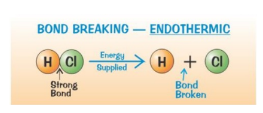
Endothermic Reactions
- Energy is absorbed to break existing bonds in the reactants.
- The energy needed to break these bonds is greater than the energy released when new bonds form. This means the overall energy change is positive, and the reaction takes in energy from the surroundings, often making the surroundings feel cooler.
Note
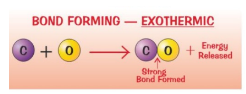
Exothermic Reactions
- Energy is released when new bonds form in the products.
- The energy released by forming these new bonds is greater than the energy needed to break the old bonds. This results in an overall negative energy change, meaning the reaction releases energy into the surroundings, often making the surroundings feel warmer.
Bond Energy Calculations
When calculating the overall energy change for a reaction:
- Add up the energy needed to break all the bonds in the reactants (this is positive energy).
- Add up the energy released when forming new bonds in the products (this is negative energy).
Note
- If the result is positive: The reaction is endothermic (absorbs energy).
- If the result is negative: The reaction is exothermic (releases energy).
Note
Example:
Imagine a reaction where breaking the bonds requires 500 kJ of energy, and forming new bonds releases 800 kJ of energy.
- Energy used to break bonds = +500 kJ
- Energy released by forming bonds = -800 kJ Overall energy change = 500 kJ - 800 kJ = -300 kJ
Since the energy change is negative, this is an exothermic reaction.