Displacement reactions (Edexcel GCSE Chemistry): Revision Notes
📚Revision Notes
Displacement reactions
Note
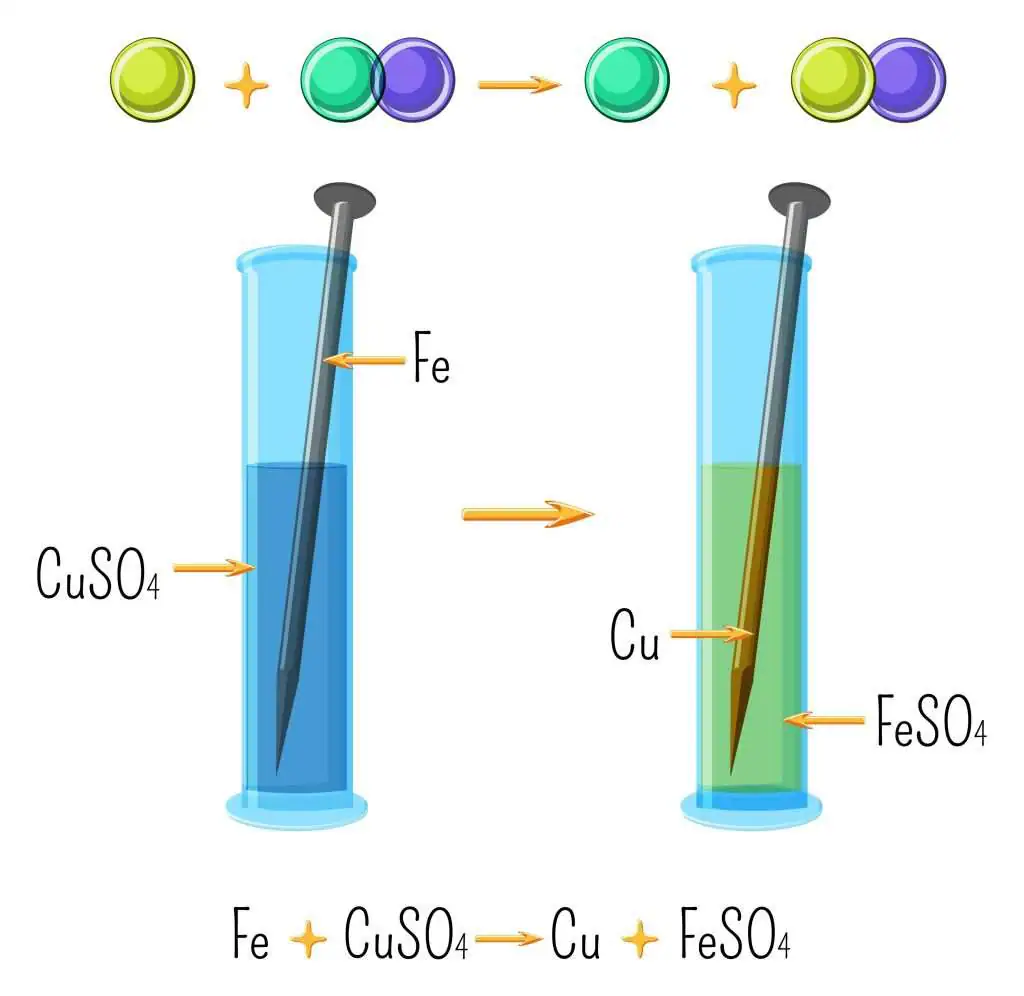
Displacement reactions are a way to compare the reactivity of metals by reacting them with metal salt solutions. These are also known as REDOX reactions, where both oxidation and reduction occur.
Note
Key Concept:
A more reactive element will displace a less reactive element from a compound.
Oxidation and Reduction in Displacement Reactions:
- Oxidation: The loss of electrons. In a displacement reaction, the more reactive metal loses electrons and becomes oxidised.
- Reduction: The gain of electrons. The less reactive metal gains electrons and becomes reduced.
Displacement Reaction Examples:
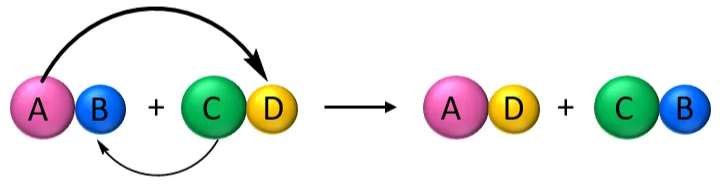
1. A More Reactive Metal in a Less Reactive Metal's Salt Solution:
If you put a more reactive metal into a solution containing a less reactive metal's salt, the more reactive metal will displace the less reactive metal from the solution.
Note
Example:
In this reaction:
- Zinc is oxidised (loses electrons) to form Zn²⁺ ions.
- Copper ions (Cu²⁺) are reduced (gain electrons) to form copper metal. You will observe copper metal forming as a reddish-brown solid and the blue colour of the copper sulfate solution will fade as zinc displaces the copper.
2. A Less Reactive Metal in a More Reactive Metal's Salt Solution:
If you put a less reactive metal into a solution containing a more reactive metal's salt, nothing happens because the less reactive metal cannot displace the more reactive metal.
Note
Example:
In this case, copper is less reactive than zinc, so it cannot displace zinc from the zinc sulphate solution.
Reactivity Series and Displacement:
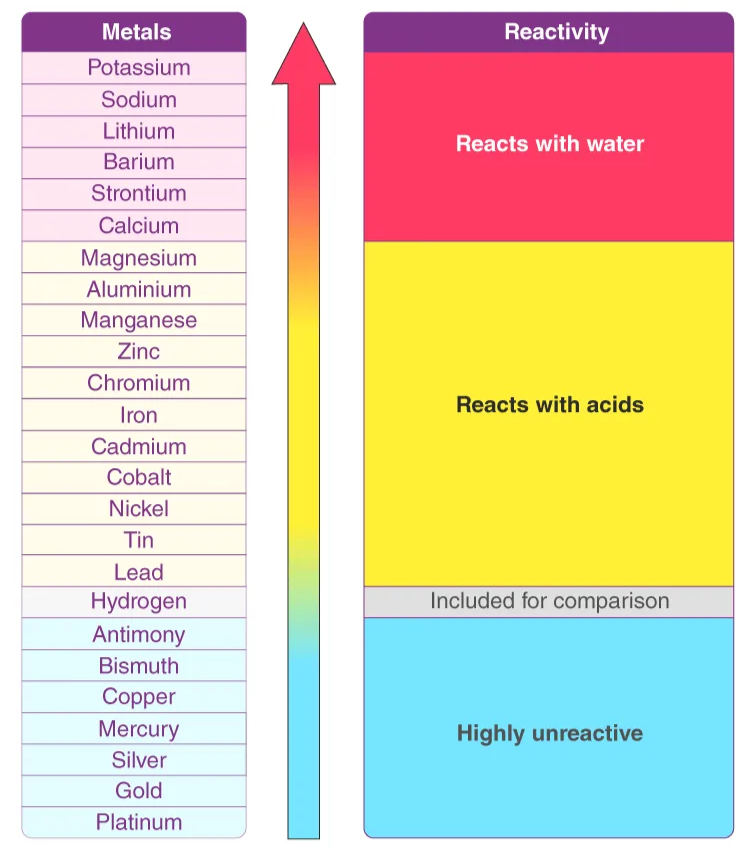
The reactivity series of metals helps to predict which metals can displace others. Metals at the top of the series are more reactive and can displace those below them.
Note